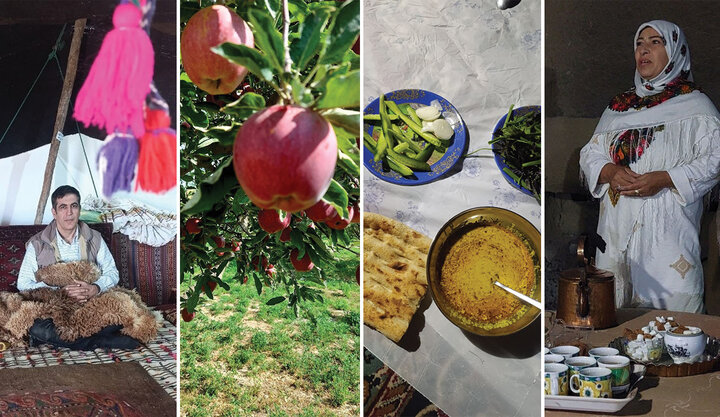
TEHRAN – A friend’s suggestion was all it took to set me on the road to North Khorasan, one of the few Iranian provinces I had never visited and, until then, had rarely considered as a travel destination.
We set out to explore the province over three days, keeping costs low and relying on local guides and the knowledge of people familiar with the region. What followed was a journey through mountain strongholds, traditional homestays, Turkmen hospitality, living musical traditions, local festivals and a secluded valley where a man had spent years building a world of his own. By the end, I had discovered how easily a place can remain off one’s travel map until the moment one finally gives it a chance.
A train to the edge of the desert
We boarded the train from Tehran around midday, heading towards Jajarm, one of the southernmost cities of North Khorasan province. We would not be getting off in the city itself, however, but at Jajarm railway station, roughly 30 kilometers away. From there, our tightly scheduled exploration of the province would begin.
By the time we arrived, it was around 8 p.m. The long train ride had carried us away from the bustle of the capital and towards a landscape where the desert and mountains seemed to set a different pace for life.
Our first night’s accommodation was a modest traditional homestay near the railway line, tucked behind a small pistachio orchard. Built largely of mud brick and earth, the property consisted of perhaps six or seven rooms. It was not the sort of place that would appear in a glossy hotel brochure. That, as I would discover, was part of its appeal.
Our hosts, a middle-aged couple known affectionately as Uncle Ghorban and Aunt Zeynab, welcomed us with a warmth that made the long journey feel worthwhile.
Dinner was a traditional meal accompanied by local music. There were no polished dining tables or carefully staged decorations. Instead, the setting had the unpretentious charm of a family home where visitors were treated less like customers than guests.
We ate, listened to music and gradually settled into the rhythm of a place that seemed far removed from the hurried world we had left behind.
The accommodation was basic. We slept on simple mattresses laid on the floor, and nothing about the rooms could be described as luxurious. The walls were made of earth, the surroundings were quiet, and above us stretched a night sky scattered with stars.
I began to understand that comfort does not always come from the things we buy or the services we expect. Sometimes it comes from the absence of things that have come to dominate our daily lives: traffic, noise, constant notifications, crowded schedules and the persistent feeling that we should always be doing something.
The following morning brought some of the most memorable moments of the entire trip. Aunt Zeynab had prepared two kinds of local bread. One was plain, while the other was enriched with aromatic herbs, sesame seeds and black seeds.
The smell of freshly baked bread filled the space, making it difficult to think about anything else.
There was also strained yoghurt that had been stored in a sheep’s skin, along with fresh eggs and vegetables from the family’s own garden.
Then came the butter.
Our hosts used a simple traditional arrangement involving a sheep’s skin and wooden poles to make butter from milk. The process was a reminder of how everyday necessities were once produced through household labor and local knowledge, long before industrial food production made such tasks almost invisible to urban consumers.
Nothing was presented as an attraction. These were simply the things our hosts did, and had perhaps done for much of their lives. Yet for us, they offered a glimpse into a way of living that is becoming increasingly unfamiliar to people in large cities. Under that simple roof, I felt an unusual sense of calm.
Before leaving, we thanked Uncle Ghorban and Aunt Zeynab for their hospitality. It was a brief encounter, but it left a lasting impression.
Through the mountains of Raz and Jargalan
After breakfast, we set off towards the northern part of the province. Our destination was Raz and Jargalan, a district close to the border with Turkmenistan, where mountains, valleys and remote settlements preserve traces of a past that is not always easy to read from the landscape.
The drive took around four hours. It was a long journey, but the scenery gave us plenty of reasons to look away from the road and towards the surrounding countryside.
Among the most striking sights were ancient juniper trees, some of which were said to be hundreds of years old, with some estimated to be as much as 2,000 years old. Their twisted trunks and weathered branches seemed to embody the endurance of life in a landscape shaped by harsh weather and the passage of time.
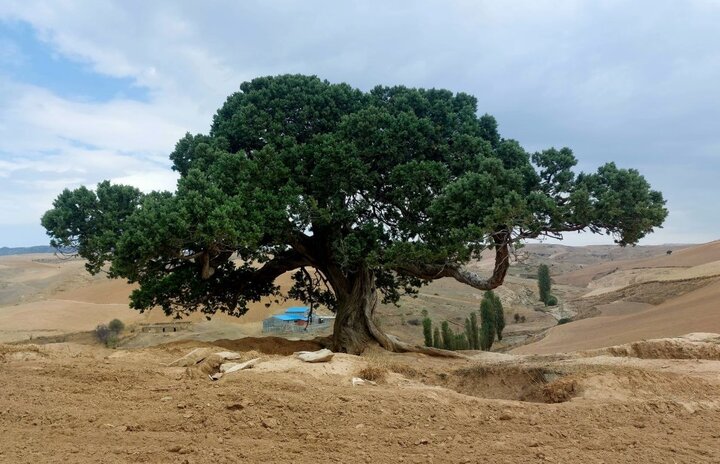
North Khorasan has many such reminders of time’s passage, although visitors who hurry towards more famous destinations may never encounter them.
The region’s historical attractions were no less compelling.
At one point, we came across a large defensive structure perched high on a mountain. Our guide explained that it had served as a refuge during periods of invasion. When danger approached, people could retreat to the elevated stronghold and pull up the ladders used to reach it, making access difficult for attackers.
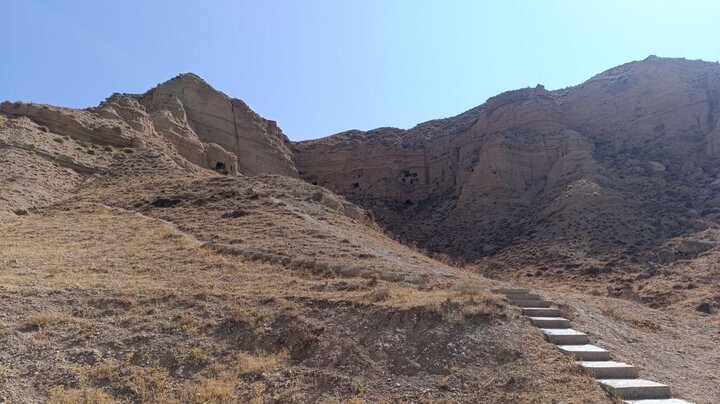
The location was striking, but the first question that came to my mind was not how the structure had been built. It was how people had managed to reach it.
Imagine a community suddenly threatened by an invading force. Families would have to abandon their homes, gather whatever possessions they could carry and make their way up a steep mountain path. Children, elderly people and those carrying food or other necessities would all have to negotiate the same difficult ascent.
Then, once inside, they would have to wait, uncertain about what was happening below and whether they would ever return to their homes.
The defensive advantages of such a place become obvious when viewed from a distance. But imagining the people who depended on it makes the history far more immediate.
A little farther along our route, we encountered another remarkable sight: a series of man-made caves cut into a mountainside, arranged in three levels.
According to our local guide, the lowest level had been used to keep animals, while the upper levels served other purposes associated with refuge and shelter.
Iran’s history is often presented through the grandeur of its palaces, mosques, monumental tombs and celebrated ancient cities. Yet the country’s past also survives in less conspicuous places: a refuge on a mountain, a room cut into rock, a mud-brick house or a path worn smooth by generations of footsteps.
These are places where history is not always written in inscriptions. Sometimes it is recorded in the landscape itself.
The mountain refuges also brought to mind the long history of insecurity experienced by communities across this part of Asia. Trade routes connected distant regions, but those same routes could bring armies, raiders and political upheaval. For people living in exposed settlements, the ability to seek shelter was not an abstract architectural concern. It could determine whether a family survived.
We eventually left that mountains behind and continued towards a different kind of encounter, one that would reveal another dimension of North Khorasan’s character.
A Turkmen welcome, with an unexpected pizza
By midday, we had reached a traditional accommodation run by a Turkmen couple and their two sons.
The atmosphere was different from that of our previous night’s homestay, but the same spirit of hospitality was immediately apparent.
Our hosts wore traditional Turkmen clothing and distinctive hats. Their appearance, manner and surroundings offered a glimpse of a cultural identity that has been preserved across generations in this borderland region.
North Khorasan is home to a diverse population, including Kurdish Kurmanji speakers, Turkmens, Persians and Turkic-speaking communities. The province’s cultural richness is not simply a matter of different ethnic groups living within the same administrative boundaries. It is visible in its music, languages, food, handicrafts, clothing and everyday social customs.
Here, cultural identities have developed through centuries of coexistence, exchange and adaptation.
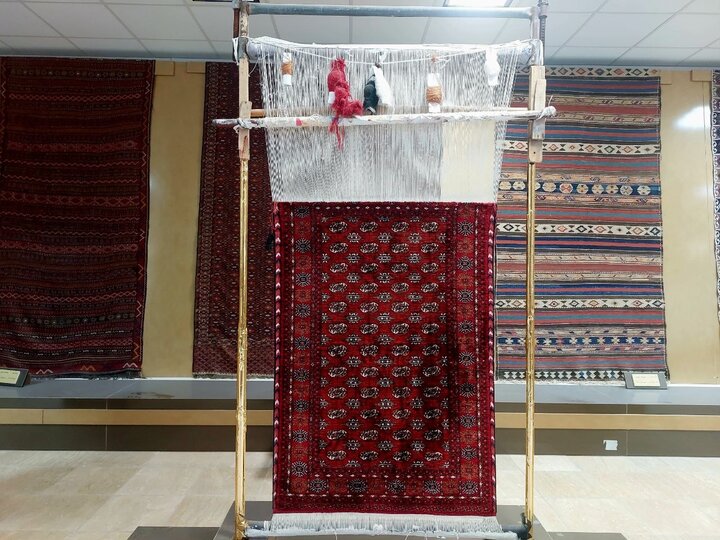
Turkmen communities, in particular, have maintained distinctive traditions in carpet weaving, textiles, music and horsemanship, while their cuisine reflects both local resources and wider cultural connections across Central Asia.
Lunch at the guesthouse brought some of those culinary traditions to the table. The food combined Iranian and Turkmen influences, giving us an opportunity to sample flavors that felt familiar in some respects and different in others.
Then came the surprise: a pizza that our hosts described as their own creation. It was delicious.
I had not expected to encounter a distinctive house pizza in a traditional guesthouse near the border with Turkmenistan. Yet that small detail seemed to capture something important about the character of the place. Cultural traditions do not necessarily survive by remaining frozen in time. They often continue through the ability to absorb new influences while retaining a recognizable identity.
Once again, the welcome was informal and sincere. We were travelling on a limited budget, and our hosts made us feel that this was no obstacle to receiving generous hospitality.
After lunch, we headed towards a reservoir behind a dam for a short boat ride. The water offered a welcome change after hours of mountain roads and dry landscapes. The surrounding hills formed a quiet backdrop, and for a while we could simply enjoy the view without having to think about the next destination.
Before long, we were back on the road, leaving Raz and Jargalan behind and heading towards Shirvan.
After approximately three hours on the road, we reached Shirvan, where one of the most memorable encounters of the journey was waiting for us.
Our first stop was a traditional dutar workshop run by master instrument-maker Khosrow Haddad and his sons.
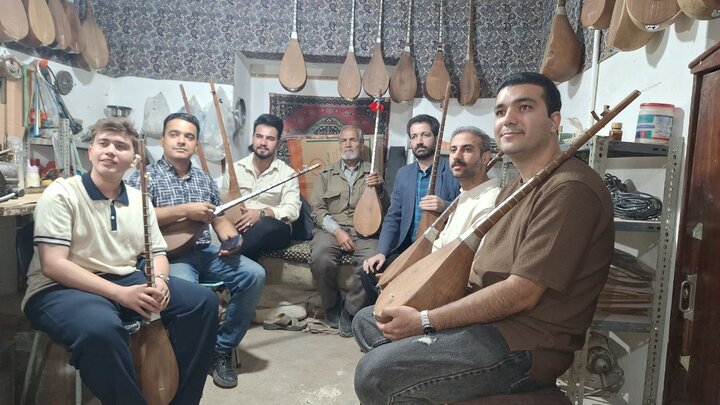
The dutar is a long-necked, two-stringed lute found in Iran and across Central Asia. Its name comes from the Persian words do, meaning two, and tar, meaning string.
Although the instrument looks relatively simple, its cultural significance is considerable. In parts of northeastern Iran, particularly among Kurdish and Turkmen communities, the dutar is closely associated with the musical traditions of the Bakhshi, performers who have historically carried songs, stories, poetry and local memory from one generation to the next.
A dutar is not merely a musical instrument. In the hands of a skilled performer, it can become a means of preserving a community’s sense of itself.
The workshop was also a shop where instruments were displayed and sold. Yet it felt much more like a place devoted to a lifelong passion than a commercial enterprise.
Master Haddad had spent more than five decades making dutars and teaching others to play them. His students shared his enthusiasm, and the atmosphere suggested that the craft was being sustained not only through technical instruction but also through personal commitment.
Master Haddad and his students took turns performing several local pieces, first individually and then together. The music filled the workshop, turning an ordinary room into a space where the outside world seemed to recede.
The sound was distinctive: sometimes gentle and reflective, sometimes energetic and rhythmic. The musicians’ movements were unforced, and their concentration was evident. They did not seem to be performing merely to entertain a group of visitors. They were sharing something they knew intimately and cared deeply about.
As the music continued, conversation gave way to listening.
In this workshop, the dutar seemed to connect the present with a much longer cultural past. The instrument’s two strings carried melodies shaped by local experience, while the musicians’ knowledge ensured that the tradition remained alive.
The performers were known as Bakhshis, a title associated with traditional musicians and storytellers in parts of northeastern Iran and Central Asia. Their role has historically extended beyond entertainment. Depending on the local tradition, a Bakhshi may preserve epic narratives, recount historical events, perform poetry and transmit the songs through which a community remembers its past.
We had planned to make a relatively short visit. But the evening continued, one performance leading to another, and the prospect of leaving became increasingly unappealing.
It was close to midnight when we finally departed.
That night, I realized that some of the most valuable places in a destination may be workshops like this one, where cultural heritage is not simply preserved behind glass but practiced, discussed and passed on.
We went to another traditional guesthouse late that night, tired from the journey but reluctant to let the experience fade.
The next morning, we were back on the road.
Farhangestan-e Kanimal: A lifetime collected under one roof
The following day’s itinerary included a private collection known as Farhangestan-e Kanimal, a two-storey building filled with objects that offered a different perspective on the province’s history.
The collection had been assembled by its elderly owner, a man of about 90 who had devoted considerable effort to bringing together materials from different periods of Iran’s past.
The ground floor contained books, historical documents, newspapers and magazines. Their range suggested an interest extending well beyond a single subject or period. The collection offered a glimpse into the changing ways Iranians had recorded events, circulated ideas and understood the world around them.
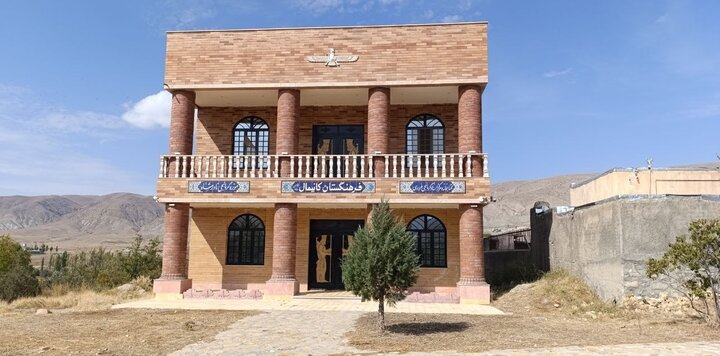
Upstairs, the focus shifted from the written record to the material culture of rural and nomadic life. There were objects associated with traditional households, village work and pastoral communities. Together, they evoked a way of life in which many everyday tasks depended on practical knowledge, locally available materials and tools that were often made to serve more than one purpose.
What made the visit especially rewarding was hearing the collection’s owner talk about it.
The owner guided us through the collection, sharing his knowledge and memories. At his age, he had witnessed an extraordinary span of social change, even if not every object in the museum belonged to his own lifetime.
The contrast between the two floors was especially striking. Downstairs, newspapers and documents recorded public events, political developments and changing ideas. Upstairs, household objects revealed the quieter history of how people lived.
Both are necessary to understand the past.
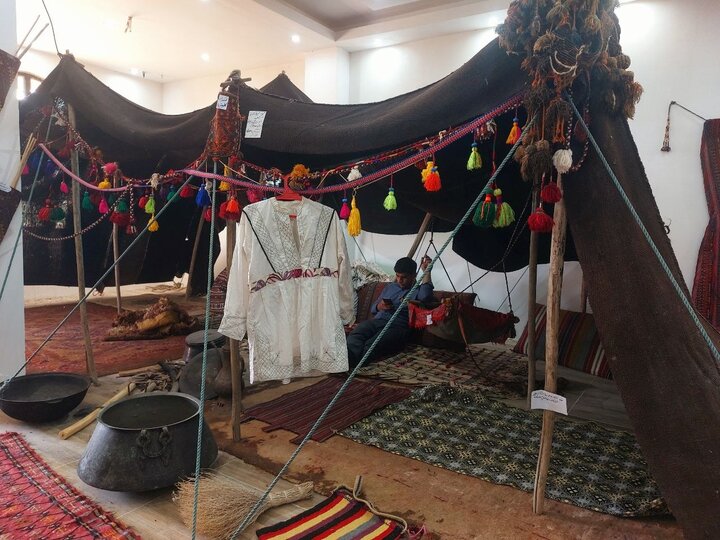
In a province such as North Khorasan, where rural and nomadic traditions have helped shape local identity, preserving these objects is particularly valuable.
Farhangestan-e Kanimal left me with a warm impression precisely because it was so personal. It was not simply a display assembled to attract visitors. It reflected the sustained curiosity of an individual who had spent much of his life gathering pieces of the past.
Beside the private museum was an apple orchard. With the owner’s permission, I picked two apples directly from the trees and ate them.
They were exceptionally crisp and fragrant, with a freshness and flavor that seemed entirely different from the apples I usually bought in Tehran.
I later learned that North Khorasan is known for its apple production. The province’s agricultural diversity is one of the less celebrated aspects of its identity, alongside its cultural heritage and natural attractions.
Wrestling, apples and the festive spirit of Shirvan
After lunch at a cozy traditional restaurant, we headed to a local event featuring koshti ba chokheh, a form of traditional wrestling associated with the Khorasan region.
The atmosphere was lively. People had gathered to watch the matches, and the event offered a glimpse into a sporting tradition that has long occupied a special place in the region’s social life.
Koshti ba chokheh is generally associated with local celebrations and communal gatherings, including Nowruz festivities and, historically, weddings. It has also been an important setting for demonstrating strength, skill and the qualities expected of a pahlavan, or champion.
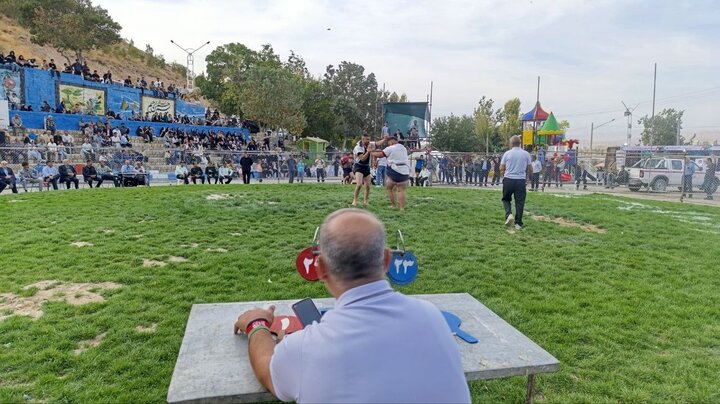
The sport is rooted in a wider culture of wrestling across Iran, where physical strength has traditionally been linked to ideas of courage, honor, generosity and community standing.
In Khorasan, the local form has developed its own identity, with characteristic clothing, techniques and customs.
The wrestling event was also a reminder that cultural heritage is not confined to architecture, museums and handicrafts. It can be embodied in movement, physical skill, competition and collective emotion.
A short distance away, another celebration was taking place: the Shirvan Apple Festival.
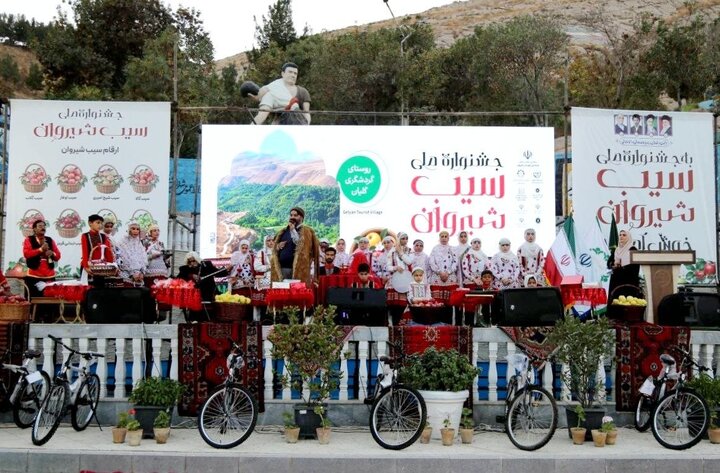
The event featured apples and a range of apple-based products, including apple vinegar. Modest stalls displayed local produce, offering visitors an opportunity to see the agricultural side of the province’s identity.
The festival was particularly interesting because it brought together two different dimensions of local life. On one side was a traditional sport rooted in community gatherings. On the other was an agricultural celebration centered on a crop associated with the region.
Both were expressions of local identity, but in different ways.
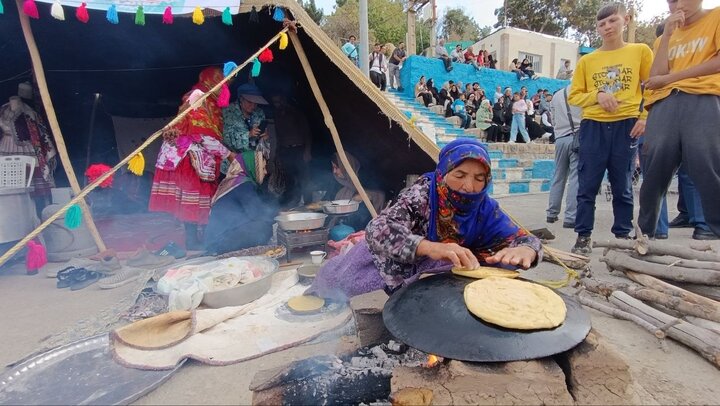
In a stall that was in fact a vast tribal tent, some women were preparing different kinds of bread, and the sight of them working around the ovens gave the festival a warm, informal atmosphere.
At the festival, the women were not just selling food. They were demonstrating a skill and sharing something of the cultural world from which it came.
I bought several pieces, thinking that they would be a pleasant reminder of the journey when I returned home.
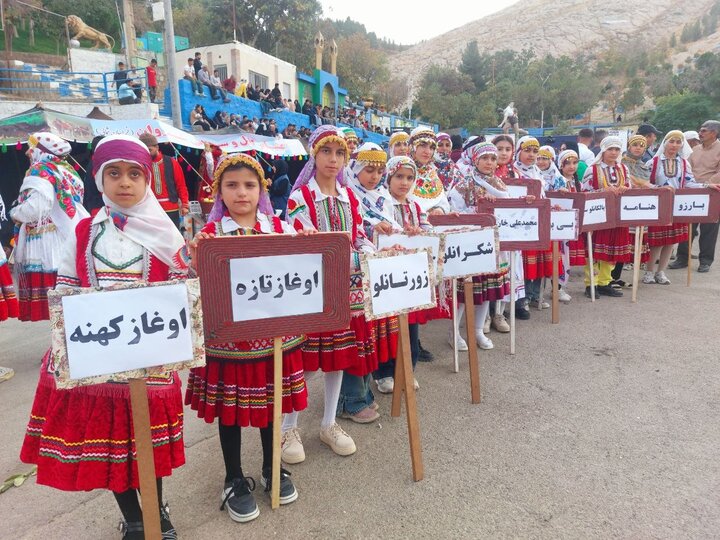
By then, North Khorasan had already offered us much more than I had expected: mountain history, living musical traditions, an elderly collector’s personal museum, exceptionally fresh apples and a traditional sporting event.
Yet the most extraordinary experience of the trip was still ahead.
The hidden valley of Estarkhi
It was early in the evening that we left the apple festival and continued towards Esfarayen.
It was during this drive that we reached the historical Estarkhi village, where I encountered a bizarre house that would become one of the defining memories of the journey.
To reach it, we first had to walk for about ten minutes down a dirt track on a steep slope. The path was quite narrow and, as far as I can remember, there was a precipice alongside it. By the time we arrived in the area, however, it was already dark. Still, we felt it would be a shame to leave without seeing the house.
After about ten minutes of walking downhill, we reached a small river, whose flowing water stood out in the silence of the night. We then followed an uphill dirt path for another two or three minutes before finally reaching the house.
The owner, a man named Ali, warmly welcomed us. He was middle-aged, with long, graying hair and a long gray beard. After serving us tea, he showed us the different parts of the house, which he had built with his own hands over many years, with very little in the way of resources.
The owner had created the place brick by brick, drawing on the materials and possibilities of his surroundings. The complex offered views of the wooded valley and mountains, while the nearby river and waterfall gave it a setting that felt almost separate from the outside world.
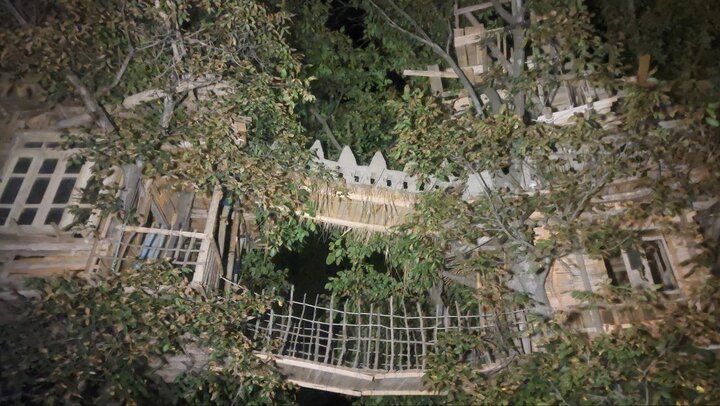
There were also treehouse-style rooms built around the sturdy trunks and branches of two walnut trees said to be about a century old.
I spent some time talking to the owner.
He explained that, during a period when he had very little money, he had gradually carved into the rocks using a pickaxe and a sieve, working slowly over the years to shape the site.
His account suggested a long process of trial, labor and patience rather than a project completed according to a conventional timetable.
What struck me most, however, was not only the physical work he had undertaken. It was the way he spoke.
He talked quietly, without any apparent need to impress his visitors. There was a remarkable calmness in his face and manner, and it seemed to extend into every sentence.
I had met many people during my years of travelling and reporting, but his presence affected me in a way I found difficult to explain.
Perhaps it was the contrast between the stillness of the valley and the relentless pace of Tehran. Or perhaps it was the sight of someone who had devoted years to creating a place according to his own vision, without rushing towards a quick result.
In an age when projects are often measured by how quickly they can be completed and how soon they can generate a return, there was something unusual about encountering a place that appeared to have grown at the pace of its maker.
I imagined him working through different seasons, returning to the same rocks, gradually changing the contours of the site and finding ways to make the buildings fit the terrain.
Such a project requires more than technical ability. It demands persistence, a willingness to live with uncertainty and a clear enough idea of the desired result to keep working when progress is slow.
The luxury of having nowhere to hurry
The longer I remained there, the more I thought about the meaning of travel.
There was something deeply appealing about the idea of staying in the historical village of Estarkhi to see its other gems and spending a morning without checking the time.
We eventually had to leave. The journey was not over yet. We still had to reach Esfarayen before midnight to spend the night.
One last night in Esfarayen
After leaving Estarkhi, we continued to Esfarayen, where we spent the night in another traditional guesthouse.
By then, the pace of the trip had begun to catch up with us. We had covered long distances, visited a wide variety of places and met people whose stories had added unexpected depth to the journey.
Our accommodation was modest, in keeping with the spirit of the trip. We were not looking for luxury, and the simple guesthouses had allowed us to experience something closer to local life than we might have encountered in standard hotels.
The next morning, we rose early and headed back towards Jajarm to catch our train to Tehran.
There was one important place we had hoped to visit but could not fit into the schedule: the historic city of Belqeys.
I was disappointed not to see Belqeys, but the omission also gave me a reason to return.
For a traveler, an unfinished itinerary is not always a failure. Sometimes it is an invitation.
The train arrived at Jajarm station about half an hour late.

As we waited and then settled into our seats for the return journey, I began to think about everything that had happened over the previous three days.
The trip had started with a simple suggestion from a friend. I had accepted because North Khorasan was a province I had never visited, without expecting that the experience would leave such a strong impression.
AM
Disclaimer : This story is auto aggregated by a computer programme and has not been created or edited by DOWNTHENEWS. Publisher: tehrantimes.com