
Emirates Man
In a dimly lit living room in one of Dubai’s tonier apartment buildings, I find myself on the fringes of a dinner party, watching a roomful of people who seem to know one another better than I know them. I have just arrived and am standing at the bar when I notice something on a wrist – a mid-century Jaeger-LeCoultre, with a hand-painted dial. It’s a peculiar Lincoln green, set on what looks like a vegetable-tanned leather strap. I have never seen one quite like it.
I asked the owner about it. What follows is one of those conversations watches sometimes make possible. He is a lawyer who has recently moved to the city, and the watch turns out to be every bit as interesting as it first appeared. The case is battered with the small dings and scratches that watches acquire when they have been properly lived with, and at no more than 36 or 37mm it looks almost diminutive by the standards of recent years. But it is the dial that stops me. The colour is extraordinary. He cannot say much about its provenance. He bought it online from another collector, who believed that the original had been painted over during a restoration. It isn’t, in other words, quite what Jaeger-LeCoultre intended it to be (surprise, surprise!). The owner doesn’t seem particularly bothered. He likes it precisely because of that. It is, in a small but meaningful way, unique.

I have begun noticing watches like this everywhere these days. Not necessarily hand-painted green Jaeger-LeCoultres, but older, smaller, sometimes even slightly eccentric pieces that seem imbued with personality. These are watches that don’t announce themselves from across the room, but they certainly do seem to confidently assert the wearer’s taste and individuality.
In New Delhi, an artist friend of mine has a ‘watch guy’ – a dealer of pre-owned timepieces that he restores and sells for a modest profit. He operates not from a boutique but a watch-repair stand, which somehow makes the whole enterprise feel more authentic. My friend buys these vintage, cushion-shaped, HMT watches with whimsical, unbelievably saturated dials and then he takes a keen interest in sourcing matching straps to pair them with. An inexpensive way to create a collection that is so uniquely his own.
He doesn’t wear these because they are pristine, perfect examples of rarity. These are pieces to be lived with, possibly with intriguing past lives of their own.

For the better part of the last decade, watch culture has been living through an extended love affair with the steel sports watch. The integrated bracelet became an object of fascination; angular cases, brushed surfaces and industrial geometry acquired the kind of cultural currency once reserved for fine tailoring and sports cars. Some of the more elaborate executions of these watches announced their presence loudly.
The irony is that the sports watch became so successful that it ceased to be particularly sporty. Watches conceived for racing, diving or life aboard a yacht found themselves accompanying people to restaurants, offices and weddings, where their supposed ruggedness was rather like wearing hiking boots to dinner, simply because they were expensive hiking boots.
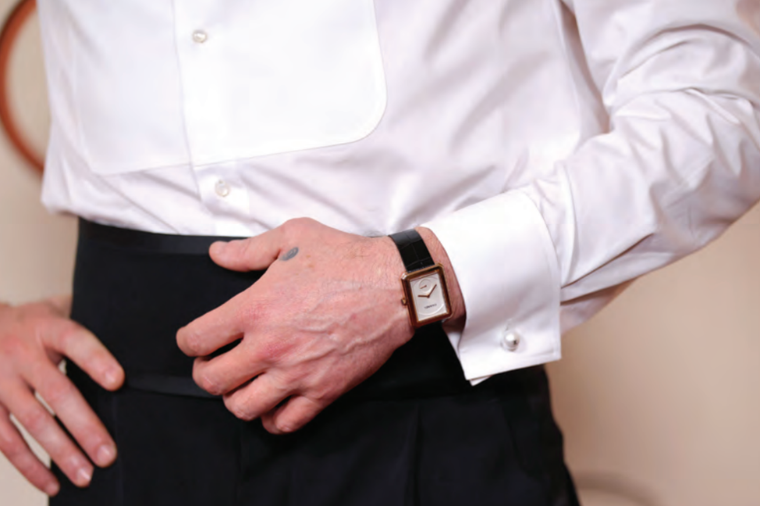
The dress watches I’m seeing now have none of the armour plating or the familiar sameness of a code designed to help their owners fit in. Their virtues are smaller and, in some ways, harder to photograph: proportion, thinness, a beautifully balanced dial, the way a polished bezel catches a stray shaft of light.

I do not think that the sports watch is disappearing. It is far too entrenched for that. It’s just that, after years of watches becoming larger, louder and more overtly luxurious, there is perhaps room again for a bit of restraint, a bit of personality or uniqueness. Now there seems to be a growing appetite for things that are harder to advertise: craftsmanship, provenance, materials, design and the pleasure of owning something that rewards closer inspection. A key indicator of this shift is the downsizing of cases spotted at this year’s Watches & Wonders. A number of brands returned to more modest proportions, with 36–39 mm cases becoming one of the more noticeable themes. Industry observers described the change as a move away from the 40–43 mm norm that dominated the previous decade. But perhaps even more interesting than the shrinking case diameters is what these smaller watches represent. For a while, luxury seemed to speak increasingly loudly: ubiquitous logos, limited editions, eyewatering prices and watches whose scarcity was almost as much a part of their appeal as the design itself. A vintage Cartier Tank, a Jaeger-LeCoultre Reverso or a simple Omega Seamaster DeVille may speak primarily to people who know what they are looking at. Their appeal is not necessarily diminished if nobody notices them. In fact, that may be part of the pleasure.
When everybody can recognise the logo, the logo becomes a rather blunt instrument for signalling taste. A more obscure reference, an unusual dial, an independent watchmaker, or an old watch with an imperfect history can work differently. Its value depends upon knowledge. Perhaps that is the appeal of these watches now. They give the wearer a little more freedom to decide when, and to whom, an object reveals its value. Some things are made for the people who know what they are looking at. That is enough.
– For more on how to look smart and live smarter, follow Emirates Man on Facebook and Instagram
Images: Supplied
Disclaimer : This story is auto aggregated by a computer programme and has not been created or edited by DOWNTHENEWS. Publisher: emirateswoman.com




