Two container ships near the strait of Hormuz have sunk after being struck by missiles, amid the sharpest rise in Iranian attacks on shipping since the start of the US-Israel war with Iran.
The increase in attacks suggests Iran is trying to fully close the strategic waterway in an attempt to frustrate Donald Trump’s efforts to bring down fuel prices before the US midterm elections on 3 November.
The Trump administration has been attempting to deflect attention from the economic impact of the war on Iran by blaming Ukraine’s attacks on Russian refineries for increased fuel prices.
On Wednesday, UK Maritime Trade Operations (UKMTO) reported at least five incidents including drone strikes in the previous 48 hours targeting tankers and other commercial ships around the Hormuz area.
“There is a tempo increase in strikes, which looks deliberate,” one maritime security source said.
The Singapore-flagged container ship GFS Pride sank on Wednesday after an attack the previous day. Hours later, the Antigua- and Barbuda-flagged Cape Dao sank close to the strait, having been hit by a projectile on 23 September, according to data from the International Maritime Organization.
Apparently referring to the GFS Pride, Iran said a cargo ship had sunk after hitting a naval mine while making an unauthorised passage through the strait.
State television quoted a statement from Iran’s Islamic Revolutionary Guard Corps (IRGC) that said the ship was travelling on an “illegal and dangerous route” when it hit the mine.
The ship, which was shown tilted in the water and spewing a thick plume of smoke, was carrying 2,500 containers, the broadcast said.
However, UKMTO suggested that both ships had been hit by unidentified projectiles, raising questions over Tehran’s account.
Iran has repeatedly warned ships against trying to transit through the strait without its approval. The US military has been guiding ships through the waterway on a route nearer to Oman’s coast.
Ships in the area were reporting an intense series of attacks in recent days, with six vessels attacked on Sunday alone, according to UKMTO’s monitoring.
Analysis by the Financial Times said 24 ships were hit in the two weeks to 11 October. Of the vessels hit, three were refined energy product tankers and two others were crude oil tankers.
The increased tempo of Iranian attacks appears to have caused a dramatic drop-off in oil shipments through the strait, as Tehran appears determined to demonstrate its ability to strike ships before the US midterms that will decide control of Congress.
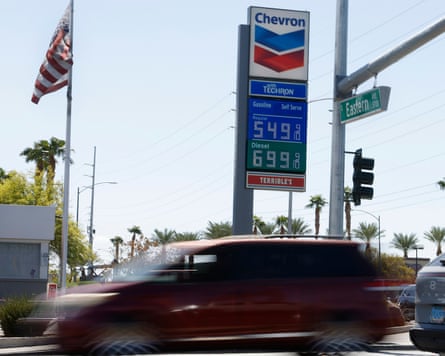
US fuel prices have surged by almost 70% since Trump launched his war on Iran, and the Republican party is bracing for punishment at the polls.
According to two Iranian officials, Iran has recently begun using new tactics against vessels it considers to be in violation of its restrictions. The strategy included a change in the type as well as the pace of attacks, with one goal being to influence the outcome of the US vote, they said.
“The aim is to frustrate efforts by the United States and its allies to bring down global oil prices,” one of the two officials told Reuters.
The decision to adopt the new strategy had been taken at the highest levels of Iran’s leadership and was fully coordinated across the country’s ruling system, the officials added.
A US military official, speaking on condition of anonymity, confirmed that Tehran had changed tactics in one significant way. After the US destroyed much of Iran’s radar capabilities, the IRGC had started using unarmed spotters in small boats to identify potential targets, including American naval vessels, the official said.
Last week, in a previously unreported incident, the US military determined that Iranian spotters were operating from a dhow, calling in targets to the IRGC, the official said. US forces confronted the vessel, told its occupants to abandon ship and then destroyed it. There were no casualties, the US official said.
Disclaimer : This story is auto aggregated by a computer programme and has not been created or edited by DOWNTHENEWS. Publisher: theguardian.com