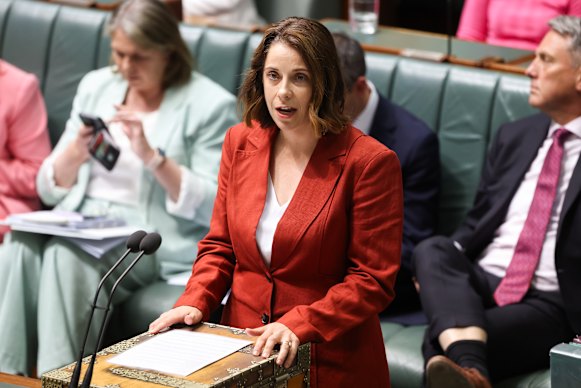

Labor’s flagship online safety bill will penalise platforms that allow users to advocate gender-based violence, but Communications Minister Anika Wells has removed the promotion of illicit-drug use from its expanded list of harmful online content.
Greens communications spokeswoman Sarah Hanson-Young, who has emerged as the sole gatekeeper for the legislation’s passage by the end of the year, has said major changes are necessary for her party to support the bill following a Senate inquiry reporting back next month.
After weeks of backlash from the Coalition and the Greens over the use of ministerial discretion in the draft legislation to say what is and isn’t online harm, three additional categories have been added to the list, and powers taken away from the minister.
The creation of fake nude material without a person’s consent; the posting, or threat of posting, an intimate image of another person without their consent; and the encouragement, promotion or incitement of gender-based violence will now all fall under the legislation.
Alongside the removal of ministerial discretion, material or conduct that “encourages, promotes, urges or instructs illicit drug use” has also been removed from the list of harms. The reason for this removal was not discussed in the bill’s explanatory documents nor Wells’ introductory speech to parliament.
Speaking in the House of Representatives on Thursday morning, Wells said: “The core of the digital duty of care is to provide a safe online environment where all Australians are protected from seriously harmful and illegal content. It moves the safety net upstream to the people who design the product to stop the harm before it ever reaches an Australian user.
“It is not about controlling adults online; it is about getting illegal and seriously harmful material offline, and giving adults choice. Like when you buy a new appliance, the government sets minimum safety standards, but ultimately, what you choose to buy is up to you, as long as it’s legal and safe.”
While the Coalition has all but ruled itself out of supporting the bill’s passage through the Senate, Liberal senator Sarah Henderson’s demands of carveouts for journalists have been heeded.
An entirely new section of the bill, listing “excluded material” has been added. The list protects news, entertainment, artistic and professional research content from the bill, among other narrow categories deemed in the public interest.
Hanson-Young said the bill needed to be significantly strengthened to put “the fear of god” into big tech companies, as she demanded penalties be tied to social media platforms’ global revenue. The Greens also want individuals have the capacity to sue platforms for causing harm.
“We are sick and tired as Australians and as consumers of big tech running our lives, we’re sick and tired of having material shoved into our children’s feeds that is dangerous and harmful,” Hanson-Young said.
The senator will also ask the government to crack down on the addictive elements of social media, including infinite scrolling features.
Wells said the changes would face a 12-month “transitional period” in which platforms would be able to prepare, and reaffirmed the ability for users to “opt in” to algorithms through a notification sent to all account holders.
More to come
Cut through the noise of federal politics with news, views and expert analysis. Subscribers can sign up to our weekly Inside Politics newsletter.
 Nick Newling is a federal politics reporter for The Sydney Morning Herald and The Age.Connect via X or email.
From our partners
Disclaimer : This story is auto aggregated by a computer programme and has not been created or edited by DOWNTHENEWS. Publisher: www.smh.com.au