
Updated ,first published
US President Donald Trump’s online platform Truth Social will be policed by Labor’s flagship online safety reforms, expected to be enforceable by the end of 2027, as Communications Minister Anika Wells brushes off questions about the prospect the Republican administration will retaliate over laws its considers a form of censorship.
Wells unveiled a list of harms proscribed under the new digital duty of care reforms, including promoting gender-based violence, but she was unable to explain why she drastically reduced one of the penalties for non-compliance from $22 million to $2.2 million.
Greens communications spokeswoman Sarah Hanson-Young, whose party is the only negotiating partner for the bill’s passage of parliament, has said major changes are necessary to support the bill once a Senate inquiry reports back next month.
After weeks of backlash from the Coalition and the Greens over ministerial discretion in the draft legislation to say what is and isn’t online harm, three additional categories have been added to the list, and powers to determine new harms have been taken away from the minister.
The new harms involve creating fake nude material without a person’s consent; the posting, or threat of posting, an intimate image of another person without their consent; and the encouragement, promotion or incitement of gender-based violence.
Wells used an address to the National Press Club on Thursday to push back against claims the bill would amount to political censorship, insisting Australians would still be able to listen to “manosphere podcasts” and “say the moon landing was fake” without restriction.
Under repeated questioning from this masthead, Wells was unable to justify why a proposed eSafety penalty was reduced from $21.8 million in the bill’s exposure draft to $2.2 million in the final draft.
“There is nothing in this bill that is designed to make it easier to be neglectful to children online,” Wells said.
A remedial directions clause gives the eSafety Commissioner the power to give platforms a written direction requiring them to comply with orders.
Opposition communications spokeswoman Sarah Henderson on Thursday confirmed the Coalition would not negotiate on the legislation, despite Wells saying the Liberal senator had reached out to her office.
Henderson told this masthead she was not reaching out to reopen negotiations, but to get a copy of the bill.
The Liberal frontbencher said the Coalition opposed “vague” wording within the legislation, and argued “sock puppet” accounts – fake profiles mimicking real users that would allow eSafety and researches to investigate how platforms operate – could be weaponised for malicious purposes.
In the re-written bill, a list of excluded material has been added that protects news, entertainment, artistic and professional research content from the bill, among other categories deemed in the public interest.
The ability to switch off social media algorithms remains in the legislation, with users to be notified by platforms once the duty of care is enacted.
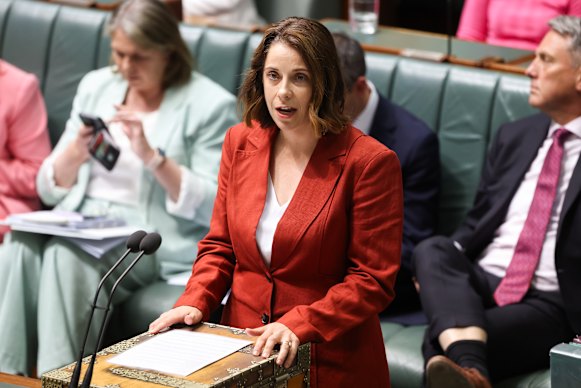
Speaking in the House of Representatives on Thursday morning, Wells said: “It is not about controlling adults online; it is about getting illegal and seriously harmful material offline, and giving adults choice. Like when you buy a new appliance, the government sets minimum safety standards, but ultimately, what you choose to buy is up to you, as long as it’s legal and safe.”
Wells confirmed that Trump’s social media platform would be caught under the laws “as its footprint exists here in Australia”. She said it would be incumbent on the platform to perform annual risk assessments, and the eSafety Commissioner would determine compliance.
Providers of “low-risk services” will have minimal obligations under the digital duty of care, including websites and applications run by small businesses, services that predominantly or exclusively share exempt material, as well as internet service providers.
Hanson-Young said the bill needed to be significantly strengthened to put “the fear of God” into big tech companies, as she demanded penalties be tied to social media platforms’ global revenue. The Greens also want individuals to have the capacity to sue platforms for causing harm.
“We are sick and tired as Australians and as consumers of big tech running our lives, we’re sick and tired of having material shoved into our children’s feeds that is dangerous and harmful,” Hanson-Young said.
The senator will also ask the government to crack down on the addictive elements of social media, including infinite scrolling features.
Wells said the changes would face a 12-month “transitional period” in which platforms would be able to prepare, and reaffirmed the ability for users to “opt in” to algorithms through a notification sent to all account holders.
Cut through the noise of federal politics with news, views and expert analysis. Subscribers can sign up to our weekly Inside Politics newsletter.
 Nick Newling is a federal politics reporter for The Sydney Morning Herald and The Age.Connect via X or email.
From our partners
Disclaimer : This story is auto aggregated by a computer programme and has not been created or edited by DOWNTHENEWS. Publisher: www.smh.com.au