Running his hand through his long, curly locks during a recent video call, the one-named Spanish musician Guitarricadelafuente confesses he is still coming down from the ecstasy of his sold-out show in Madrid a couple of weeks ago. It was the last performance of his tour and the unofficial kickoff of a new Hollywood adventure.
That night, his booming career as a folk-pop musician and his burgeoning future as an actor came together on stage. The 29-year-old Guitarrica (the Aragonese word for “small guitar”), whose real name is Álvaro Lafuente Calvo, performed the original song “La Nieve” (The Snow) for the first time in front of an audience — more than 15,000 people.
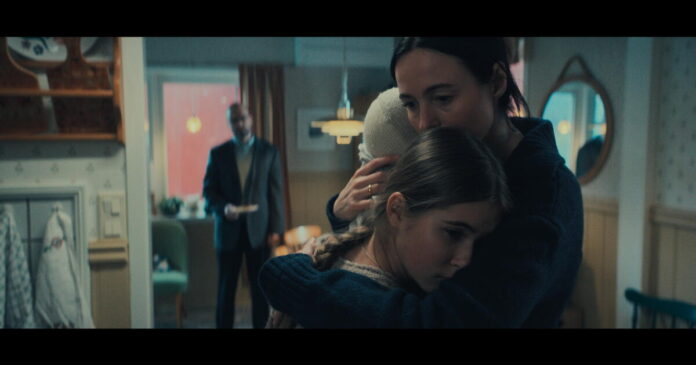
He wrote the sorrowful track for the stirring historical queer epic “La Bola Negra” (opening today), in which he also makes his acting debut in a substantial role as Sebastian, a trumpeter forced to join the fascist-aligned National Army during the 1930s Spanish Civil War in order to survive.
“It was such an incredibly moving moment with the whole stadium singing along, and we even showed images from the movie,” he says in Spanish over Zoom, holding up his cellphone while walking around his home in Barcelona. “La Bola Negra” has already become a box-office phenomenon in Spain.
Co-directors Javier Ambrossi and Javier Calvo (the duo is also known as Los Javis) alongside co-writer Alberto Conejero devised “La Bola Negra” as a triptych of interlaced stories. The ambitious multi-character tale combines elements from Federico García Lorca’s unfinished title play, about a young gay man blackballed from joining a casino’s membership, and Conejero’s 2013 work “La Piedra Oscura,” which traces the romance between Lorca and actor Rafael Rodríguez Rapún.
In a fiction built from these narratives, Guitarrica’s Sebastian is a soldier in 1937 tasked with keeping an eye on the captured Rodríguez Rapún. They fall for each other amid the horrors of war. A third story set in modern-day Spain connects the dots. On screen, Guitarrica’s expressive and angular visage conveys the fright and uncertainty that afflict his character, who is desperate for tenderness.
An openly gay artist, Guitarrica skyrocketed to fame when his mournful, late-night lament “El Conticinio” found viral success after he uploaded it to Soundcloud in 2018. His second and most recent album, the rousing “Spanish Leather,” has catapulted him to major stardom in the Spanish-speaking world and beyond.
“When I was little, I wanted to be an actor, but I also wanted to be a thousand other things,” he says. “It’s funny because being a musician is just about the last thing I ever imagined I would do.”
Back in the spring, before “La Bola Negra” premiered at the Cannes Film Festival, Guitarrica embarked on his first U.S. tour, stopping in Los Angeles at the Roxy in March. Since then, he’s also performed on “Jimmy Kimmel Live!”
Guitarrica’s fortuitous relationship with music emerged from the time he spent during his formative years in his grandparents’ Spanish village of less than 100 people, Las Cuevas de Cañart. His grandfather taught jota music and guitar.
“In my town, the culture is deeply rooted in folklore and in the love of land,” he says. “The songs that people sing there were passed down from generation to generation as part of the folk tradition.”
There’s an atemporal quality to Guitarrica’s music, at once vibrant and youthful, of its moment with pop hooks but simultaneously pulling from the traditional sounds of flamenco and rumba.
“I learned at home by playing with my family and teaching myself like, ‘I want to learn this song’ and jumping into a YouTube tutorial,” he explains, laughing. “It’s totally a Gen-Z thing, learning using what technology offers.”
Los Javis first worked with Guitarrica on a documentary miniseries about Pedro Almodóvar called “Pedro x Javis,” for which they asked him to perform the classic Mexican song “Cucurrucucú Paloma.”
“He did it with such beauty, such sensitivity, I saw an actor right there in front of the camera and then we knew it was meant for him,” says Calvo, affectionately during a chat at the Mill Valley Festival earlier this month. “Álvaro was our little gay soldier.”
In 2024, when they first approached Guitarrica — he says he was shocked they wanted him to act — Los Javis didn’t have a screenplay yet. The duo already had a fanbase thanks to their eclectic TV series “Paquita Salas,” “Veneno” and “La Mesías,” and their debut comedy musical feature “Holy Camp!” about young women in a religious camp.
Ambrossi explains they needed to first have someone in mind for the character of Sebastian before they could even start the process.
“He was the first piece of the puzzle that allowed us to begin writing,” says Ambrossi. “To write a film about Lorca and the Civil War called for something refreshing, something pop, something that entices you to look at the screen, something new — and he has it.”
Since they were writing the part for him, Los Javis asked Guitarrica to sign a contract committing to make the film. They hired him before “Spanish Leather” was released in May 2025. “I knew it was going to be his moment,” says Ambrossi.
“The same thing happened with Rosalía,” adds Calvo of the multimillion-selling Spanish star. “She recorded the opening theme song for our series right before she blew up. We know things!”
Even before “La Bola Negra” started shooting, Guitarrica had realized one of his cinematic dreams: He and Los Javis all have cameos in Almodóvar’s latest film “Bitter Christmas” (out Nov. 13) during a scene in which a group of people pose for a photo.
Guitarrica vividly recalls interacting with Almodóvar that day. “He just stared at me and said, ‘You’ve got a tough one ahead of you. But having your hair in your face and pretty eyes isn’t enough — you’re going to have to work.’ And I thought, ‘I’m going to remember this for the rest of my life.’ ”
Through his company El Deseo, Almodóvar is an executive producer on “La Bola Negra,” which is Spain’s Oscars submission for best international feature film.
To play Sebastian, Guitarrica had to immerse himself in the character’s emotional repression, from which music is his only escape. “From all the pain Sebastian lived through, I have learned to be grateful for the life I have,”Guitarrica says about the fictional character he embodied.
Since getting their start in television, Los Javis have gained experience teaching people who have never acted how to perform. For a scene where he needed to read a devastating letter, Los Javis showed Guitarrica photos of him as a child, “He started crying and read it like they were his own words,” says Calvo.
For an early scene in which Sebastian crosses a river escaping from the bombs that kill his loved ones and destroy his town, a heartwrecking song that makes Guitarrica cry, “Volver a Volver,” by the late Argentine musician Gabo Ferro, was played on set.
That Guitarrica would write a song for the film was always part of the deal, but he could only do so once he had been immersed in Sebastian’s world long enough to share his exhaustion. He wrote “La Nieve” the night after filming an emotionally demanding execution and took inspiration from the verses in the last letter that Lorca wrote to Rodríguez Rapún. Lorca was executed in 1936.
“I was in my room at 4 a.m., unable to sleep, when a melody came to me that gave birth to the song as it exists today,” he recalls. “Lorca’s words inspired me to write the lyrics and try to describe the impossibility of all those loves and stories.”
“Lorca is also so visceral, you can’t separate his desires from his art,” Guitarrica adds.
Does he also think of himself as an artist whose desires are inextricable from his artistic output?
“I believe so because when I create, it comes not so much from the heart, but from the very core of my being,” he says. “I pour my whole body into what I do. And if it cannot be done that way, I simply won’t do it.”
An intergenerational conversation between gay men across decades that closes with a warning about the perils that remain, “La Bola Negra” reminds Guitarrica that the freedoms that LGBTQ+ people enjoy today in some countries can’t be taken for granted.
“When you’ve already surrounded yourself with queer circles that seem so safe, it’s often easy to forget many of the realities you experienced before,” Guitarrica says. “It’s a privilege to be able to take the time to discover who you are.”
In Guitarrica’s music, masculinity is expressed differently, as if reclaiming some of its toxic traits for queer liberation. The male choruses in his tracks “Full Time Papi” and “Babieca!,” as well as the homoerotic images in their music videos (showcasing shirtless young guys frolicking in nature, wrestling and flexing their muscles), are a form of artistic repossession.
“The album features hooligan-style chants as backing vocals, evoking a kind of masculinity and virility that we’ve always associated with aggression or something working against [gay people], but in these songs, they’re on your team,” he says. “These voices are defending you and saying, ‘I want to be a full-time papi,’ they’re aligning themselves with who you are.”
Acting, Guitarrica says, is something he wishes to continue exploring, but he’s aware that his road has started on a high note. What could even follow up “La Bola Negra,” in which he shares multiple scenes with Oscar-winning Spanish superstar Penélope Cruz?
“Maybe something like ‘The Odyssey’ but Spanish-style,” he says, half-joking but thinking big.
More to Read
Disclaimer : This story is auto aggregated by a computer programme and has not been created or edited by DOWNTHENEWS. Publisher: latimes.com