
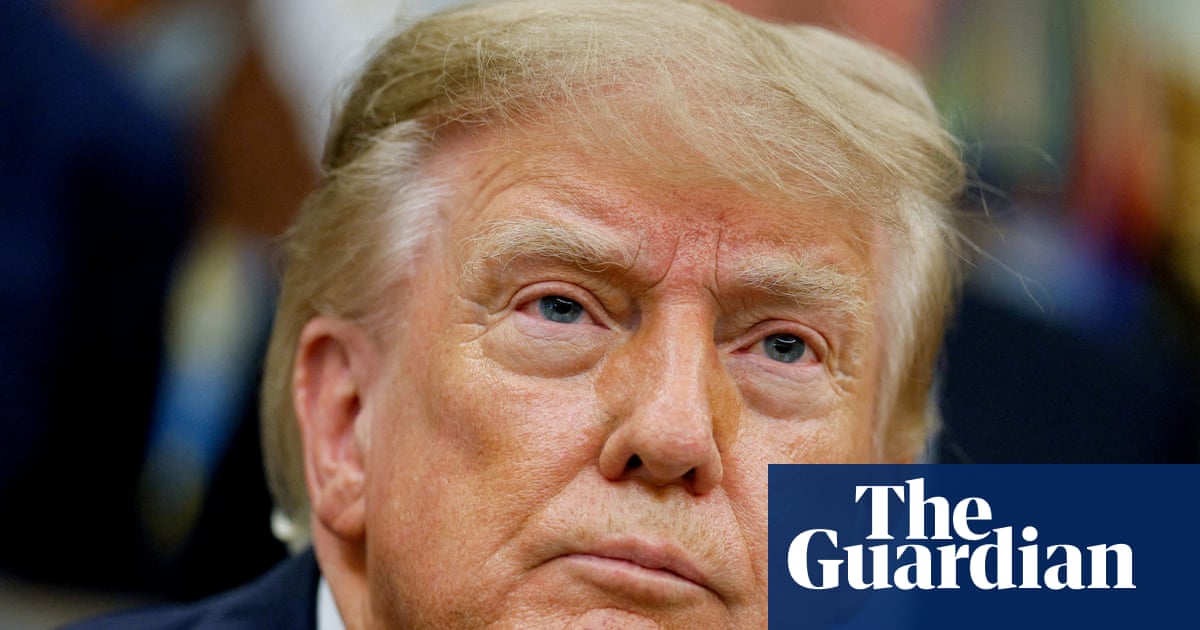
in Brussels
Europe has to take action to curb soaring oil and gas prices to prevent people from turning to populists and extremists, a senior EU official has said.
Dan Jørgensen, the European commissioner for energy and housing policy, said EU governments could choose actions to make fossil fuels cheaper as long as they were “targeted” and “temporary” so as not to derail the continent from its goal to tackle the climate crisis by drastically cutting carbon emissions.
Earlier this week European gas prices hit their highest level since the winter of 2022, when consumers faced rising prices in the wake of supply disruption following Russia’s full-scale invasion of Ukraine.
Meanwhile global oil prices have surged to $92 a barrel, an increase of $20 a barrel since March with even bigger price increases in some product markets, the International Energy Agency reported this week
Speaking to the Guardian and other European newspapers, Jørgensen said the EU was approaching a “tough” winter for citizens and business with “no signs that the situation in the Middle East is improving”.
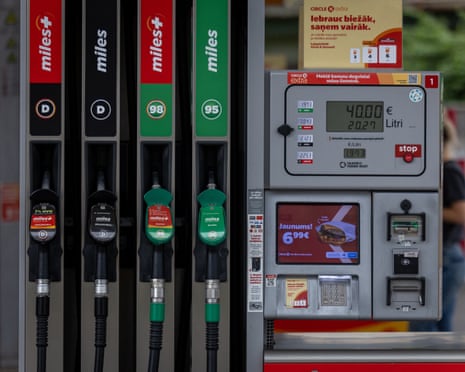
Since the US and Israel launched the war on Iran that unleashed spiralling oil and gas prices, the EU had spent an extra €110bn (£93bn) paying for energy it would not have spent if supplies had remained stable, according to EU estimates.
Faced with that situation governments and the EU had to take action to help people heat their homes and put petrol in their cars, the commissioner said, even if that meant favouring fossil fuels in the short-term.
Jørgensen, a former Danish climate and energy minister, pointed out that even in an average year nearly 50m people in Europe struggle to heat their homes.
“If we do not tackle what people see as their most fundamental problems every day… if they do not have the ability to pay their bills at the end of the month, there’s a risk that they will listen to populists and extremists.”
He said governments could subsidise fossil fuels if necessary, “but it needs to be targeted and it needs to be temporary.”
He was speaking on Wednesday when the European Commission proposed a one-year delay to the EU’s methane emissions rules for oil and gas imports under pressure from the US, but also France. The rules, due to take effect on January 1, 2027, would have required foreign oil and gas suppliers to the EU to monitor and report methane, a super-polluting greenhouse gas.
Earlier this year the European Commission proposed a major overhaul of the EU’s emissions trading system, the EU’s flagship policy to cut polluting emissions. Green groups fear the plans will weaken what they see as the EU’s most effective tool in fighting planet-heating gases.
But many member states are looking for more, including scrapping an extension of the ETS to housing and transport.
EU leaders, who discussed fuel prices on Thursday, are expected to call for the EU executive “to examine and put forward as needed further measures to address soaring energy prices in the short term” according to a draft of their summit conclusions.
And, on that note, we will be closing the blog for today.
-
Europe has to take action to curb soaring oil and gas prices to prevent people from turning to populists and extremists, a senior EU official has said (16:03).
-
If EU citizens don’t see their “fundamental problems” addressed, they may turn “to populists and extremists,” Dan Jørgensen said.
In other news,
-
EU leaders are meeting in Brussels to discuss energy prices, EU budget, Middle East, and Ukraine during a two-day summit attended by Ukraine’s Volodymyr Zelenskyy (11:16, 11:57, 13:25, 15:08).
-
The meeting comes amid heightened tensions between Ukraine and the US, with EU leaders joining Kyiv in criticising the US-Russia diesel deal (10:36) and reported Starlink disruptions (9:45, 9:49).
-
We will pick up on tonight’s developments in tomorrow morning’s blog.
-
Separately, the leaders of Romania and Bulgaria held urgent talks with Nato’s secretary general Mark Rutte over repeated drone attacks on ships off Black Sea coast (14:31, 15:26), with seven people missing after latest incidents last night (12:03, 13:01).
If you have any tips, comments or suggestions, email me at jakub.krupa@theguardian.com.
I am also on Bluesky at @jakubkrupa.bsky.social and on X at @jakubkrupa.
After meeting with Ukraine’s Volodymyr Zelenskyy, Nato’s Mark Rutte has said the pair discussed “the importance of implementing an energy ceasefire,” as well as “continuous support for Ukraine” from Nato allies.
in Belgrade
Meanwhile, Serbia’s authoritarian ruler personally intervened to advance an allegedly illegal scheme to hand over a protected site in Belgrade for a Trump tower, the Guardian can reveal.
Aleksandar Vučić summoned officials to a meeting at his presidential offices about the project, which has culminated in a landmark indictment of senior figures from his regime on charges of abuse of public office.
The criminal case is believed to be the first resulting from the Trumps’ global moneymaking campaign, described by critics as a “pay to play” arrangement where everything from sanctions relief to cutting-edge chips is available to those who enrich the first family and their associates.
The alleged scheme to override the protected status of a historic building in the Serbian capital looms over an election scheduled for 25 October, when Vučić will seek to extend his 12 years in power in the face of a mass protest movement spurred by government corruption.
A nationalist former propaganda chief under Slobodan Milošević, Vučić hosted the US president’s son Donald Trump Jr and son-in-law Jared Kushner in Belgrade as they developed plans for a $500m hotel and residential tower to add to their global property portfolios.
After the abuse of power charges were brought last December, Kushner’s company announced the project would not proceed “at this time”. Vučić threatened reprisals, calling the prosecutors “corrupt gangs” who “fabricated cases”.
“We have lost an exceptional investment,” the Serbian president said. “I will personally ensure that everyone who participated in causing this damage is held accountable.”
Vučić’s culture minister is among those charged with abuse of power. But a Guardian investigation, drawing on interviews and leaked documents, reveals that the Serbian president himself led the initial meeting where the alleged scheme was discussed. This crucial meeting is not mentioned in the indictment, raising questions about what information the prosecutors are holding back and why.
Representatives of the Trumps and Kushner said they had no part in the removal of the building’s protected status and that it would be “false” to say the Belgrade project was part of a “pay to play” scheme.
Vučić did not respond to requests for comment. His decision to call a snap election means that a hearing at which witnesses might reveal details of his involvement will not take place until after the vote.
in Brussels
Europe has to take action to curb soaring oil and gas prices to prevent people from turning to populists and extremists, a senior EU official has said.
Dan Jørgensen, the European commissioner for energy and housing policy, said EU governments could choose actions to make fossil fuels cheaper as long as they were “targeted” and “temporary” so as not to derail the continent from its goal to tackle the climate crisis by drastically cutting carbon emissions.
Earlier this week European gas prices hit their highest level since the winter of 2022, when consumers faced rising prices in the wake of supply disruption following Russia’s full-scale invasion of Ukraine.
Meanwhile global oil prices have surged to $92 a barrel, an increase of $20 a barrel since March with even bigger price increases in some product markets, the International Energy Agency reported this week
Speaking to the Guardian and other European newspapers, Jørgensen said the EU was approaching a “tough” winter for citizens and business with “no signs that the situation in the Middle East is improving”.
Since the US and Israel launched the war on Iran that unleashed spiralling oil and gas prices, the EU had spent an extra €110bn (£93bn) paying for energy it would not have spent if supplies had remained stable, according to EU estimates.
Faced with that situation governments and the EU had to take action to help people heat their homes and put petrol in their cars, the commissioner said, even if that meant favouring fossil fuels in the short-term.
Jørgensen, a former Danish climate and energy minister, pointed out that even in an average year nearly 50m people in Europe struggle to heat their homes.
“If we do not tackle what people see as their most fundamental problems every day… if they do not have the ability to pay their bills at the end of the month, there’s a risk that they will listen to populists and extremists.”
He said governments could subsidise fossil fuels if necessary, “but it needs to be targeted and it needs to be temporary.”
He was speaking on Wednesday when the European Commission proposed a one-year delay to the EU’s methane emissions rules for oil and gas imports under pressure from the US, but also France. The rules, due to take effect on January 1, 2027, would have required foreign oil and gas suppliers to the EU to monitor and report methane, a super-polluting greenhouse gas.
Earlier this year the European Commission proposed a major overhaul of the EU’s emissions trading system, the EU’s flagship policy to cut polluting emissions. Green groups fear the plans will weaken what they see as the EU’s most effective tool in fighting planet-heating gases.
But many member states are looking for more, including scrapping an extension of the ETS to housing and transport.
EU leaders, who discussed fuel prices on Thursday, are expected to call for the EU executive “to examine and put forward as needed further measures to address soaring energy prices in the short term” according to a draft of their summit conclusions.
Meanwhile, Romania’s Nicușor Dan has warned that Russia seeks to “destabilise societies – not just in Romania and Bulgaria, but across European nations, particularly those on the Eastern Flank,” as he responded to overnight drone attacks on ships in Romanian territorial waters of the Black Sea (12:03).
Briefing the media in Brussels after his meeting with Nato’s Mark Rutte and Bulgaria’s Rumen Radev (13:01, 14:31), Dan said they discussed the recent incidents in Romania and Bulgaria, and that he believed there was “a need for equipment suited to this new type of challenge.”
He said that’s what happened when Romania was affected by stray drones coming into its territory. “You will recall that … we turned to the allies, some military equipment arrived and the situation stabilised.”
He continued:
“Clearly, Russia is attempting to destabilise societies – not just in Romania and Bulgaria, but across European nations, particularly those on the Eastern Flank – and to erode support for Ukraine.
Our response is to continue supporting Ukraine, as this is a matter of international law and a matter concerning Romania’s own security.”
However, he did not offer more details about the incidents, saying the investigation was ongoing.
The Ukrainian president also confirmed he’s now in Brussels, where he is expected to meet with Nato’s Mark Rutte later today, and join the European Council tomorrow.
He will also hold bilateral talks with Belgium’s de Wever (no doubt on frozen assets), Denmark’s Frederiksen, France’s Macron and Poland’s Tusk.
“Tomorrow, meetings are planned with the presidents of the European Council and the European Commission, as well as the prime ministers of Hungary, Finland, and Sweden.
All of us in Europe want this war to end. And for that to happen, strong signals are needed – more real pressure on Russia and more defence support for Ukraine. It is especially important now to act together to protect lives.”
A Ukrainian missile strike destroyed four fighter jets at an airfield in western Russia overnight, Volodymyr Zelenskyy has said in a social media post.
The Ukraine president said:
Last night, Ukraine’s Defense Forces struck an airfield in the Voronezh region. Four Su-34 aircraft were destroyed and two more Su-34s were hit. Our Long Neptune missile was used to strike the target.
The claim has not been independently verified, and there has been no immediate comment from Russia’s defence ministry. The Voronezh region borders Ukraine.
Posting to social media, Nato’s secretary general Mark Rutte confirmed he met earlier with Bulgarian prime minister Rumen Radev and Romanian president Nicușor Dan to discuss security in the Black Sea and the latest attacks on commercial shipping (13:01).
The alliance leader said:
Nato will continue to work closely with our allies in the Black Sea, adjusting our deterrence and defence posture as needed.
Violent clashes have been taking place in Albania, where prime minister Edi Rama has today rejected calls to resign.
Protesters have voiced anger about perceived corruption, the cost and quality of education and a deal to sell off parts of its southern coastline to a luxury resort development backed by US President Donald Trump’s son-in-law Jared Kushner.
In a written statement to Reuters, Rama rejected calls to quit, saying:
My responsibility is to listen, address legitimate concerns and keep Albania moving forward. The alternative would be a betrayal of the Albanians who gave me a strong mandate to complete negotiations on EU membership.
in Brussels
One other thing that is clear from this morning’s doorstep statements: leaders are heading for a mighty clash over the EU’s next long-term budget.
Agreeing the EU seven-year budget is always a fraught negotiating exercise, which pits a group of “frugals”, such as Germany, Sweden, the Netherlands, who oppose a bigger budget, against a larger group in southern and eastern Europe, who want to maintain the EU’s traditional spending on agriculture and regional funding.
European Council president António Costa wanted a deal by the end of the year to ensure that the next long-term budget (2028-35) would be ready on time – and avoid getting caught in the crossfire of major elections next year in France, Poland and Italy.
That timing is in doubt, as the EU’s frugals (who prefer to be called “modernisers”) reiterated this morning they are in no hurry.
Sweden’s prime minister Ulf Kristersson said he expected tense talks today.
“We are not reaching agreement this month, not next month. I don’t know even if it’s possible to reach an agreement before the end of the year. I think we are not in a hurry, honestly. We need to have a budget that could combine the modernisation, the resources for Ukraine and of course the traditional things as well. But all the titles [areas of spending] need to be decreased to be able to reach an agreement.”
Friedrich Merz said he expected the “very, very difficult” talks to run into December (11:05) but privately Germany has made it clear it is ready to see the talks go into next year unless there are massive cuts to the current proposal.
In the other camp is Spain’s Pedro Sánchez, who described the current proposal as “insufficient” to face the bloc’s challenges, adding that his government would fight to expand it. But with Spain due to hold elections in November, the Socialist leader may not be around to make that argument.
The latest draft summit conclusions call for only a “timely agreement” rather than setting a deadline “by the end of the year”, as in an earlier version.
The European Commission’s €2tn (£1.7tn) budget proposal, which aims to increase spending on defence, border security and research, has already been trimmed by €140bn by Ireland, who as holders of the rotating presidency were tasked with finding a common ground by October.
But almost nobody is happy.
The frugal camp thinks the cuts, which target defence and research, are in the wrong places, while the self-styled “friends of cohesion” think there is too much scrimping on the EU’s traditional priorities, such as regional development funds.
France, which does not belong in either camp, but faces acute budget pressures, wants to see the EU agree to new common taxes in order to fund a budget that allows increased spending on new priorities such as defence and maintain the traditional ones, such as farm subsidies.
While the Commission has floated EU taxes on big companies, tobacco and e-waste, member states cannot agree on any of the options.
And the whole budget has to be agreed … by unanimity.
Back to Romania, the country’s president Nicușor Dan confirmed that two aerial drone hit ships which caught fire in Romanian territorial waters overnight (12:03).
Dan also said the Romanian state will offer “a reaction” to the incident, without speculating on what it could be. He also suggested that the issue should be added to tomorrow’s agenda on Ukraine-related issues.
Later today, Dan and Bulgaria’s PM Rumen Radev will meet with Nato’s secretary general Mark Rutte to discuss the recent incidents in their respective territorial waters.
A quick update from Sweden, where the country’s parliament rejected Social Democrats leader Magdalena Andersson’s candidacy to form a single-party minority government.
Only 99 lawmakers voted in favour, with 248 against. Two people were absent.
The vote, forced by the parliament’s speaker Andreas Norlén, was widely expected to fail, but is intended to put more pressure on parties as they continue discussions on who could form the next government.
Four centre-left opposition parties, which have all said they favour Andersson as prime minister, won last month a majority of seats in Sweden’s parliament, the Riksdag, but do not agree on who should be part of a new government.
Norlén will now have to appoint a new candidate to hold further exploratory talks on the new government.
Oh, and we have just heard from Zelenskyy again, doubling down on his criticism of Russia and attributing its latest attacks to “signals from the US.”
Responding to a “horrific” drone attack on a supermarket in Odesa, he said:
“Russia continues its bloody terror. The store was partially destroyed, and cars were damaged. Three people were injured. All necessary emergency services are working at the scene and providing assistance to those affected. It is important that our partners help us defend against this. Residential buildings, stores, energy and other critical infrastructure are under attack virtually nonstop. Not a single hour of peace.”
Crucially, he continued:
“What is happening is Russia’s pointed response to the signals it is receiving from America. Unfortunately, there are dangerous signals about the possibility of further sanctions relief. These sanctions were imposed by the world, by America, Europe, and our partners in response to Russia’s aggression against Ukraine and its war against us. Nothing has changed. The war has not stopped. The sanctions must not be lifted. Russia must end the slaughter it itself started and has continued for 1,695 days now. More money to fund the killing will not help bring this about. Strength is what is needed, and America is stronger than Russian terror.”
in Kyiv
The White House’s unilateral effort to negotiate an energy ceasefire between Russia and Ukraine has collapsed as Moscow sent a record swarm of drones overnight to attack infrastructure in central Ukraine and Kyiv appeared to resume strikes on Russian oil refineries – despite warnings from Donald Trump.
Moscow accused Ukraine of launching its first strike against a Russian oil refinery in the Ryazan region since Trump abruptly declared an “energy ceasefire” that neither Russia nor Ukraine said they had agreed to. Trump has demanded that Volodymyr Zelenskyy stop attacking Russian oil refineries, claiming that it was the cause of a global rise in the price of diesel fuel.
Zelenskyy said on Wednesday that he would resume strikes on Russian oil refineries after halting those attacks to show that Ukraine was ready for peace talks. “The block [on attacking refineries] is out. We’re done,” he told the Financial Times. He also attacked the gap in US intelligence sharing as “dangerous”.
Images from Ryazan showed flames at the refinery, which regional officials said had been targeted by 69 drones and four Flamingo cruise missiles. Debris from a drone struck by anti-aircraft fire had hit the refinery and sparked the fire, the ministry claimed.
In Ukraine, more than 360 Russian drones targeted Kirovohrad, a central region that has been hit less hard than others closer to Russia, in attacks that killed three and injured six.
“The enemy deliberately hit critical infrastructure, transport enterprises, logistics facilities and residential homes,” the regional governor, Andriy Raikovych, said in a statement.
Zelenskyy said Russia had attacked Ukraine with more than 850 Shahed drones at a time when the speed of Ukraine’s defensive capabilities was being “artificially restricted”, a reference to the sudden limitations on Ukraine’s use of the Starlink and Starshield mobile internet terminals.
Meanwhile, Ukraine’s Volodymyr Zelenskyy offered an update on last night’s Russian attacks on Ukraine.
“Emergency services are still providing assistance in dozens of our cities and communities. Repair crews and rescuers are working to deal with the aftermath of Russian attacks. For practically all of yesterday and throughout last night, a massive shahed attack was under way. The drones kept coming in waves, and there was not a single hour when our skies were clear of them.”
He said “more than 850” drones were sent against Ukraine, “at a time when the speed of our defence capabilities is being artificially restricted.”
He added:
“It is obvious that Russia deliberately chose to escalate its attacks after receiving sanctions relief and seeing attempts to pressure Ukraine. Russia exploits every such opportunity and must be held accountable for what it does. Strong decisions are needed to end this war. Ukraine needs steady support, above all in defending our skies.
We need HONESTY from our partners about this war: It is important that everyone in America stand not with the aggressor, but with our efforts to protect lives, end this war, and guarantee security.”
Disclaimer : This story is auto aggregated by a computer programme and has not been created or edited by DOWNTHENEWS. Publisher: theguardian.com




