
Tom Rhys Harries plays the morally ambiguous Clayface in an ambitious twist on the classic superhero.
As filmmakers build new universes out of iconic comic book stories, an inevitable crossroads is reached: to continue to mine what you know, such as Batman, Aquaman and Wonder Woman, or to step into something wholly new.
The latter choice is risky. It paid off for Marvel Studios, which turned Guardians of the Galaxy from a second-tier comic book line into a blue-chip movie asset. DC Studios is making a similarly bold choice in following up its iconic Superman reboot with a story from the dark depths of canon: Clayface.
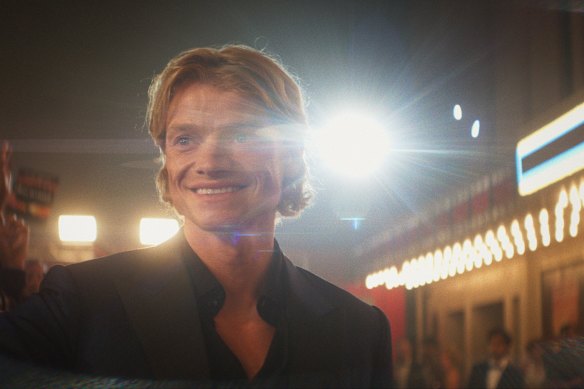
The title given to this opening chapter of DC comic-to-movie stories is “Gods and Monsters”, a sign that the franchise’s creative lead, writer/director James Gunn, intends to put a very specific spin on the screen: after Superman, in many interpretable ways as a god, we meet Clayface, at first flush, almost certainly a monster.
“What James Gunn and Peter Safran are building at DC is really exciting,” says 36-year-old Welsh actor Tom Rhys Harries, who is playing the dual roles of Clayface and his alter-ego, actor Matt Hagen, in director James Watkins’ adaptation of the story.
“The notion of being able to have different worlds that have their own identity and their own place, on merit of storytelling purely, is admirable, and I have great hope for that to continue. How it all ties together is for greater minds than mine to answer.”
Clayface – whose original name was Basil Karlo – was created by Bob Kane and Bill Finger for Detective Comics #40, published in 1940, and his creative DNA came largely from the early silent film era, and the canon of early movie monsters, such as Lon Chaney’s Phantom of the Opera, and Frankenstein, played by Boris Karloff. (Basil Karlo? The homage was hidden in plain sight.)
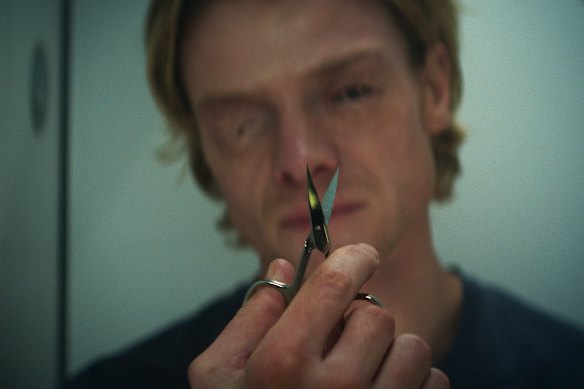
Kane, of course, had created Batman, and was the author of some of DC Comics’ darkest canon. True to form, the original “golden age” Clayface was a failed actor driven mad when he discovered his magnum opus, a horror film titled Dread Castle, was being remade without him.
“Whilst you have an awareness, as I do, of the long history of this character and the sense of responsibility and privilege to be able to bring that into live action for the first time, at a certain point, you have to take ownership over it and tell the story that you are telling,” Harries says.
“So, [screenwriter] Mike Flanagan wrote a keystone blueprint that is the story that we’re telling,” he adds. “I would grapple with that to the point where I felt like I had enough of a hold of it that then I would be able to branch off and go back and look for inspiration or anything that might inform and aid the script that Mike had written.
“That might take form and shape and many different guises, and it wouldn’t necessarily have to be the comic books, but it’s something that I was aware of. I continue to feel a real sense of privilege to be part of that lineage and to be able to bring that into live action for the first time … you are having a conversation in some way, shape or form with 80 years ago.”
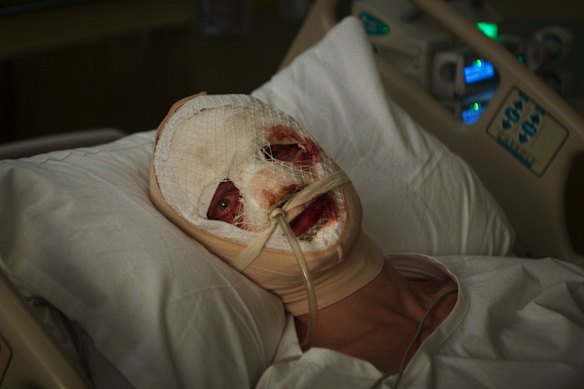
At the heart of the story is Clayface’s face. Which is, at least at the beginning of the story, also Harries’ face. Until it is not. And at that point, Harries sits in a curious artistic juxtaposition: an actor, whose career is built, in many respects, off his face, playing an actor, whose face is disfigured, essentially destroying the man in the mirror.
“Something that felt really palpable to me on the first read of this feature was that Matt’s face is circumstantially important for what he has chosen as a profession, and the vanity of it doesn’t interest me at all,” Harries says. “It’s [more] like if a violinist lost his ability to use his hands. Or a film reviewer not [be] able to watch a film for whatever reason.
“Separate to that, there’s an interesting by-product of being an actor potentially; that you then are commodified. And I don’t think it’s something that many actors that I know have a really complicated relationship with. Because it is just that. It’s a by-product of doing what my job is.
“I don’t really know how I feel about it, to be completely honest,” adds Harries. “I have this sort of detachment to it. But I know that I love being able to collaboratively tell stories with people that I really believe in.”
In terms of building an origin story, Flanagan drew his inspiration from a two-part story from Batman: The Animated Series, titled Feat of Clay. The double episode introduced Matt Hagen’s Clayface, on television voiced by actor Ron Perlman, recasting him (slightly) as a washed-up actor dependent on a dangerous chemical to keep his face working.
And notably, that television story opens with the image of the iconic masks of theatre that represent comedy and tragedy: Thalia, the Greek muse of comedy and pastoral poetry, represented by the laughing mask, and Melpomene, the muse of tragedy, represented by the weeping mask.
The result is a curious contradiction: a character sprung from the superhero canon, with the footnote that he is, in essence, a super villain. But here, he has been reshaped by Flanagan, an accomplished director of horror television and cinema. Which leaves all of it in an uncertain and compelling space.
“You’d be hard-pressed to find an individual who would be a self-proclaimed villain,” Harries says. “And I think it’s remarkable what human beings can do, and justify to themselves as actions. History is testament to that, as [are] certain things that happen in [the] present day.
“To the point about the tragedy and comedy of everything, I’m constantly surprised by where humour comes from and how all of us are capable of finding the most inappropriate things or objectively wrong moments for laughter to come out of. I find that endlessly fascinating.
“Part of the thing I love about him is his persistence and tenacity and strength of character that has existed way before we meet him at the beginning of this film,” Harries adds. “It’s also the thing that helps carry him over the course of the film. Whether that is expressed in the most ethical moral terms is not for me to say.”
But what is left is a broken shadow of a man, whose heartbreak and rage allow him to be perhaps one of the most complex comic book characters ever written, either for the original comic book or as a cinematic adaptation. His humanity, however elusive, prevents us from wholly losing a link to him, and the possibility of a way back.
“Real horror exists very close to the bone and something that is potentially deeply unsettling is when these fantastical worlds reflect real human characteristics and traits,” Harries says. “But also if you’ve had a great injustice done to you, then the response to that injustice is equal, and then the audience is judge and jury.
“I know what happens, and I have a lot of affection for Matt and his continued predicaments, [but] there’s a moment where the film is handed over to an audience and the audience takes ownership over it, and I’m intrigued to see what people think and what judgment call they make on certain ethical and moral boundaries that may be crossed.”
Clayface is released on October 22.
More from the movies
Disclaimer : This story is auto aggregated by a computer programme and has not been created or edited by DOWNTHENEWS. Publisher: www.smh.com.au