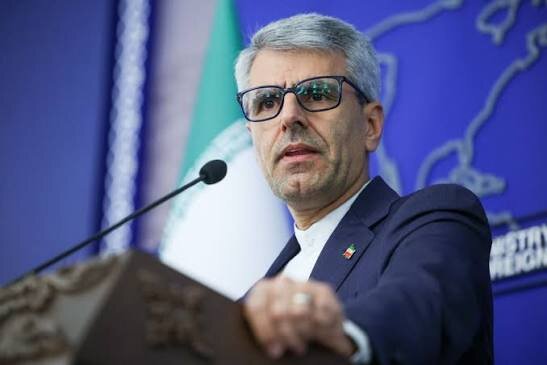
TEHRAN— Iranian Foreign Ministry spokesman Esmaeil Baqaei has condemned Britain’s accusations against Iran, accusing London of reversing the roles of aggressor and victim despite two rounds of unlawful aggression against the Islamic Republic in just nine months, including while Tehran was pursuing negotiations.
In a message posted on his X account on Thursday, Baqaei attributed the turmoil engulfing the region to unlawful interventions, including those supported or facilitated by Britain.
“The chaos engulfing our region is the consequence of unlawful interventions, including those backed or contributed to by the UK,” he wrote.
Baqaei criticized British Foreign Secretary Ed Miliband for portraying Iran as the aggressor after two rounds of unlawful attacks against the country within nine months, even as Iran was engaged in diplomatic efforts to resolve disputes.
“For the UK Foreign Secretary Ed Miliband to portray Iran as the ‘aggressor’ after two rounds of unlawful aggression against it in just nine months, even as it pursued negotiations, is a grotesque reversal of victim and aggressor,” Baqaei wrote, describing the remarks as another low point in Britain’s long record of hostile campaigns against Iran.
Drawing a historical parallel, the spokesman said the British position was as absurd as depicting Nazi Germany as a defender of peace while portraying Britain and its allies in World War II as the aggressors.
Baqaei’s remarks came after UK Foreign Secretary Ed Miliband said on October 13 that he had spoken with US Secretary of State Marco Rubio, offered condolences over the death of a US citizen in an attack on King Khalid International Airport in Saudi Arabia, and discussed what he described as ending Iran’s aggression, including in the Strait of Hormuz.
Iran maintains that such accusations disregard the circumstances surrounding the US-Israeli war of aggression against the country and overlook the wider consequences of foreign military intervention in West Asia.
Tehran has repeatedly emphasized that diplomacy must be pursued based on respect for national sovereignty and international law, arguing that efforts to assign responsibility for regional instability must take account of the actions that have fueled the conflict rather than isolate Iran’s response from the events that preceded it.
Disclaimer : This story is auto aggregated by a computer programme and has not been created or edited by DOWNTHENEWS. Publisher: tehrantimes.com