In 2012, Wallabies legend Mark Ella made a “stunning” prediction in the pages of The Sydney Morning Herald.
“We haven’t won the Bledisloe Cup for 10 years – and I think it’s going to be another 10 years before we get there,” Ella said.
“It’s almost like the depression … we need to get out of it.”
It turns out the genius in a gold No.10 jersey was having his Nostradamus moment – and an optimistic one at that.
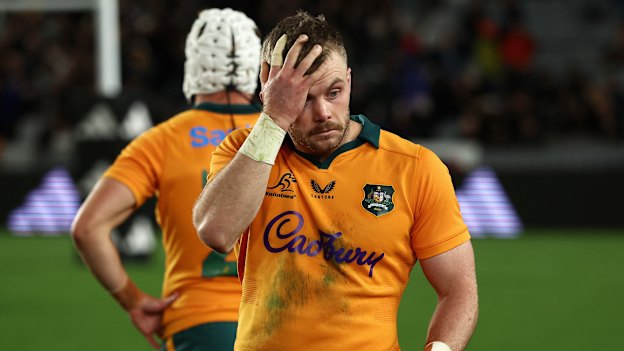
Not only did another decade pass without Australian players getting their hands on the Bledisloe Cup, the drought has now stretched into a 24th year after last Saturday’s 50-19 thumping by the All Blacks at Eden Park.
With the trophy contested over two matches this year, Australia cannot reclaim it, reducing Saturday’s return clash at Accor Stadium in Sydney to little more than a dress rehearsal for the sides’ World Cup pool clash at the same venue on October 9 next year.
Contacted this week about his prediction 14 years ago, Ella admitted he rarely watches rugby these days and doubted he could offer much insight.
He also skipped last week’s reunion in Sydney for Wallabies who were part of the 1984 grand slam tour of the UK and Ireland or Australia’s 1986 series triumph in New Zealand.
“The Bledisloe Cup was hard to win, whether it was in my day or the current era,” Ella says. “We’re still struggling.”
Which raises a question that once would have seemed absurd: will the Wallabies win the Bledisloe Cup again?
Sure, it’s a provocative question. But if you believe those “experts” who reckon artificial intelligence could wipe out humanity within the next decade, the Wallabies might genuinely be running out of time.
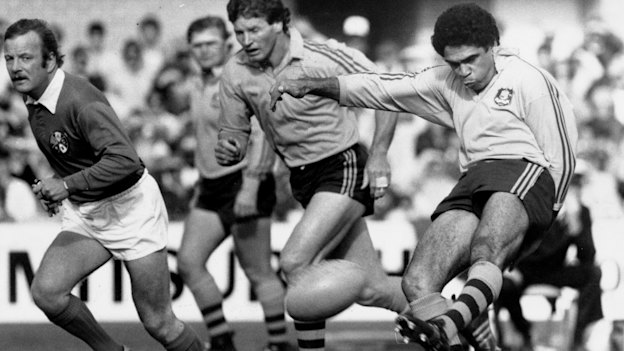
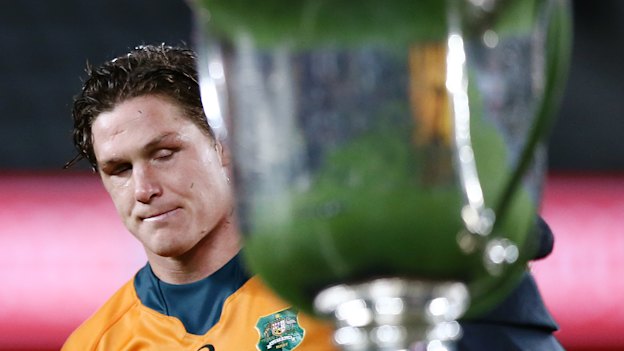
George Gregan was the last Australian captain to lift the trophy, in 2002. For an entire generation of supporters – anyone under about 25 – the Bledisloe Cup isn’t something Australia wins. It’s something New Zealand owns.
Once a source of national pride and enormous interest, the trophy has become a symbol of Australian rugby’s decline, an annual reminder of the glory days at the turn of the century.
The numbers are brutal.
In 24 Bledisloe series from 2003 onwards, Australia have lost 19 and drawn five. Those five drawn series – in 2004, 2007, 2011, 2015 and 2019 – were all two-match affairs.
In individual Tests during that period, the All Blacks have recorded 51 victories to Australia’s nine, with three draws. Australia’s success rate is a miserable 14.3 per cent.
The scale of Australia’s failure can be measured in more than wins and losses.
Seven Australian prime ministers have held office during it. Seven Wallabies coaches – from Eddie Jones, twice, to Les Kiss – have tried and failed to wrestle the trophy back across the Tasman.
Matt Dunning, Wallaby No.786, was the first player to make his debut for Australia during the Bledisloe Cup drought, in October 2003. He will turn 48 before the year is out.
Massimo De Lutiis became Wallaby No.1000 in August, so more than 200 players have worn the gold jersey without experiencing a Bledisloe Cup triumph.
Stan Sport presenter Michael Atkinson recently asked Wallabies great Tim Horan on the Today show, with more than a hint of exasperation, whether Australia would ever win the Bledisloe Cup again.

Horan, now 56, said he hoped Australia could win the trophy again in his lifetime.
“You’d hope it’s going to turn within another 10 years,” Horan says in a follow-up interview.
He won’t put a date on it, but believes this Wallabies side has the talent to end the drought – provided it strikes soon. A potential exodus of players to overseas competitions after next year’s World Cup could make the task even more difficult.
“If we have our top 15 to 18 players out there without being injured, we would win two out of 10 games [against New Zealand],” Horan says. “If it’s not in the next two years, it’s going to take a while.
“We will win the Bledisloe at some stage in the next 10 years. I hope we win it two or three times. We all get so excited coming into it. The All Blacks have just been too big, too powerful and too skilful over the last 24 years.”
Last Saturday, about 15 Wallabies from the 1980s gathered for a few beers at the Royal Oak hotel in Balmain to reminisce about their glory days.
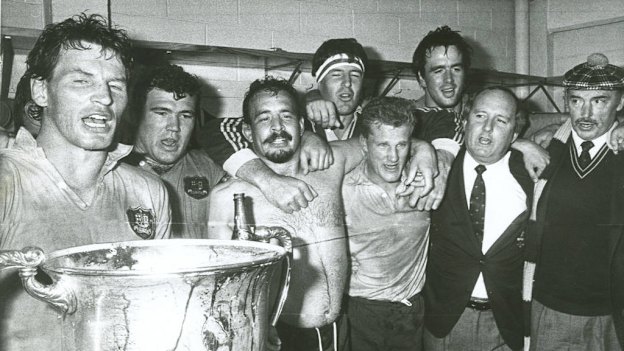
Among them was Wallabies great Simon Poidevin, who later slipped back home to Coogee to watch the match. He prefers to watch Bledisloe Tests in the privacy of his own home in case emotion gets the better of him.
It was a wise call as others stayed at the pub to watch the onslaught.
“We want that hoodoo to be broken,” Poidevin says.
“I do have faith [in future Wallabies teams] because I watched Australia’s under-18s side beat the New Zealand Barbarians and then they beat New Zealand Schools. They were tough games, but we were dominant. If we can hold that talent, we have the ability to beat them.”
Poidevin points to the long tours that forged the great Wallabies sides of the past. The 1984 European tour ran for two months and 18 matches, while on the 1986 tour of New Zealand, Australia played 14 games in 46 days.
He is adamant the All Blacks benefited from something similar in Saturday’s demolition, arriving battle-hardened from an extended tour of South Africa. Poidevin wants Rugby Australia to push for longer Wallabies tours.
“Everyone got carried away with six unbeaten Test matches [for the Wallabies],” Poidevin says. “They [the All Blacks] were battle hardened. We weren’t. That is a phenomenal advantage.
“For Australia to win the Bledisloe, they’ve got to do something different in their preparation.”
But what if Australia’s greatest obstacle isn’t physical preparation, talent or tactics?
What if, after more than two decades of disappointment, the Wallabies have developed a psychological barrier they can’t overcome against their greatest rivals?
High-performance mind coach Dave Diggle worked with the Wallabies during Michael Cheika’s tenure and again under Dave Rennie from 2020 to 2022. He has a theory.
“You just sensed the tension in the air from the top down [in Bledisloe weeks],” Diggle says. “We would start to get members of the board turning up. They didn’t turn up at normal training or other games. It just meant more.
“It was palpable. You walked into training and the tone and intensity was different.”
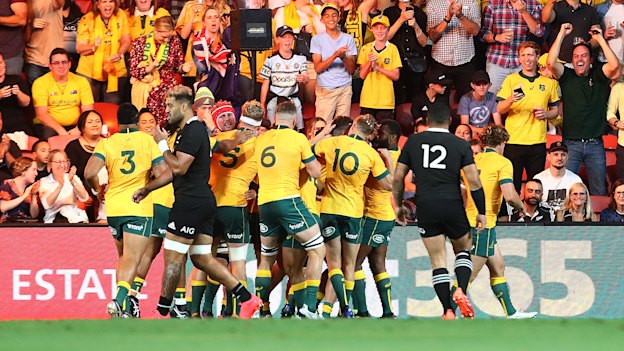
In 2020, during a COVID-affected four-match series, Australia drew the opener in Wellington before losing the next two. A 24-22 victory in Brisbane offered some consolation. It is Australia’s last win over the All Blacks.
New Zealand have since won 12 straight Tests against the Wallabies, the longest streak in history.
Diggle believes the scars are real and that the cure is something the world’s best teams have in abundance: a touch of arrogance.
“I do think the hoodoo is a potential thing,” Diggle says. “Clearly the boys are playing well, [but] the challenges come down to the players having belief they can win. The vast majority of this is psychological.
“In the early days of the Wallabies, when we were really dominant, it was because the players were really strong in identity. I think we’ve moved away from that and become a little bit more fear driven.
“I do think we can beat them. We have to change our psychology; a little bit of that arrogance has to come back into our belief system.
“An issue we’ve had in Australian rugby for quite some time is looking to minimise loss rather than maximise opportunity. I also don’t think we kept continuity in the team dynamic enough. In my time, both under Cheik and Rens, that cycling through of players didn’t allow them to form an identity and continuity.
“If you get knocked down so many times, you start to look for when you get knocked down next, rather than [work out] why you got knocked down.”
Saturday’s result has sucked some of the energy out of a Sydney Bledisloe week and Australia’s last game on home soil for the year.
Fourteen years after Ella predicted another decade of Bledisloe misery, the Wallabies are still searching for answers. His prediction was viewed as extraordinary at the time. These days, another decade without the trophy doesn’t seem quite so far-fetched.
Disclaimer : This story is auto aggregated by a computer programme and has not been created or edited by DOWNTHENEWS. Publisher: www.smh.com.au