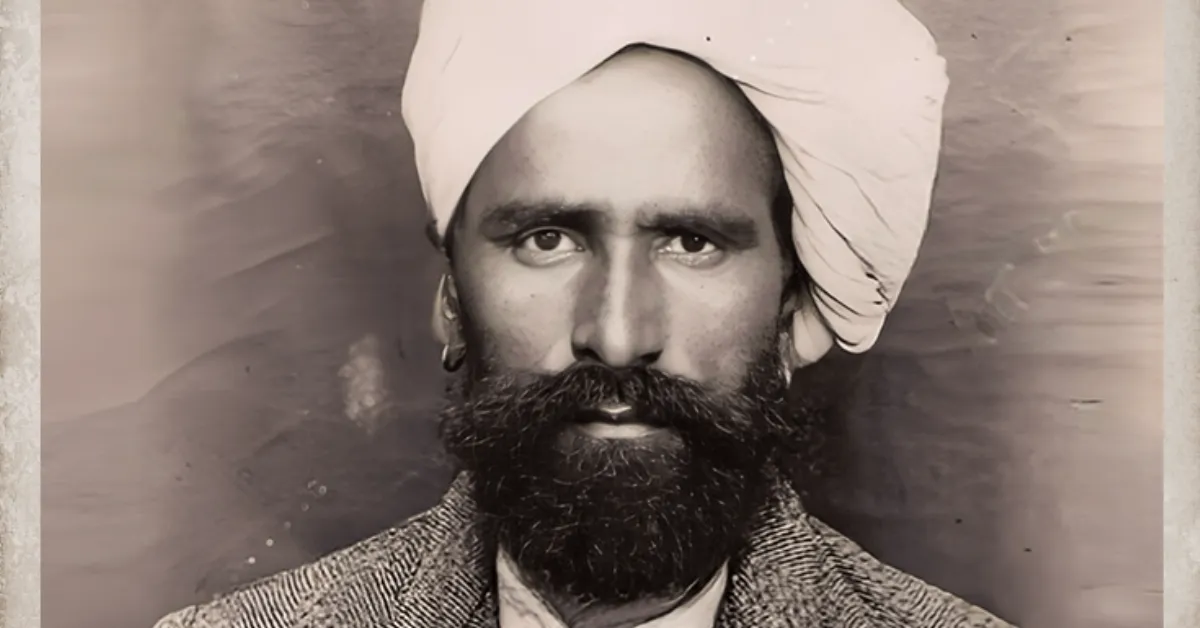
Before he could welcome people into a restaurant of his own, Gurbachan Singh Maan spent 10 years knocking on strangers’ doors.
He had arrived in Britain from Punjab in 1936, carrying a suitcase of goods to sell. Far from home, he walked London’s streets day after day, earning a living and saving whatever he could. It would take him a decade to open a small restaurant.
In 1946, he finally opened ‘Punjab India Restaurant’ on Braham Street in Aldgate.
Eight decades later, his family still runs it at 80 Neal Street in Covent Garden. Now in its fourth generation, it is recognised as the oldest North Indian Punjabi restaurant in the UK.
But keeping its doors open has brought its own struggles. From financial hardship to threats of redevelopment and a global pandemic, each generation has faced challenges in carrying forward what Gurbachan started.
From door-to-door sales to a Punjabi restaurant
Back in the 1930s, opportunities for Indian migrants in Britain were limited. Peddling was one of the few trades available to them, and the work meant long, tiring days in a city that was not always welcoming.
Yet those years also helped Gurbachan understand something about the Indian community living in London. Far from their families and the places they had grown up in, people missed the simple comfort of a familiar meal.
That was the need his modest restaurant hoped to meet: a place where Indians living in London could enjoy the Punjabi food they knew from home.
When he finally opened ‘Punjab Restaurant’ in 1946, it was a modest operation on Braham Street. But demand soon grew.
As word spread through London’s Indian community, particularly among people at the Indian High Commission and the city’s growing population of Indian students, the small restaurant on Braham Street could no longer keep up.
So, the family relocated to 80 Neal Street in Covent Garden, an address that would become closely associated with the Punjab name for decades to come.
Four generations later, Gurbachan’s own words still guide how the family talks about the business. His great-grandson Amrit Maan recalls him saying: “We rise by uplifting others.”
How a grandson carried forward the family kitchen
As Gurbachan’s family grew and more relatives arrived from Punjab, the restaurant business grew with them. His sons and grandson went on to open two more restaurants, ‘New Punjab’ and ‘Sardar’, extending what had started as one man’s gamble into a small family network of Punjabi kitchens across the city.
/filters:format(webp)/english-betterindia/media/media_files/2026/10/16/2-2026-10-16-17-47-20.png)
But 80 Neal Street remained at the centre of the family business. When Gurbachan decided to retire, he passed the restaurant to his grandson, Sital Singh Maan, who was just 15 when he arrived in London.
Sital moved into the rooms above his grandfather’s restaurant, where he went to school while also helping with the family business.
Over the years, the restaurant became a familiar part of his everyday life. So when he took over around 1970, he was taking charge of a place where he had spent much of his childhood.
By then, Punjab’s reputation was growing, and the restaurant needed more space to welcome its customers. Sital began expanding it, first sideways, then backwards, and eventually upwards.
But through these changes, the food remained central to the family business. ‘Punjab’ was, by several accounts, among the first restaurants to introduce tandoor cooking to Britain, a tradition that continues to shape its menu today.
For Sital, getting the flavours right mattered. “We blend spices such as coriander, cumin, cinnamon and turmeric,” he says.
He explains that blending the spices helps bring out their flavours. He also likes to think that the spices offer health benefits alongside the taste.
/filters:format(webp)/english-betterindia/media/media_files/2026/10/16/3-2026-10-16-17-47-20.png)
As Sital worked to grow the restaurant, another challenge was emerging. The family had spent years building its business on Neal Street, but now the future of the neighbourhood itself was under threat.
A street worth saving
By the 1970s, the restaurant Sital had spent years helping to grow faced a threat he could do little to control. Plans to redevelop large parts of Covent Garden put several streets and buildings at risk of demolition, including Neal Street, where Punjab Restaurant stood.
For Sital, this was personal. His family had spent years building their lives around the restaurant. Along with other local shopkeepers and restaurateurs, he joined the effort to protect the neighbourhood from demolition.
Walk down Neal Street today, and you’ll find cafés, bookshops and restaurants. It’s easy to assume they’ve always been there. But the street could have looked very different if people like Sital hadn’t fought to protect the buildings and businesses that had become such a familiar part of the neighbourhood.
/filters:format(webp)/english-betterindia/media/media_files/2026/10/16/4-2026-10-16-17-47-20.png)
The threat to Neal Street passed, but the family would face other difficult years. Recessions came and went. Financial crises squeezed margins across the hospitality industry.
And in 2020, the pandemic forced restaurants across the country to shut their doors, many of them for good. ‘Punjab’ responded by keeping its kitchen staff on and turning the restaurant into a community kitchen, cooking well over two lakh meals for homeless charities, food banks and frontline workers over the two and a half years that followed.
For Amrit, feeding people during the pandemic was a way of carrying forward something his family had believed in for generations: helping those around them. The same kitchen that had served customers for decades was now preparing meals for people who needed them most.
In 2022, Amrit received an OBE (Officer of the Order of the British Empire), a British honour recognising contributions to society, for his charity and community work. But when he spoke about the recognition, his thoughts went back to the family that had built the restaurant.
“Seva, or selfless service to the community, has been the ethos of our family business since it was founded,” he said at the time.
Amrit shares that the honour also belongs to the generations before him, beginning with his great-grandfather, whose decision to open a small Punjabi restaurant had brought the family this far.
A fourth generation steps in
Alongside carrying forward his family’s tradition of helping others, Amrit also had the responsibility of running the restaurant his great-grandfather had started all those years ago.
/filters:format(webp)/english-betterindia/media/media_files/2026/10/16/5-2026-10-16-17-47-20.png)
He had taken over its day-to-day operations as Managing Director in 2012, while his father, Sital, remained Chairperson. With both generations still involved, the family continued looking for ways to grow the business while holding on to its roots.
Amrit continued expanding the restaurant into neighbouring properties. In 2023, the family also acquired a second address at 190 Shaftesbury Avenue, taking the Punjab name beyond Neal Street for the first time in the restaurant’s history.
That same year, King Charles III and Queen Camilla visited the family’s stand at Covent Garden and sampled some of the restaurant’s signature dishes.
For Amrit, taking the family business into its fourth generation comes with the responsibility of keeping its traditions alive while allowing it to grow. “Preserving that legacy requires balancing tradition with progress. I try to create a balance between respecting the values the business was built on while still allowing it to change with the times.”
A family-run Punjabi restaurant, 80 years later
For all the expansion, growth and shifting addresses, Punjab Restaurant remains largely a walk-in restaurant. It seats diners on a first-come, first-served basis and only takes complete groups rather than splitting tables between separate parties.
/filters:format(webp)/english-betterindia/media/media_files/2026/10/16/6-2026-10-16-17-47-20.png)
Reservations exist, but they are the exception rather than the rule, reserved mainly for special occasions, large groups of more than 10, or diners visiting from overseas. Anyone walking in outside the 7 to 9 pm rush is likely to find a table within minutes.
That walk-in approach offers a glimpse of the restaurant’s character today. The family has expanded the business and seen it through redevelopment threats, recessions and a pandemic, while continuing to welcome diners through its doors.
Eight decades and four generations after Gurbachan opened a small restaurant on Braham Street, Punjab Restaurant continues to welcome diners in Covent Garden.
The city around it has changed, and so have the generations running the kitchen. But the family continues to do what Gurbachan set out to do all those years ago: serve familiar Punjabi food to people looking for a taste of home.
Disclaimer : This story is auto aggregated by a computer programme and has not been created or edited by DOWNTHENEWS. Publisher: thebetterindia.com