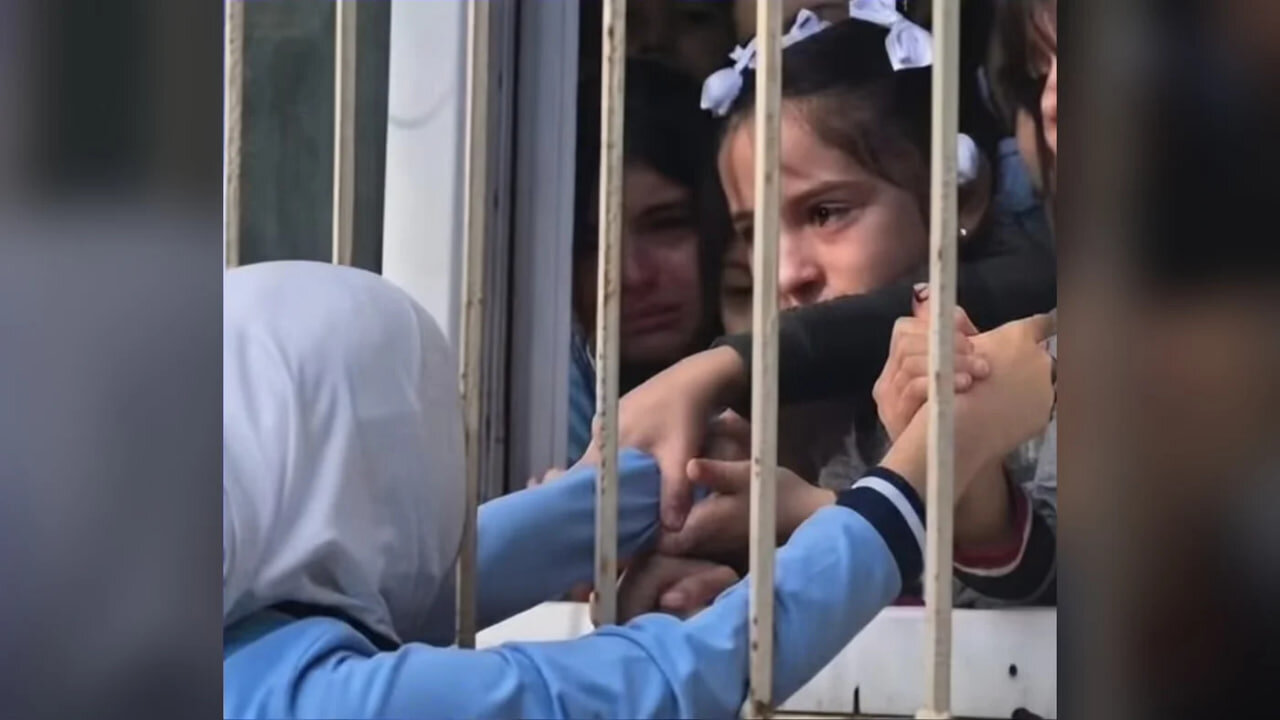
MADRID – A decision by the Azerbaijani government that effectively bans students and teachers from wearing the hijab in educational institutions has sparked a wave of protests.
The amendment, approved last month, does not directly ban the Islamic veil. Instead, it prohibits clothing that the government considers to violate the “principle of secularity.”
From a Western perspective, secularism is often used to judge the hijab in a way that excludes certain views while supporting others. The hijab is often presented as a sign that women lack freedom and control over their own decisions. Women who wear it are sometimes portrayed as lacking independence and the ability to make their own choices. However, this view does not necessarily reflect the experiences of women who choose to wear the hijab. Instead, it follows a way of thinking that gives priority to values such as visibility and individual freedom as understood within a Western framework.
By placing a barrier between the body of an Oriental woman and the Western gaze, the veil appears to put her beyond Western observation and desire. Its covering makes the woman seem mysterious and inaccessible, frustrating the desire to see and understand her. When a veiled woman refuses to be observed, the Western gaze may respond with disappointment and subject her to even greater scrutiny.
The portrayal of the Orient and its women as an “enigma” that must be uncovered turns the veil into a central part of this process. The veil becomes a symbol through which Western fantasies about discovering the secrets of the Orient and understanding the inner lives of its people are expressed. The desire to unveil the Oriental woman is not simply about removing what covers her. It also creates a power relationship in which the Western observer gains access to knowledge that was previously beyond their reach.
One might expect Azerbaijan, a country with a Shia Muslim majority, to be protected from this kind of thinking. However, the facts show the opposite.
Azerbaijan’s Shia majority has undeniable cultural importance. Yet the way the government in Baku presents Islam reduces it to what could be called “Islamization.” In this context, Islam is allowed a certain degree of visibility in cultural life, but it is not treated as a framework that can shape international relations or public policy.
Moreover, Islamization must be understood within a broader political approach to modernity. This approach treats public expressions of Islam as remnants of a tradition that must be removed or, where possible, confined to specific spaces. Outside those spaces, the hijab is portrayed as a sign of oppression and backwardness. In many European countries, support for banning the veil has been based on the belief that it is the “definitive symbol of Islam’s resistance to modernity” and a challenge to secular democracy. Similar attitudes toward visible signs of Islam can also be found in Westernized parts of Muslim-majority countries, as seen in Azerbaijan today and in Turkey several decades ago.
The distinction between modern citizens and those who publicly resist this process creates a division within the nation itself. This division can serve as a racial marker. In this view, the nation is treated as an unchanging political community with a stable past, an identity passed down through generations, a relatively fixed territory, and a shared destiny that connects the present with the future. Although nation-states emerged relatively recently and have constantly changed, they often present themselves as if they had existed forever.
This idea assumes that a particular people forms the core of the nation. That people is seen as a “natural community” with its own origins, culture, and interests, an identity that exists beyond individual differences and changing social conditions. In other words, the nation-state is assumed to be based on what is commonly called “ethnic unity.”
However, no nation-state truly has a fully formed ethnic identity that existed before the state itself. As a result, nationalism must constantly create and reproduce what is known as fictive ethnicity. This process gives the nation what appears to be a natural origin and creates the myth that its population has always been culturally and ethnically homogeneous.
This imagined homogeneity creates racial divisions within the nation. It becomes a means of excluding people who do not fit the dominant idea of modernity. The official discourse presents some citizens as representatives of progress while treating others as obstacles to the nation’s unity and transformation. Those who do not fit the preferred national identity are therefore viewed with suspicion. They become reminders of a past that the nation claims to have left behind, as well as a threat that could bring that past back.
The situation in Azerbaijan, where protests against the hijab ban have brought students and teachers into the streets, reflects an attempt to use secularism as a means of social control. In this case, secularism becomes a political tool that recognizes some beliefs and ways of life as legitimate while portraying others as threats. Rather than simply separating religion from the state, this approach can be used to regulate public life, restrict individual choices, and determine which forms of identity are accepted within the nation.
Disclaimer : This story is auto aggregated by a computer programme and has not been created or edited by DOWNTHENEWS. Publisher: tehrantimes.com