Partial curfews have been issued for a number of French cities, including parts of Paris, after the government admitted police had “lost control” during violent weekend protests around the country.
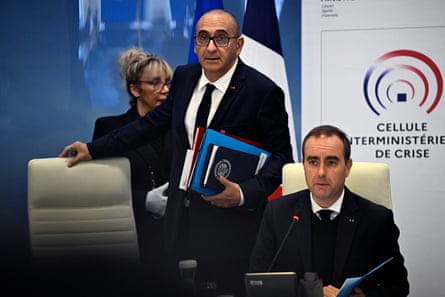
Sébastien Lecornu, the French prime minister, said after an emergency cabinet meeting on Monday he was “fully resolved to restore public order” and had called for “local and partial” curfews if needed. There was “no question” of imposing a full curfew on entire cities, he said.
His office later announced partial curfews from 8pm to 6am on Monday and Tuesday nights in four northern cities, including Lille.
Police also imposed a curfew from 11pm Monday until 6am on Tuesday on two locations in Paris: Place de la République, where rioting took place on Saturday; and the shopping neighbourhood of Les Halles, which has been subject to looting.
A statement from police said the orders banned gatherings and demonstrations and prohibited anyone from entering or remaining in the two designated areas.
France’s second city, Marseille, earlier announced independently that it had banned all gatherings and demonstrations on Monday. French unions, meanwhile, called for a new round of strikes and rallies on 5 November.
Lecornu told reporters that if declaring a state of emergency was deemed necessary “we could do so”, but added that at this stage partial curfews seemed “more appropriate”.
Lecornu’s comments came after France’s interior minister conceded that police had “lost control” in some cities during Saturday’s protests and the president, Emmanuel Macron, demanded a full security review and “new operational methods” to end the rioting.
Laurent Nuñez said on Monday there had been a “lack of anticipation” in preparations for the protests and acknowledged that police numbers had sometimes been inadequate to deal with rioters and looters on the fringes of the demonstrations.
Nuñez said intelligence had suggested there would be 200,000 demonstrators around the country. In the event, there were more than 500,000 and peaceful protests were hijacked, morphing into one of France’s most violent days of unrest in recent years.
He said he had tendered his resignation to Macron because he felt “responsible for everything that happened”. Macron refused it, demanding instead that Nuñez “take all necessary steps to ensure transparency over planning and intelligence failures”.
The protests follow weeks of demonstrations by high school students that have been marred by sometimes violent clashes with police, rocking the country six months before a crunch presidential election and amid mounting economic pressures.
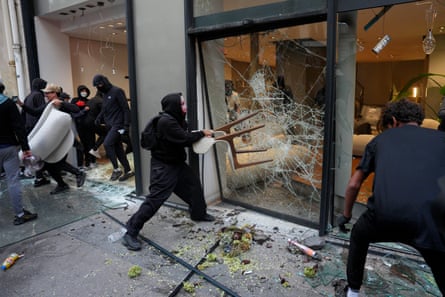
Public buildings including a town hall were attacked and set ablaze and an estimated 2,000 shops were ransacked and looted, authorities have said. Nearly 2,400 people – 70% of them adults – were arrested and almost 1,000 police and gendarmes injured.
France’s digital minister, Anne Le Henanff, urged online resale platforms to remove listings for “stolen items” and summoned representatives of companies including Vinted and eBay. According to the commerce ministry, representatives of Amazon, Leboncoin, Meta and TikTok were also invited.
Nuñez said 60,000 police and other security forces had been deployed around the country, but acknowledged it had not been enough to control determined, organised groups of violent rioters in major cities including Paris, Marseille and Lyon.
“You couldn’t look shopkeepers in the eye after hundreds of shops had been looted and say we hadn’t lost control,” the minister told French radio, but added that the responsibility of “rioters, looters and ultra-left militants” should not be glossed over.
The justice minister, Gérald Darmanin, also said intelligence failings had left the state vulnerable. “There’s no good policing without good intelligence,” he said, adding that many of those arrested had police records and “about 80%” were being prosecuted.
Macron’s office said in a statement on Monday that besides reviewing the security shortcomings, Nuñez had been tasked with “promptly implementing new operational methods for security forces to use on the ground in combating rioters”.
Rioting and looting continued on Sunday. The mayor of Paris, Emmanuel Grégoire, said on Monday that about 30 shops had been targeted in the capital the previous day, with a further 350 people arrested overnight.
“Maintaining public order is the responsibility of the state. It is the state that was at fault this weekend,” Grégoire said. “We have a social movement that is spreading, and no political prospect for a constructive way out. So the protests will continue.”
Marseille’s mayor, Benoît Payan, said not just democracy but “the very foundations of the Republic” had been undermined. Describing the situation as “almost insurrectional”, he said the government’s stance amounted to “petty political manoeuvring”.
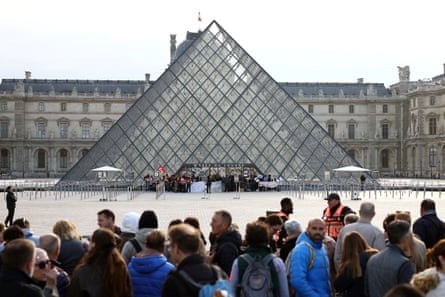
On Monday, protesters blocked entrances to the Louvre Museum in support of the nationwide high school student protest movement and to denounce “police repression”. The museum could not open as scheduled because of the protest.
A leaflet displayed outside the museum read: “We are proud to announce that we are blocking the world’s largest museum.”
In a televised address on Sunday, Macron criticised the “unbridled” violence and said local authorities would be able to ban some demonstrations in the coming days, but stopped short of drastic measures such as declaring a state of emergency or curfew.
Saturday’s protests, by students, teachers, parents, unions and workers, focused on the high cost of living, an issue that also prompted demonstrations in several other European countries including Italy, Belgium and Albania over the weekend.
Disclaimer : This story is auto aggregated by a computer programme and has not been created or edited by DOWNTHENEWS. Publisher: theguardian.com