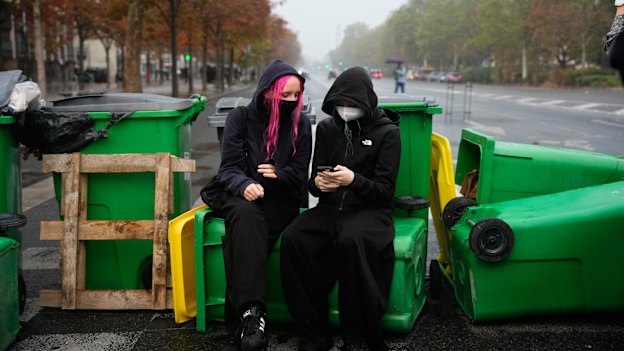
The French protests can easily look like one vast throng. In fact, there are possibly three movements at work at the same time.
Paris: Student protesters have opened a new front in their demands of the French government, just when the country is in uproar over rallies that turned into riots.
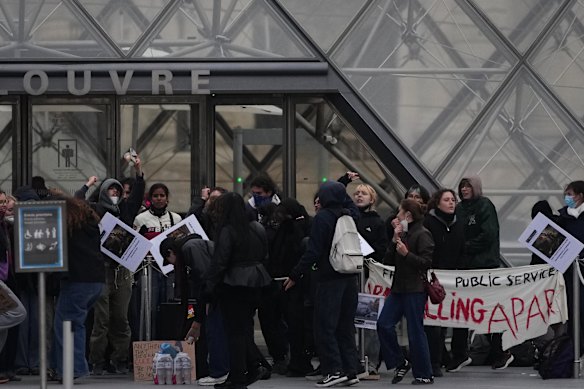
Hundreds of students blocked access to the Louvre on Monday in a bid to force the government to spend more on cultural institutions.
Tourists and other visitors paid the price, forced to shelve plans to see the Mona Lisa and other exhibits.
The protest deliberately contrasted with the violence of the past few days: the students were positive and pleasant, and they took time to talk to visitors and explain why they wanted the Louvre closed for the day. (Answer: to make a point about its need for funding). Some even danced to pop music in front of the famous pyramid at the world’s most-visited museum.
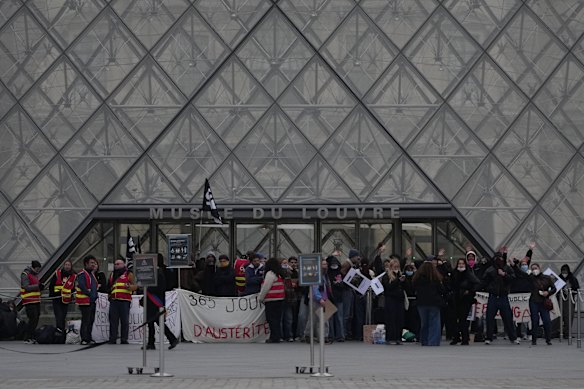
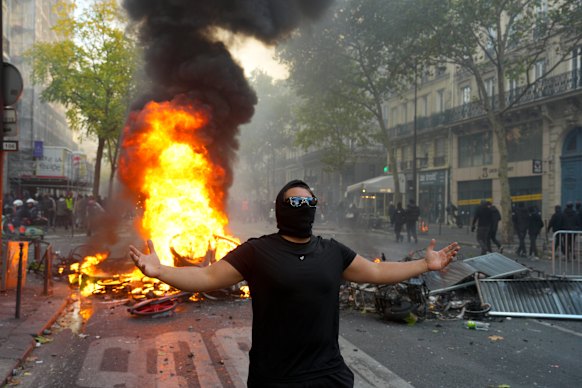
Even so, the tactic highlighted the challenge for the protest movement in breaking any association with the masked rioters who set fires on streets across France on Saturday night.
The French protests can easily look like one vast throng – a student uprising that has turned violent, drawing parallels with the movement for social change in 1968.
In fact, there are at least two and possibly three movements at work at the same time.
First are the students who want more teachers and better school facilities, starting with working toilets.
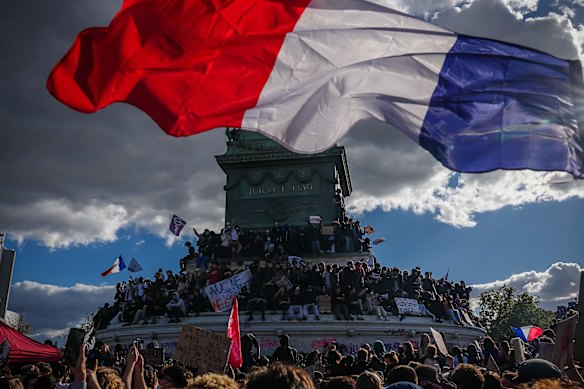
Second are the angry young rioters who want to confront the police and are propelled by issues like Gaza and a better deal for the poor, leading some of them to smash property and set fire to historic town halls.
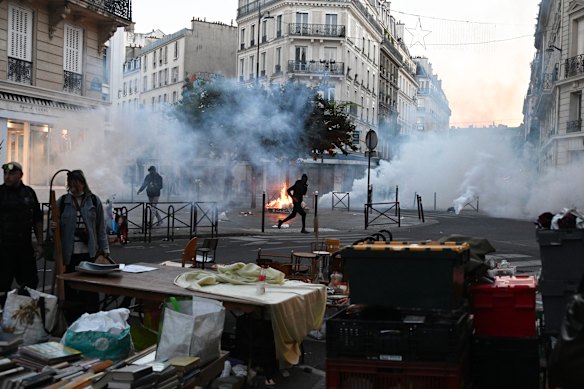
Third are the looters who ransacked stores. While some of this group could overlap with the activists, it is now obvious that criminals took advantage of the mayhem on Saturday. Some store owners, for instance, say the thieves knew exactly what they wanted. They were organised and wanted to steal products they could sell quickly.
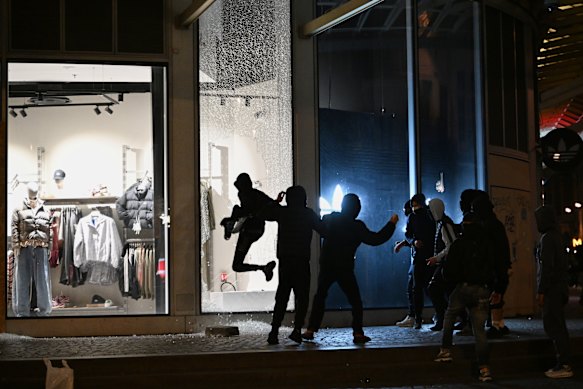
This means the students at the Louvre, worried as they are about cultural funding, come from a very different Paris to the rioters who smashed windows to steal flashy clothes.
The riots and looting have deepened a public debate about the demonstrations and whether students should keep holding rallies when they are, in effect, a useful backdrop for those intent on violence or theft.
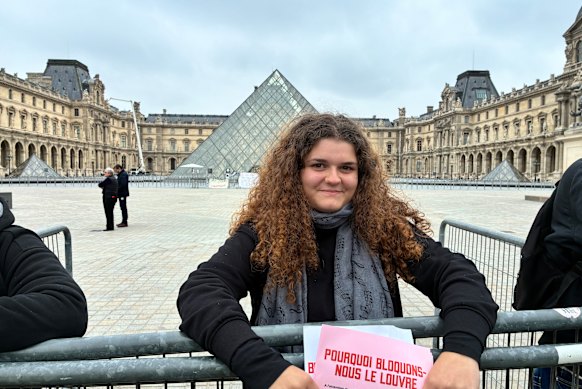
One student at the Louvre barricade, Inaya Plieu, said the “breakers” who destroyed buildings had nothing to do with the students who wanted to improve education.
“The media is showing only the violence, only the breakers, only the bad things,” she told this masthead.
“But on Saturday there was a lot of really peaceful people. The problem is that our government right now is not allowing us to open a dialogue.
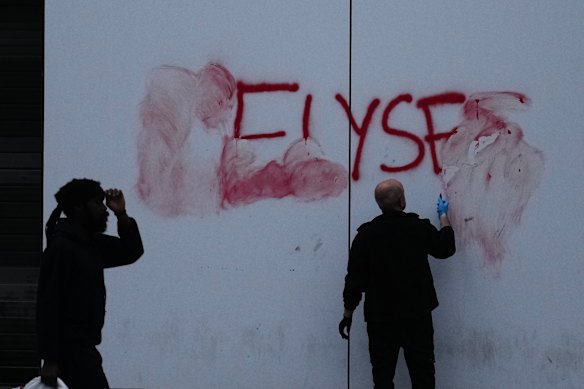
“We don’t support the breakers. We don’t support the destroying of buildings, of anything.”
Plieu, 18, is studying art history and wants to work in a museum or gallery. (Her favourite painter: Chaïm Soutine). She and her fellow students justified their blockade of the museum entrance by saying they were fighting for better national funding for the Louvre, which cannot survive on ticket sales alone.
The protest took place one year to the day after thieves broke into the museum and stole eight pieces of the French Crown Jewels, said to be worth about €88 million, highlighting a lack of security funding.
The argument for the protest did not wash with some tourists, who chanted at the students in frustration and challenged them to help the museum by letting visitors enter. Some visitors spoke to the students to hear their concerns, but the disruption was significant.
The museum gets about 9 million visitors each year, which amounts to about 29,000 people every day it is open. Many of those who were turned away on Monday will probably never have another time they can get there.
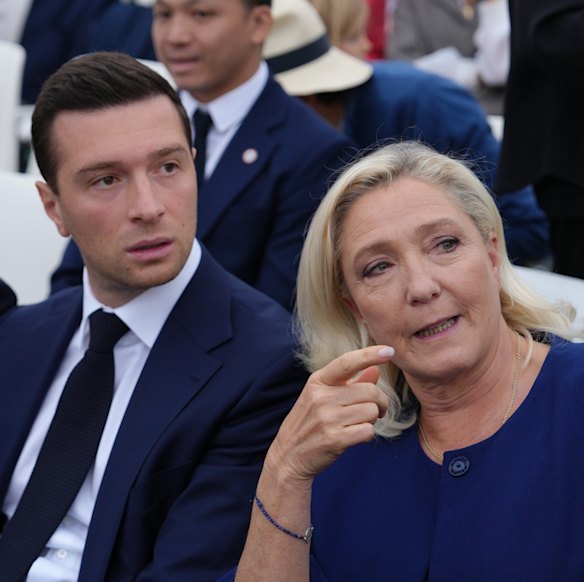
And this highlights a central question about the French protests: will they achieve anything? The riots have undermined the students’ cause and lit a raging fire beneath the presidential election due next year. With concerns about law and order running high, voters may fall in behind the right-wing candidate, Marine Le Pen, and her National Rally party.
Will the students do better under a Le Pen government? She has promised some help for schools, but she largely stands for budget cuts and conservative values.
Questions remain about protest movements in other parts of Europe. Italian police fired tear gas at protesters in Milan on the weekend to control a gathering that was supposed to be about the cost of living. As in France, it turned into a chance for some to loot stores.
The recent rallies in Spain have been driven largely by concerns over housing costs, while the student protests in Albania have been triggered in part by allegations of corruption against the government.
What stands out in France is the way authorities were overwhelmed when violent agitators and thieves exploited the wave of student rallies.
French President Emmanuel Macron admitted on Sunday night that there were failures in the police response to the unrest on Saturday night, but this comes too late for many voters who see him as a disappointment.
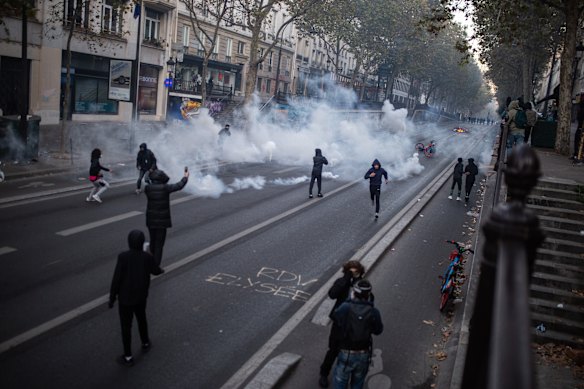
The immediate question for France is to avoid a repeat of the chaos and violence of October 17 – a date that will be remembered in the community for some time. Prime Minister Sébastien Lecornu authorised curfews in parts of Paris, including the Place de la Republique and the Les Halles shopping precinct, so police could assert control.
Cities and towns across France have chosen different approaches to keep the peace. In Nice, Mayor Eric Ciotti announced a curfew for young people from 9pm to 6am for the rest of this week.
This is a grim time for France. It has just witnessed an epic rupture in social cohesion. Citizens are shocked by the looting and violence. While the curfews took effect as planned, some fear the unrest is not over.
The protest at the Louvre was so mild by comparison that it seemed to belong to another world and another time: the era before October 17.
Get a note directly from our foreign correspondents on what’s making headlines around the world. Sign up for our weekly What in the World newsletter.
Disclaimer : This story is auto aggregated by a computer programme and has not been created or edited by DOWNTHENEWS. Publisher: www.smh.com.au