Brought to you by BULLS N’ BEARS
Andrew Todd
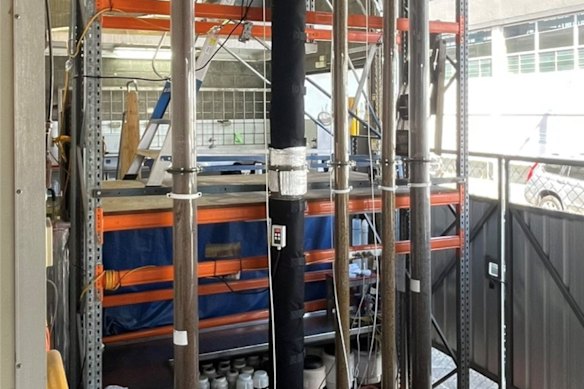
Red Metal has kicked off a crucial phase of metallurgical testwork at its Sybella rare earths project in Queensland, launching six-metre-tall column leach tests designed to simulate a full-scale, low-cost, heap leach operation for its multi-billion tonne monster.
The program marks a significant de-risking milestone for the project, providing the most realistic data yet on recoveries, acid consumption and processing kinetics ahead of a planned definitive feasibility study (DFS) on what some resources pundits are calling the Escondida of rare earths.
The new tests are being run on slightly weathered rock and transitional ore from Sybella’s Kary Zone deposit, which sits just 20km south of the major mining hub of Mount Isa.
The company plans to load -20mm crushed ore into 150mm-diameter columns standing six metres high to closely replicate the conditions of a commercial heap leach pad. In heap leaching, a chemical solution is trickled through the crushed ore to dissolve the valuable metals, which are then collected from the liquid and recovered.
‘(This) next step far more closely replicates the compaction, percolation and acid distribution inside a full-scale commercial heap leach.’
Red Metal managing director Rob Rutherford
The final validation is expected to build on Red Metal’s previously successful two-metre column program that delivered impressive neodymium extraction of up to 76 per cent and praseodymium extraction of up to 78 per cent from transitional ore.
Red Metal managing director Rob Rutherford said: “This important next step far more closely replicates the compaction, percolation and acid distribution behaviour we expect inside a full-scale commercial heap leach.”
The prize for Red Metal is a low-cost processing route for what is a geologically unique and potentially globally significant mineral deposit. The company has already defined a monster 4.795-billion-tonne inferred resource at Sybella, where the sheer scale and potential for zero-strip mining make bulk-tonnage processing methods such as heap leaching an attractive option for unlocking economic value.
In a concurrent program, the company has also started a series of two-metre column tests to assess a coarser -30mm crush size. Proving that a coarser grind can still deliver strong recoveries could be a game-changer for the project’s economics, materially lowering crushing costs and potentially allowing higher stacking heights on the leach pads, further reducing expenditure.
Management says it will report results from both the six-metre and the coarser-crush two-metre tests as they become available. The work forms part of an ongoing prefeasibility study (PFS), targeted for completion early next year.
While Sybella is its flagship, Red Metal has also kicked off a new “Big Copper” exploration strategy, targeting giant iron-oxide-copper-gold (IOCG) discoveries in Queensland’s north-west minerals province, analogous to the nearby Ernest Henry and Osborne deposits.
The company recently expanded its copper hunt, lodging 17 new tenement applications around its Gulf and Three Ways projects and is now planning two fully-funded drill holes to test targets at both projects, with the Gulf hole partly funded by a $200,000 Queensland Government grant.
As Red Metal sharpens its copper hunt in Queensland’s far north and Sybella’s near-5-billion-tonne resource edges towards economic studies, cracking the rare earths processing puzzle could prove the key to unlocking the project’s enormous potential. If the latest testwork can solve the cost equation, the company’s rare earths giant could be staring down a low-cost rare earths reality in the not-too-distant future.
Is your ASX-listed company doing something interesting? Contact: mattbirney@bullsnbears.com.au
From our partners
Disclaimer : This story is auto aggregated by a computer programme and has not been created or edited by DOWNTHENEWS. Publisher: www.smh.com.au