Frequently Asked Questions
What are alpha hydroxy acids?
Alpha hydroxy acids are a family of water-soluble chemical exfoliants, often derived from sources like sugarcane, milk, and fruit, that help loosen the bonds holding dead skin cells together. By clearing away that buildup, they can improve uneven texture, discoloration, and the appearance of fine lines.
Unlike oil-soluble beta hydroxy acids (BHAs), such as salicylic acid, which can penetrate pores to help clear excess oil and congestion, AHAs primarily work on the skin’s surface. And while they all share the same basic job description, some are more aggressive than others. Here’s how the most common types stack up, according to Dr. Ruth:
- Glycolic acid: The smallest of the bunch, glycolic acid penetrates skin relatively easily, making it one of the more potent AHAs for tackling rough texture, dark spots, and fine lines. The downside? It can be irritating, especially for sensitive skin.
- Lactic acid: A multitasker that exfoliates while also attracting moisture, making it a good option for dry skin that needs smoothing without sacrificing hydration.
- Mandelic acid: Its larger molecular size means it penetrates more slowly, making it generally better tolerated by sensitive or easily irritated skin.
- Citric, malic, and tartaric acids: These fruit-derived AHAs can contribute to exfoliation and help adjust a formula’s pH, though they’re less studied as standalone exfoliants.
“Glycolic acid tends to be the most potent exfoliator, while lactic acid can provide exfoliation with some hydrating benefits,” says Dr. Ruth. “Mandelic acid penetrates more gradually and may be better tolerated by easily irritated skin.”
Can you use AHAs with retinol?
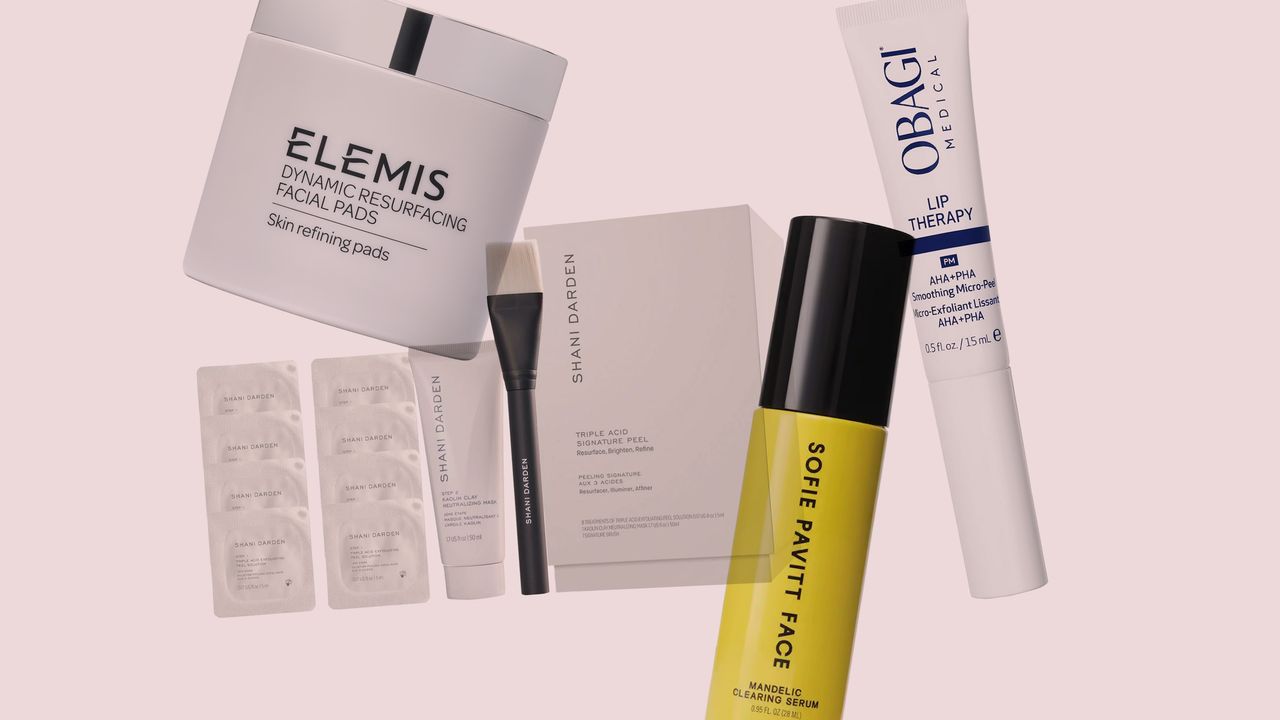
Yes, AHAs and retinol can absolutely coexist in your skin-care routine (just look at SkinBetter Science’s AlphaRet Exfoliating Peel Pads on our list), but that doesn’t mean you should go all in on both at once. Both ingredients encourage skin cell turnover, so combining them can increase the risk of dryness, redness, and irritation, especially if you’re new to either one. If you’re a beginner to acids and/or retinol, “rather than layering them in the same routine, I recommend alternating nights,” says Dr. Ruth. “For example, using an AHA one night and separate retinol another. You will get the benefits of both while giving the skin barrier time to recover.”
Who shouldn’t use AHAs?
AHAs aren’t off-limits for sensitive skin, but if you’re dealing with an active eczema flare, rosacea, a compromised skin barrier, or skin that’s already irritated or peeling, it’s best to hold off until things calm down. The same goes for freshly waxed skin or skin recovering from certain in-office treatments, like lasers and chemical peels. Even if your skin generally tolerates exfoliation well, dermatologists warn that AHAs can increase sun sensitivity, making your skin more vulnerable to UV damage. When introducing an AHA, start slowly, consider using it at night, and be especially diligent about applying broad-spectrum sunscreen with SPF 30 or higher during the day.
Meet the experts
- Alexandra Bowles, DO, a board-certified dermatologist at MONA Dermatology based in Cincinnati
- Nicole Ruth, MD, a board-certified dermatologist at Weiser Skin MD based in New York City
- Mamina Turegano, MD, a board-certified dermatologist, internist, and dermatopathologist based in New Orleans
How we test and review products
When Allure tests a product, our editors look at it from every angle in an effort to best serve you. We review ingredients, scrutinize brand claims, and, when necessary, examine peer-reviewed scientific and medical studies. In addition to testing each and every product that’s included in each and every review, we rely on experts who shape their fields, including dermatology, cosmetic chemistry, and medicine, to help us vet the ingredients and formulas.
For our list of best alpha hydroxy acid products, we considered each product’s performance across five primary categories: product ingredients and efficacy, packaging, fragrance, texture, and product wear. Every product was determined to have excelled in each category by our editorial team, which is composed of in-house writers and editors as well as contributors—along with special consideration from board-certified dermatologists. To learn more information on our reporting and testing processes, read our complete reviews process and methodology page.
Our staff and testers
A beauty product is a personal purchase. You might be searching for a face cream to address persistent dryness or a new nail product to add to your Sunday self-care routine; you may simply be browsing around for the latest launches to hit the hair market. No matter what you seek or your individual needs and concerns, Allure wants to ensure that you love anything we recommend in our stories. We believe that having a diverse team of writers and editors—in addition to the wide range of outside testers and industry experts we regularly call upon—is essential to reaching that goal.
After all, can we really say a skin-care product is the “best” for people over 50 if the only testers we’ve solicited opinions from folks who have yet to hit 30? Can we honestly deem a high-end diffuser worthy of your hard-earned cash if it’s never been tested on curls? We’re proud that our staff spans a wide range of ages, skin tones, hair textures, genders, and backgrounds, which means that we are able to fairly assess any beauty product that comes into the beauty closet.
Disclaimer : This story is auto aggregated by a computer programme and has not been created or edited by DOWNTHENEWS. Publisher: www.allure.com