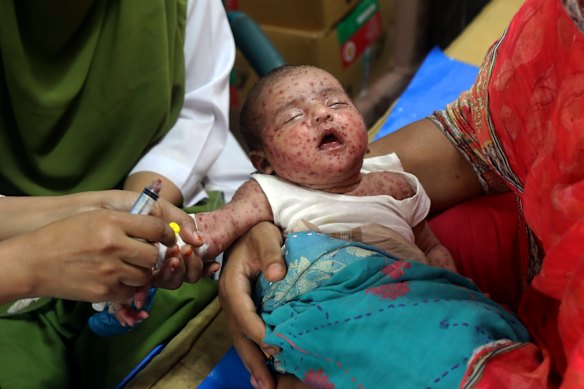

Measles cases rose globally by 40 per cent in the years after the COVID pandemic, with under-resourced health systems and disruptions to vaccine scheduling contributing to ongoing outbreaks of the disease.
The study by University of Queensland researchers, published on Wednesday, examined cases, deaths and vaccine gaps in children under five across more than 200 countries and territories, and prompted a warning from a local expert about a concerning drop in vaccination rates here.
Measles cases increased worldwide from 11.1 million to 15.6 million – between 2019 and 2023, with Sub-Saharan Africa and South Asia recording the highest mortality rates, the study found.
Associate Professor Benn Sartorius from UQ’s Frazer Institute said the findings effectively wound back decades of progress combatting the highly infectious disease, including the nearly 80 per cent decline in measles cases recorded worldwide between 1990–2019.
“The resurgence coincides with COVID-19 related disruptions to immunisation programs, health systems, and funding – reflecting both the fragility of measles control and vulnerability of children in lower-resourced areas,” Sartorius said.
“To some degree, we did anticipate that there would be some uptick from [COVID], but it was more than many would have anticipated in that particular context, which is obviously concerning.”
Despite global trends, Australasia maintained some of the highest measles vaccination coverage in the world, with an estimated 96 per cent of children under five receiving their second dose of measles vaccine in 2023.
But more recent figures show vaccination rates are declining in some high-income countries, including Australia.
Data from the Australian Immunisation Register points to a drop in coverage for measles in nearly every state and territory over the past three years, with Queensland recording the lowest vaccination rates in the country.
Mater Health’s director of infectious diseases Professor Paul Griffin said hospitals were seeing an increase in measles presentations, mostly in children who had not been vaccinated.
“By now, measles is something I hoped I’d be having to know about from a historic point of view,” Griffin said.
“People underestimate measles and think of it as something that’s a fairly benign rash in kids. Unfortunately, it’s far from that; it’s quite a severe respiratory virus.”
Measles are highly contagious, with one case able to generate up to 18 secondary infections where immunity is low. The disease can cause serious complications, including pneumonia and encephalitis (swelling of the brain).
Unvaccinated young children and people with weakened immune systems are at higher risk of severe illness and death.
“Fortunately in Australia, severe infection from measles has become exceedingly rare because we do have relatively low numbers because we’ve done such a good job with vaccination, and we eradicated endemic measles in 2014,” Griffin said.
“But certainly if the numbers keep increasing, like we’ve seen in other countries like the US, we will start seeing deaths and serious complications again.”
Start the day with a summary of the day’s most important and interesting stories, analysis and insights. Sign up for our Morning Edition newsletter.
From our partners
Disclaimer : This story is auto aggregated by a computer programme and has not been created or edited by DOWNTHENEWS. Publisher: www.smh.com.au