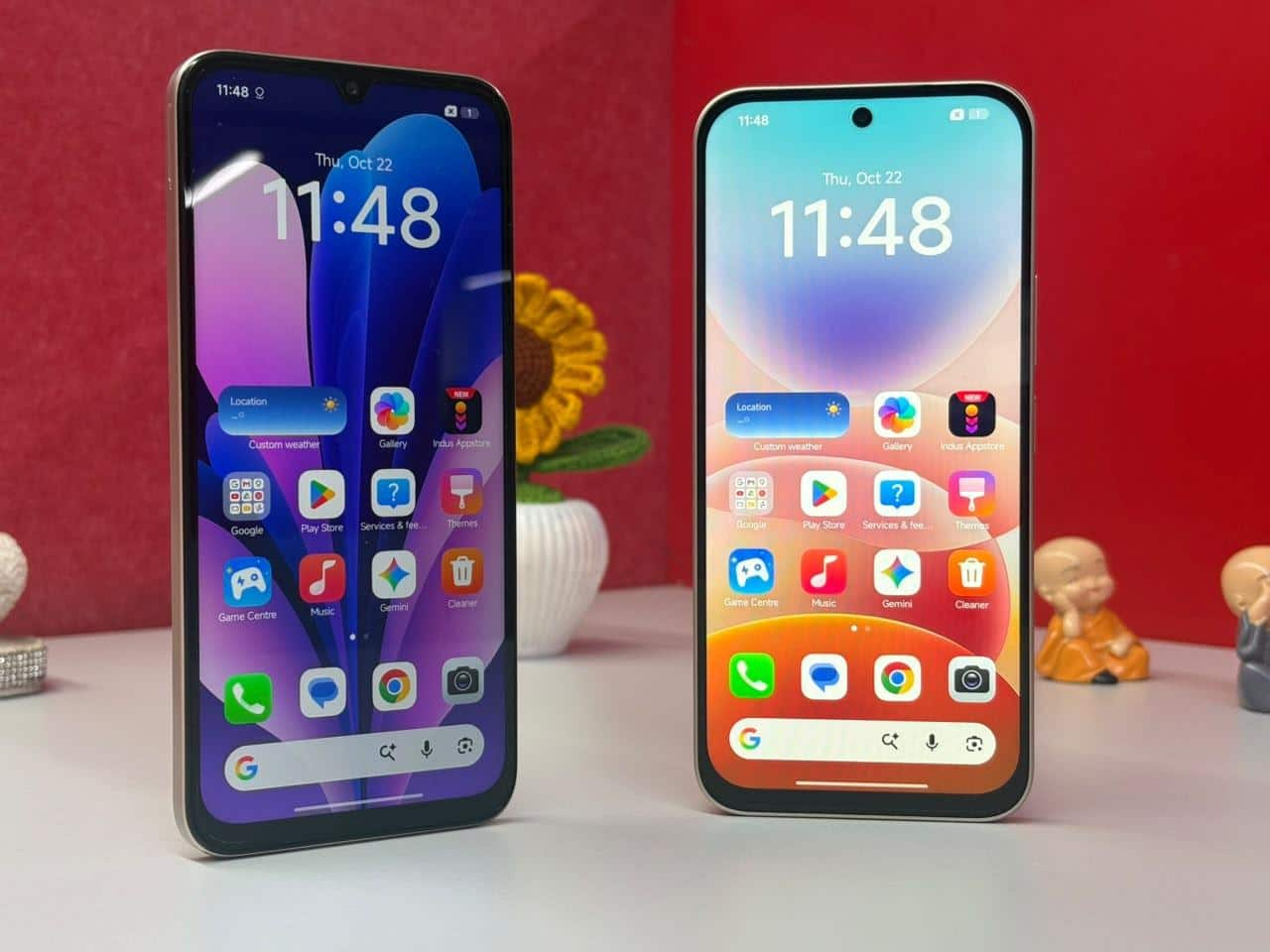
- Redmi 17 costs more for enhanced battery, processor, charging.
- Redmi 17C offers savings, lighter design, dedicated SIM.
- Both share large 120Hz display, 50MP camera, 5G.
- Decision depends on balancing budget with desired features.
Redmi 17 vs Redmi 17C Review: Every manufacturer nowadays promises to reinvent your life with an extra camera mode and a processor name that sounds like a rejected Marvel character, buying a phone should be simple. It rarely is. Enter the Redmi 17 and Redmi 17C. Both come with enormous 6.9-inch displays, 120Hz refresh rates, 50MP main cameras, 5G connectivity and Xiaomi’s HyperOS 3. But while the Redmi 17 starts at Rs 23,999, the Redmi 17C undercuts it at Rs 20,999. That’s a Rs 3,000 difference, enough for a decent pair of earphones, several months of OTT subscriptions, or the beginning of a very unnecessary argument about whether your phone needs to cost more than your first laptop.
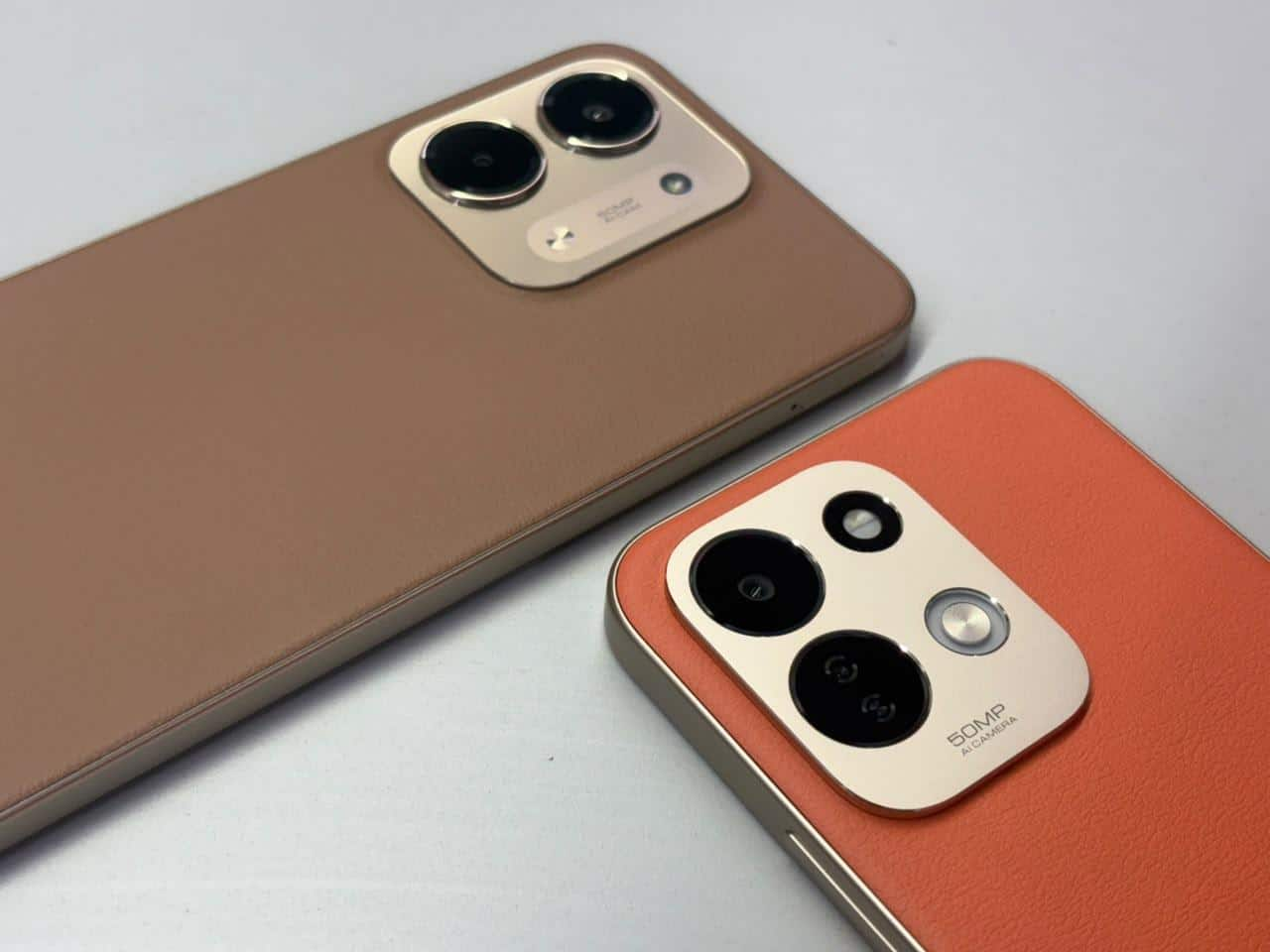
On paper, the Redmi 17 has the more ambitious hardware package. It gets a Snapdragon 4 Gen 5 processor built on a 4nm process, a 7,900mAh battery and 45W charging. The Redmi 17C takes the more economical route with a MediaTek Dimensity 6300 chipset, a 6,000mAh battery and 33W charging.
So, should you spend extra for the Redmi 17, or is the Redmi 17C enough for everyday life?
GennieGPT, ABP Live’s in-house AI reviewer, is ready with a spreadsheet, a suspicious amount of enthusiasm and absolutely no experience of carrying a phone around all day. Shayak, meanwhile, has questions about what these specifications actually mean for buyers. Let’s begin this tech tug-of-war.
ALSO READ: Redmi Note 17 Pro Review: Who Needs A Power Bank When You Have This?
Redmi 17 vs Redmi 17C Review: Quick Pointers
Redmi 17: What Works
- Larger 7,900mAh battery on paper, with support for 45W charging
- Snapdragon 4 Gen 5 built on a 4nm process
- 825 nits HBM brightness rating
- Up to 2TB of expandable storage
- Wired reverse charging rated at up to 22.5W
Redmi 17: What Doesn’t
- Costs Rs 3,000 more than the Redmi 17C at the starting price
- Weighs 232g, making it the heavier phone of the two
- Uses a hybrid SIM and microSD slot
- Bluetooth 5.1 is an older version than the Redmi 17C’s Bluetooth 5.4
Redmi 17C: What Works
- Saves Rs 3,000 at the starting price
- Lighter at 211g and slimmer at 7.99mm
- Dedicated dual-SIM-plus-microSD arrangement
- Bluetooth 5.4, with support for AAC, SBC and LDAC
- Still offers a 120Hz display, a 50MP main camera and 5G connectivity
Redmi 17C: What Doesn’t
- Smaller 6,000mAh battery and slower 33W charging
- Uses a 6nm Dimensity 6300 chipset
- Lower listed HBM brightness of 810 nits
- Expandable storage is capped at 1TB
The Rs 3,000 Question: What Are You Actually Paying For?
✨ GennieGPT: The Redmi 17 costs Rs 23,999, while the Redmi 17C starts at Rs 20,999. The Redmi 17 is therefore the superior smartphone because a higher price means a higher level of sophistication!
Shayak: That’s not a buying guide. That’s how you end up paying extra for a gold-plated USB cable.
The Rs 3,000 difference is roughly 14 per cent of the Redmi 17C’s starting price. In return, the Redmi 17 offers a bigger battery, faster charging, a different processor platform and a slightly higher listed peak-brightness figure. Those are tangible differences, not just marketing confetti.
But the Redmi 17C retains several of the headline features that matter to everyday buyers: a 6.9-inch screen, a refresh rate of up to 120Hz, a 50MP main camera, 5G and HyperOS 3. It isn’t stripped down to the point of becoming a smartphone-shaped paperweight.
✨ GennieGPT: So the cheaper phone gives you most of the headline features for less money?
Shayak: Exactly. The real question is whether the Redmi 17’s upgrades solve problems you actually have. If you spend long days away from a charger, use your phone heavily or want more charging flexibility, the extra spend becomes easier to justify. If you mainly browse, message, stream videos and use everyday apps, the Redmi 17C deserves serious consideration.
The early verdict: The Redmi 17 is the more ambitious specification sheet. The Redmi 17C is the more economical starting point.
Snapdragon vs MediaTek: Which Processor Makes More Sense?
The Redmi 17 uses Qualcomm’s Snapdragon 4 Gen 5 Mobile Platform, manufactured on a 4nm process. It has an octa-core CPU with Cortex-A78 and Cortex-A55 cores, clocked at up to 2.4GHz, alongside an Adreno GPU.
The Redmi 17C uses MediaTek’s Dimensity 6300, built on a 6nm process. It also has an octa-core CPU, with Cortex-A76 and Cortex-A55 cores reaching up to 2.4GHz, and a Mali-G57 MC2 GPU.
✨ GennieGPT: Snapdragon! Four nanometres! Adreno! The Redmi 17 is practically a supercomputer with a SIM card slot.
Shayak: Let’s not get carried away. We are comparing two budget-oriented mobile platforms, not choosing the next machine to run a space programme.
There is a meaningful difference in the listed CPU architectures: the Redmi 17 uses Cortex-A78 performance cores, while the Redmi 17C uses Cortex-A76 cores. The Redmi 17 also has the advantage of a newer manufacturing process on paper. These are reasons to favour the Redmi 17 if processing capability is high on your list.
However, processor names and manufacturing nodes do not tell the entire story. Actual performance depends on implementation, software optimisation, thermal management and the workload. We cannot declare the Redmi 17 a gaming champion without benchmark results or hands-on testing.
Both phones pair their processors with LPDDR4X RAM and UFS 2.2 storage. The Redmi 17 starts with 6GB RAM and 128GB storage, with an 8GB option listed. The Redmi 17C offers 4GB or 6GB RAM with 128GB storage.
Memory extension is available on both, but remember that this feature uses part of the phone’s internal storage to supplement RAM. It is not the same as having that amount of physical RAM installed.
✨ GennieGPT: So 16GB RAM on the Redmi 17 means I can open 16GB worth of apps simultaneously?
Shayak: No. The advertised maximum of 16GB includes virtual memory on the 8GB version. Similarly, the Redmi 17C’s maximum of 12GB includes memory extension on its 6GB version. Don’t confuse a software-assisted figure with physical RAM.
For most buyers, the practical decision is straightforward: choose the Redmi 17 if its newer platform and stronger-looking core specifications are worth the premium to you. The Redmi 17C remains a plausible everyday option, but its 4GB base variant is the one I’d approach more cautiously if you keep lots of apps open or intend to hold on to the phone for years.
Two Giant Screens, One Very Familiar Compromise
Both phones offer a 6.9-inch display with a refresh rate of up to 120Hz. That’s a substantial canvas for video, reading, social media and games.
The Redmi 17 lists HBM brightness of up to 825 nits. The Redmi 17C lists 810 nits HBM, alongside a typical brightness figure of 660 nits. The Redmi 17C’s supplied specifications also spell out its 1,600 × 720 resolution, 1,200:1 contrast ratio, 8-bit colour depth and 83 per cent NTSC colour gamut.
✨ GennieGPT: A 120Hz display means everything will look twice as good, right?
Shayak: It means the display can refresh up to 120 times per second in supported scenarios. Scrolling and compatible animations can look smoother than on a conventional 60Hz screen. It doesn’t automatically make video sharper, colours more accurate or every game run at 120 frames per second.
And here’s the compromise worth understanding: a 6.9-inch screen is enormous, but size isn’t the same thing as sharpness. The Redmi 17C’s listed resolution is 1,600 × 720, which is HD+-class rather than Full HD+. Text and fine details won’t have the same pixel density as they would on a higher-resolution screen of this size.
The supplied Redmi 17 specifications don’t explicitly state its resolution, so we shouldn’t assume that its display is sharper simply because the phone costs more. That needs confirmation.
The brightness difference is also modest on paper: 825 nits versus 810 nits in HBM mode. That’s not enough to crown the Redmi 17 the undisputed outdoor-viewing champion without testing the screens side by side.
Both phones include reading modes and TÜV Rheinland certifications relating to low blue light, flicker and circadian-friendly display features. These are useful considerations for regular screen users, but they don’t eliminate eye strain or make endless scrolling a medically recommended activity.
✨ GennieGPT: So both phones are giant-screen entertainment machines?
Shayak: Potentially, yes. But if display sharpness is important to you, verify the Redmi 17’s resolution before making a decision. And if you want a phone that disappears into a pocket, neither 6.9-inch device is exactly auditioning for that role.
Battery Life: The Redmi 17’s Biggest Argument
This is where the Redmi 17 makes its clearest specification-based case for the extra money.
The Redmi 17 packs a 7,900mAh battery and supports 45W turbo charging. The Redmi 17C has a 6,000mAh battery with support for 33W charging. Both include a charger in the box, according to the supplied specifications.
The Redmi 17’s battery capacity is about 32 per cent larger than the Redmi 17C’s. That is a substantial difference on paper, although actual battery life also depends on screen brightness, network conditions, apps, processor efficiency and usage patterns.
✨ GennieGPT: Almost 8,000mAh! The Redmi 17 will survive a Himalayan expedition, a cricket World Cup and three consecutive family WhatsApp video calls.
Shayak: It might help you worry less about finding a charger, but let’s not turn battery capacity into a promise of a particular number of days. We haven’t tested either phone’s endurance.
The charging figures reinforce the distinction. The Redmi 17 supports 45W charging, compared with 33W on the Redmi 17C. That gives the more expensive phone a higher supported charging rate, although the difference in actual charging time would need to be measured.
There’s another useful feature on the Redmi 17: wired reverse charging rated at up to 22.5W. The Redmi 17C supports reverse charging at up to 10W. In compatible circumstances, the Redmi 17 can therefore offer more flexibility when you need to top up another device.
✨ GennieGPT: So the Redmi 17 wins the battery round?
Shayak: On capacity and supported charging specifications, yes. In real-world endurance, we’ll need test results before declaring a winner.
If battery anxiety is your recurring nemesis, the Redmi 17 is the more compelling option. If you charge regularly and your daily usage is fairly modest, the Redmi 17C’s 6,000mAh battery could be enough, but that is a personal usage question, not a guarantee.
Cameras: Don’t Let The Megapixel Number Do All The Talking
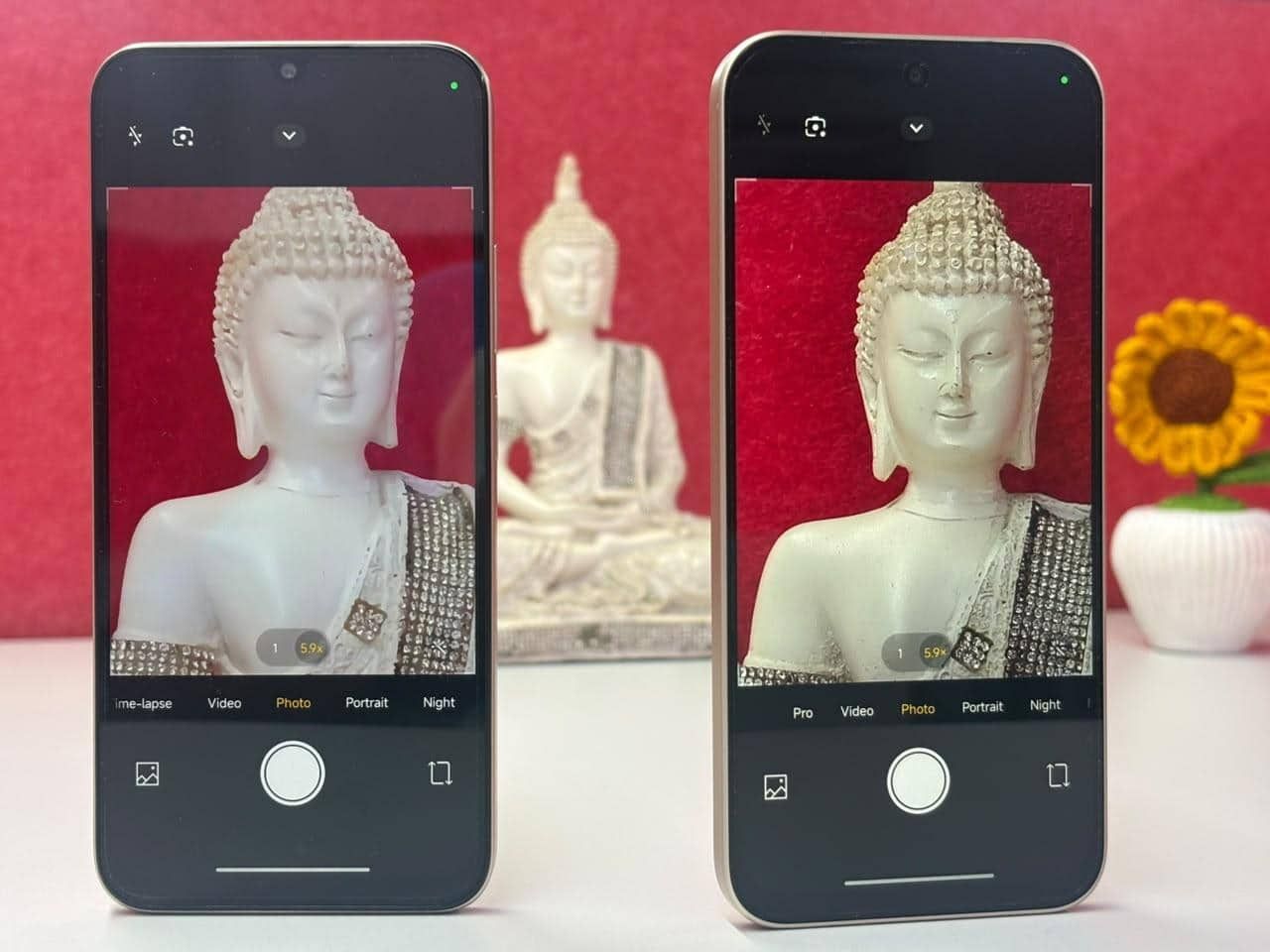
Both phones have a 50MP main rear camera with an f/1.8 aperture and a five-element lens, alongside an auxiliary lens. Both also have an 8MP front camera.
Their listed camera modes include HDR, night photography, portrait mode and time-lapse. The Redmi 17 also lists dual-camera recording and document mode in its camera features. The Redmi 17C’s supplied specifications explicitly list 1080p recording at 30 frames per second on the rear and front cameras.
✨ GennieGPT: Fifty megapixels on both! Surely that means two equally brilliant cameras?
Shayak: Not necessarily. Megapixels tell us about image resolution, not the complete quality of a photograph. Sensor size, image processing, autofocus, dynamic range, lens quality and low-light performance all matter.
The shared 50MP label is a useful starting point, not a verdict. The supplied specifications don’t establish that one phone takes better photographs than the other. We’d need sample images and comparable tests in daylight, indoors, at night and with the selfie camera to make that call.
The Redmi 17’s listed dual-camera recording feature may appeal to people who like recording from more than one camera perspective, but the exact implementation and limitations should be checked before treating it as a decisive advantage.
For now, neither phone gets a camera crown simply for showing up with 50MP on the box.
The Everyday Details: Weight, Storage And Connectivity
The Redmi 17 weighs 232g and measures 8.8mm thick. The Redmi 17C weighs 211g and measures 7.99mm thick.
That makes the Redmi 17C 21g lighter and 0.81mm slimmer. It is not a radical transformation, but the difference is worth noting when both phones already have very large displays.
✨ GennieGPT: The Redmi 17C is the fitness-conscious one. The Redmi 17 has been bulking up on battery.
Shayak: That metaphor is better than your processor analysis. The extra battery capacity comes with a heavier device, at least in this comparison. Buyers who prefer a lighter phone may appreciate the Redmi 17C’s lower weight.
Storage expansion is another point of difference. The Redmi 17 supports microSD expansion up to 2TB, while the Redmi 17C supports up to 1TB. Both use UFS 2.2 internal storage.
The SIM arrangements differ too. The Redmi 17 has a 3-in-2 hybrid SIM and microSD setup, while the Redmi 17C lists dual SIM plus microSD. If you regularly use two SIM cards and a memory card together, the Redmi 17C’s stated configuration is the more convenient one, subject to confirming the exact regional variant.
Connectivity offers a small reversal. The Redmi 17 lists Bluetooth 5.1, while the Redmi 17C lists Bluetooth 5.4 and explicitly includes AAC, SBC and LDAC support. That makes the cheaper phone look more attractive on the Bluetooth specification sheet, particularly for buyers who pay attention to audio-codec compatibility. Actual codec availability and performance depend on the connected accessory and software.
Both phones support 5G, dual-band Wi-Fi, FM radio and a 3.5mm headphone jack. Both also carry an IP64 rating for dust resistance and protection against splashes under specified laboratory conditions. Neither should be treated as waterproof or safe to submerge.
✨ GennieGPT: So the cheaper phone is lighter, has a more recent Bluetooth version and a dedicated dual-SIM-plus-microSD arrangement?
Shayak: Correct. The Redmi 17C has some practical advantages of its own. A higher price doesn’t automatically mean every component is newer or every design choice is better.
Which Redmi Should You Buy?
Let’s make this less complicated than a smartphone launch presentation.
✨ GennieGPT: My recommendation is to buy the Redmi 17. It has the bigger battery, faster charging and a 4nm processor. More numbers, more victory!
Shayak: The recommendation is reasonable, but the reasoning needs a buyer profile attached to it.
Buy the Redmi 17 if:
- You want the larger 7,900mAh battery
- Faster supported charging matters to you
- You value the Snapdragon 4 Gen 5’s newer listed CPU architecture and 4nm process
- You want up to 2TB of expandable storage
- You’re comfortable paying Rs 3,000 extra and carrying a 232g phone
Buy the Redmi 17C if:
- You want to keep the starting price at Rs 20,999
- A lighter, slimmer device is important to you
- You want Bluetooth 5.4 and the listed LDAC support
- You need dual SIM and microSD at the same time
- Your everyday use doesn’t justify paying extra for the Redmi 17’s larger battery and other upgrades
Think twice if:
- You want a sharp, high-resolution display. Confirm the resolution of the Redmi 17 and consider whether the Redmi 17C’s listed 720p-class screen suits you.
- You care most about photography or gaming. The supplied specifications aren’t enough to establish a clear real-world winner.
- You’re choosing the 4GB Redmi 17C for long-term use with demanding apps. Consider the 6GB variant if the price difference is manageable.
Redmi 17 vs Redmi 17C Review: Final Verdict
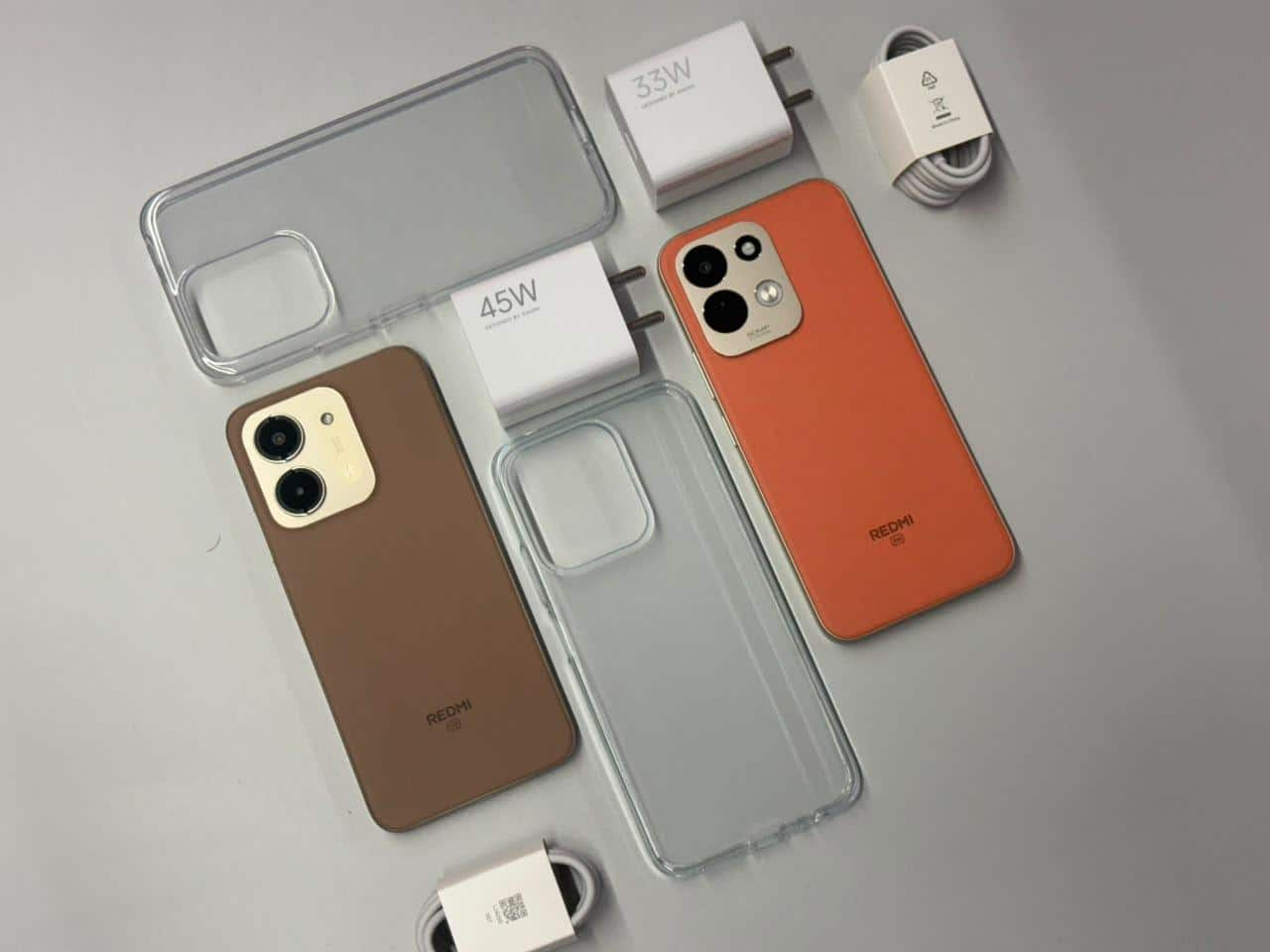
The Redmi 17 and Redmi 17C are not separated by a completely different philosophy. Both offer the big-screen, high-refresh-rate, 5G formula aimed at buyers who want a lot of phone without heading into flagship territory. The difference lies in how much extra hardware you’re willing to pay for.
At Rs 23,999, the Redmi 17 makes the stronger case for buyers who prioritise battery capacity, charging speed and the newer listed processor platform. Its 7,900mAh battery is the headline upgrade, and the combination of a 4nm chipset and 45W charging makes the extra Rs 3,000 easier to explain.
At Rs 20,999, the Redmi 17C is the sensible budget contender. It keeps the large display, 120Hz refresh rate, 50MP main camera, 5G and HyperOS 3, while shaving off weight and offering Bluetooth 5.4 and a more flexible listed SIM arrangement.
Think of the Redmi 17 as the bigger meal deal: more on the plate, but you pay extra. The Redmi 17C is the economical order that still covers most of the basics. Neither is automatically the right choice for everyone.
My pick, based on the supplied specifications alone: Redmi 17. The larger battery and faster charging are meaningful everyday advantages, and the newer listed CPU architecture strengthens its case. But if Rs 3,000 matters more to your budget than the extra battery capacity, the Redmi 17C remains the more sensible buy.
One final caveat: this is a specification-led comparison, not a declaration that the Redmi 17 has better battery endurance, gaming performance or camera output in actual use. Those verdicts require hands-on testing.
Disclaimer : This story is auto aggregated by a computer programme and has not been created or edited by DOWNTHENEWS. Publisher: abplive.com