Catalina Beleña Martinez, España, nos envió una pregunta por callout:
¿Hasta qué punto las deportaciones y las políticas migratorias de Donald Trump están influyendo en el voto de los estadounidenses? ¿Se está votando por seguridad, por miedo o por convicción?
Jose: Para cada persona que ha sido arrestada por ICE, hay docenas de personas afectadas. No solamente afecta a los familiares — hijos, hijas, parejas, etc. — pero también a la comunidad que posiblemente han cultivado en los Estados Unidos. Gracias a esto, y también con los métodos agresivos que hemos estado viendo, hay algunas comunidades que apoyaron a Trump en el 2024 (principalmente cubanos en Florida), que están poco a poco abandonando y dejando de apoyar a la política migratoria de la administración. Esto se puede ver con la campaña de la congresista María Elvira Salazar, una republicana de Florida, que tuvo una ruptura muy pública con Trump y su política migratoria. En un comercial de su campaña, la congresista le dijo a Trump que “los mismos hispanos que te ayudaron llegar a la Casa Blanca en el 2024 se sienten traicionados hoy en día.” Una encuesta de NBC News y Telemundo de votantes latinos encontró que el 2/3 de ellos piensan que la política migratoria de Trump está fuera de control (“too far”). El 17% de los que participaron en la encuesta dijeron que ellos, o algún conocido, están considerando no votar en persona este año, por preocupación de ICE. Vamos a tener que ver realmente cuáles serán los resultados de estas elecciones y de ahí podremos ver cuáles comunidades y cuántas personas votaron por el partido Demócrata gracias a la poítica migratoria. Pero después de eso, si ganan los Demócratas, hay que ver realmente lo que van a hacer para oponerse a la política migratoria de Trump. Por ejemplo, muchas personas que trabajan con migrantes estuvieron sumamente decepcionados con la administración de Biden, porque después del primer mandato de Trump, él decidió continuar muchas de las políticas agresivas de Trump.
Paul, Texas asks in a callout question: How many ICE agents are there in the field? What percentage of ICE agents have verified working cameras?
Sam: ICE launched an extraordinary and rapid hiring push last year after the agency received an unprecedented $170bn in funding for immigration and border enforcement activities. With DHS lowering its standards for new recruits and reducing training, there have been significant concerns about the quality of hires, as I reported last year.
At the start of 2026, ICE said it had doubled the number of its officers and agents from 10,000 to 22,000, though as my colleagues have reported, the department has extensively relied on local, cooperative police to support their deportation efforts.
In terms of body cameras, ICE in recent weeks has said it now has enough of the devices for all officers, though it’s unclear how widely the cameras have been distributed and used.
The agency has also at times signaled its reluctance to release footage, so the impact of this deployment, particularly in terms of accountability for alleged misconduct, remains to be seen.
Richard Wolfe, Maine asks in a callout question: Why can’t local law enforcement be assigned to monitor ICE?
Maanvi: Across the US, local police, highway patrol, sheriffs departments, even Fish and Wildlife Services actually work directly with ICE – helping the federal government find and arrest immigrants as part of what’s called the 287(g) program. In many regions, it’s unclear whether local cops are conducting routine police work (pulling someone over for speeding, or conducting a drug operation) or engaging in immigration enforcement. Sometimes, it’s both at the same time.
I recently wrote about an operation at the El Corralón bar in Memphis on 29 August. It began as a police raid targeting illegal gambling and drugs turned into one of the largest sweeps of undocumented immigrants in Tennessee – 120 people were detained. Initially, search warrants at the bar related to drugs and gambling targeted the bar’s owner. But agents also arrested a number of patrons on immigration charges.
Nola67 from comments: After Ilhan Omar’s house was raided, I’m wondering if there’s any kind of statistic that shows how much ICE/DHS has come after US citizens or tried to fake evidence?
Sam: The federal government has said it was working to carry out the “largest denaturalization effort in history,” and there have been isolated DoJ announcements of cases to strip people of citizenship based on their criminal records or claims that they illegally procured their naturalization. Denaturalization cases have been brought under previous administrations, and it’s unclear if the scale of this administration’s efforts match its rhetoric. We do know that US immigration agents in the field have frequently detained US citizens. The Trump administration has repeatedly downplayed this problem, but ProPublica recently did great reporting documenting reports of 506 citizens detained by DHS between January 2025 and September 2026.
Will Craft, data editor at the Guardian US:
It’s hard to know how often us citizens are being arrested, the impact from immigration enforcement goes way beyond just the person getting arrested. We know for a fact that immigration is impacting US citizens across the country and there are lots of families with mixed statuses. When a person is arrested, the impacts reverberate throughout a family and a community. We sued the Trump administration for records on the people being arrested, and found that the data had a column for the citizenship of the person’s children. Thousands of parents, nearly 7,500 fathers and 1,000 mothers in the first 7 months of the Trump admin, had a different nationality than at least one of their children. In about half of these families, siblings had different citizenships from each other. That means that those families faced incredibly difficult decisions about how they might get split up. Taken together, it really seems like a new family separation crisis created by the US government.
Mr_202 from comments: Has there been a drop in visitor numbers to America either as tourists or migrant workers and if so, are US voters and businesses feeling the economic pinch?
Maanvi: It’s hard to pin down exactly how much US tourism has been affected by Trump’s immigration crackdown. But various Trump policies have certainly made it more difficult for people from certain countries to visit the US – either as tourists, or academics and students, or business visitors.
Earlier this year, union leaders in the hospitality industry said that the immigration crackdown has not only scared immigrant workers in the tourism indosuty, but also discouraged international tourism.
The number of employed hospitality workers dropped by 98,000 from December 2024 to December 2025, according to a report from Unite Here, which represents 300,000 workers across the hospitality, food and tourism industries in the US and Canada.
The US saw a decline of $1.2bn, or a 5.5% drop, in tourism revenue from September 2024 to September 2025, according to a report by Unite Here. International visitors to the US declined by 2.5 million in 2025, even as international tourism increased around the world, according to the report.
Abdullahi Duale Muhumed, Dadaab Refugee Camp, asks in a callout question: Could a Democratic majority in Congress after the November 2026 midterm elections help reinstate the Welcome Corps refugee sponsorship programme? If Democrats gain control of the House of Representatives or the Senate, what practical steps could they take to restore the programme, and how much power would President Trump retain to block those efforts? For refugees who were hoping to find safety in the United States through Welcome Corps, could a change in congressional leadership offer a realistic path to reopening the programme?
José Olivares: The Welcome Corps refugee program, like all refugee programs in the US, was canceled and shut down by the Trump administration in early 2025. This was then compounded with further constraints on refugee communities and their ability to enter the US via travel bans — all through executive order. We recently reported on how the US is admitting only 17,500 refugees for Fiscal Year 2027, but they will “primarily” be white Afrikaners from South Africa. The administration’s refugee policies are now leaving thousands of vetted and approved refugees stuck in refugee camps or in dangerous conditions, including relatives of US citizens. It is hard to speculate, but a Democratic majority in congress would have a very challenging time reinstating the refugee and resettlement programs. Congress would have to introduce and then pass new legislation to override Trump’s refugee and “travel ban” executive orders, which would be a lengthy and difficult battle. At the moment, there is a major lawsuit playing out in a federal court that is challenging the administration’s refugee policies and executive orders. Advocates are hopeful that a federal judge will side with them to potentially override Trump’s executive orders and allow refugees to enter the US.
Anonymous reader, Georgia asks in a callout question: There were comments early on from Trump and his AG suggesting ICE agents had “absolute immunity”. I’m curious if this was handled/litigated beyond just discussion in the media.
Sam: When immigration agents shoot people, DHS typically responds with statements claiming the use of force was justified and in self defense. It is exceptionally rare for the federal government under Trump to take any stance that suggests offers who injure, shoot or kill people should face accountability or any consequences. But it’s worth noting an isolated case last month where DOJ filed charges against an agent who shot a Venezuelan man in Minnesota. Federal prosecutors accused him of making false statements. This case would suggest that officers do not, in fact, have “absolute immunity”, even in the eyes of the Trump administration. It’s also very rare for local officials to file charges against federal officers, but it’s possible we will see more of those cases resulting in some levels of accountability for federal agents’ use of force.
Anonymous reader, California asks in a callout question: What impact the ICE actions are having on the Latino vote, particularly in states like FL? I am very concerned about the many tactics that the Trump Administration can deploy to frustrate voting, (last minute mobilization of ICE, Federalization of Nat’l Guard, martial law, litigation questioning the results, delaying the swearing in of the new representatives). Any thoughts on the likelyhood of any or all of these?
Maanvi Singh: Politically, it’s clear that Trump’s immigration crackdown is affecting Republican candidates in key Florida midterms races – opening a door for Democrats. Latino voters who helped carry Trump to victory in the presidential election have seen the crackdown affect their communities, and daily lives. Florida restaurant and hotel owners have said that ICE’s presence is frightening away both workers and customers. Republican congresswoman María Elvira Salazar – who is re-election in a central Miami district that Trump carried – aired a Spanish-language ad breaking with the president, saying his immigration crackdown had “betrayed” Hispanic voters in her district.
Meanwhile, the stakes are high for Latino voters in the state. New changes to state election laws, pushed by Republican legislators, will de-register voters who do not participate in this election. And there’s a mountain of disinformation targeting Latino voters.
Sam Levin: The Department of Justice and Department of Homeland Security have launched aggressive efforts across the country to stop alleged “voter fraud” by noncitizens, and there are growing concerns these crackdowns could intimidate lawful voters and be used to sow doubt in the results of the elections. The DoJ recently sued California, alleging widespread voter fraud and demanding the state be blocked from tabulating certain ballots the DoJ claimed could belong to US citizens, but state officials have strongly rejected those claims and said the DoJ was incorrectly flagging US citizens as potential ineligible voters. It’s really unusual for the government to take these kinds of actions so close to an election, and there are worries the theatrics around these efforts could discourage people from going to the polls.
It’s our last US midterms live Q&A before election day on 3 November, and our reporters are answering your immigration questions.
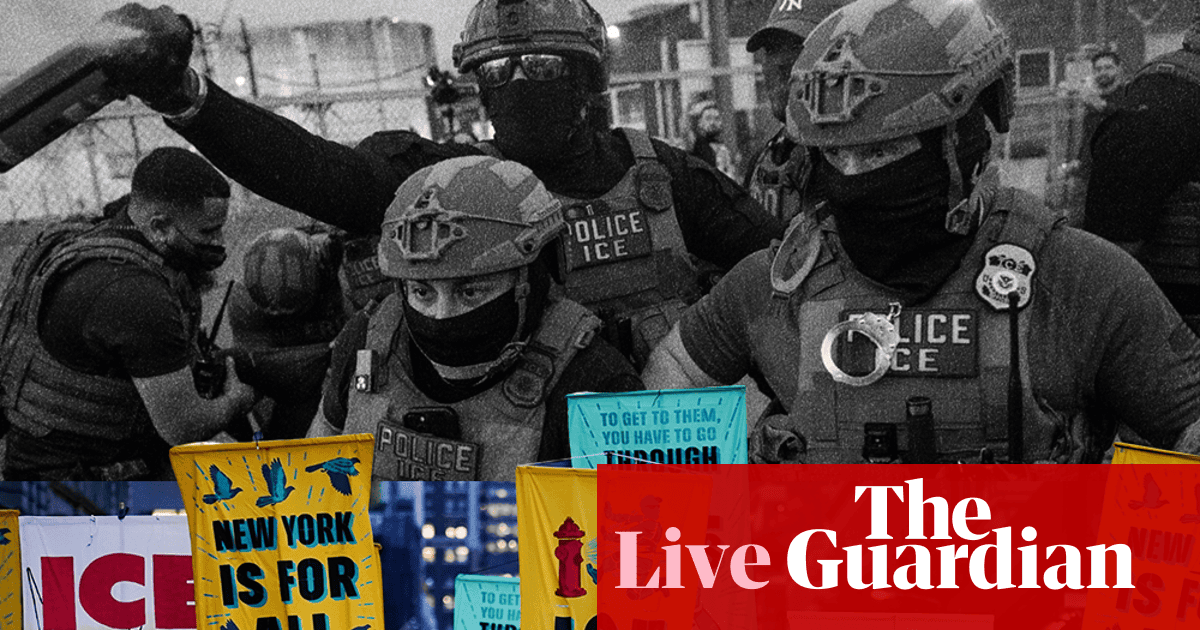
Since Donald Trump began his second term, ICE arrests have reached record levels, operations have become deadly, and immigration raids have hit politicians’ homes. Our reporting has documented the experiences of those directly affected by the harsh conditions in detention centers and resistance to ICE agents on the ground.
Immigration remains a key issue for voters in the final weeks of campaigning. Joining us on Thursday at 12pm ET (5pm BST) to answer questions on candidates’ platforms, the effects on your community, ICE and more are immigration reporters Maanvi Singh and José Olivares, along with Los Angeles correspondent Sam Levin.
Sign in or sign up to join the conversation.
The US politics team is hosting a series of reader Q&As leading up to the November US midterm elections. See our first four conversations, here:
Looking for more coverage ahead of the midterms? Sign up to The Stakes newsletter: your weekly guide to the US midterms
Disclaimer : This story is auto aggregated by a computer programme and has not been created or edited by DOWNTHENEWS. Publisher: theguardian.com