There are a few occasions when requesting time off is warranted: The birth of a child, a much-needed staycation, a once-in-a-lifetime concert. Maybe you’ve exaggerated being sick to enjoy some time at the beach or a last-minute museum day.
Or maybe you’ve skipped work to play the year’s most hotly-anticipated video game.
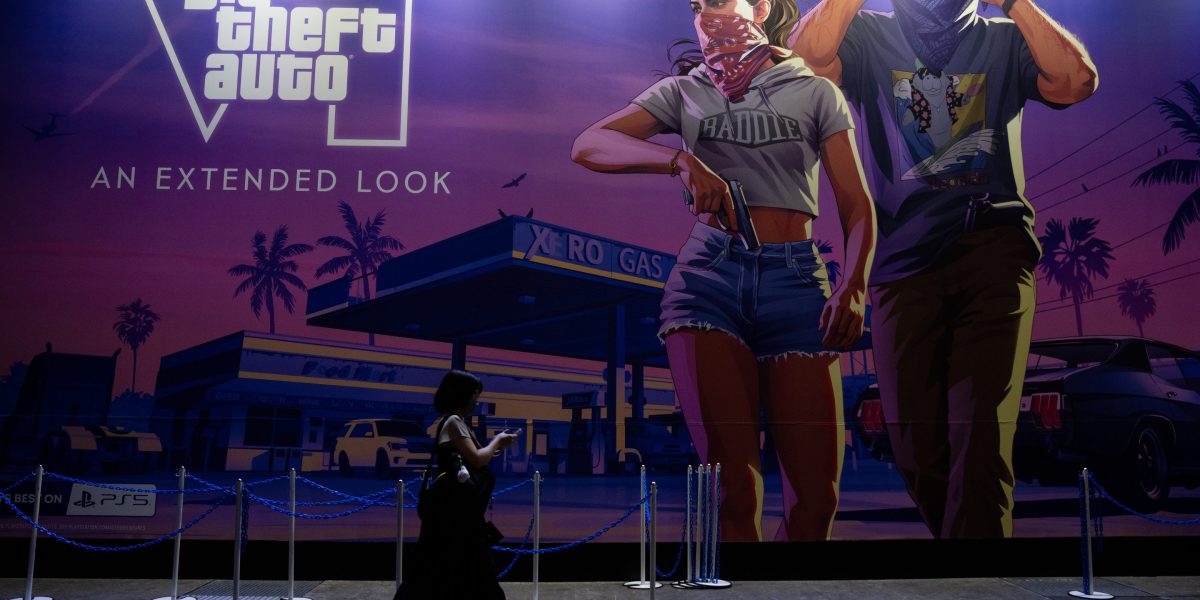
Workers are booking time off for the Nov. 19 release of Grand Theft Auto VI, and one widely shared estimate cited by the International Business Times put the cost to the U.S. economy at $1 billion in a single day. But is the country really going to lose that much economic output because of a video game?
Victor Matheson, an economist at the College of the Holy Cross who studies sports and major events, disputes that number. “But even if it were true, it’s not necessarily a bad thing if people are happier,” he said. “And it’s pretty tiny in the big picture anyway.”
The broader point is that estimates about lost productivity—whether from the Super Bowl, or the latest Star Wars movie, or the next Sony Playstation console—are probably bogus: these events are merely rearranging when workers take their vacation. And Matheson points to the simple age-old phenomenon economists love to point to: the substitution effect. When some event changes spending or productivity, it won’t simply be removed from the economy so much so it’ll shift when that spending or productivity occurs.
Where did the billion-dollar estimate came from
The source for the $1 billion estimate for GTA-driven lost productivity is widely cited to come from José García Montalvo, an economist at Barcelona’s Pompeu Fabra University. (Montalvo did not respond to a request for comment). The South Atlantic news agency MercoPress notes that the data does not come from a published study, and has been circulating for much of the past year.
Still, people are still going to take time off—just maybe not to the effect of a 10-figure hit to the economy.
BambooHR, which sells HR software, told Money that time-off requests for Nov. 19 are 9% to 17% above a typical third Thursday in November. A spokesperson said the rise could also reflect workers using their time off more freely.
In April, Strauss Zelnick, the CEO of GTA publisher Take-Two Interactive, predicted that “a lot of people will be calling in sick on November 19.”
For economists like Matheson, this sounds like the substitution effect: most of those absences will be offset later in the year.
“Even if we did have a billion dollars of people call out sick, that’s a short-term loss that is made up for in the long term, when that PTO day isn’t available for you next February, next March, next June, next July,” he said. “It’s not like people are going to take more days off than in the past because of this. They’re just changing when those days are getting taken off.”
During the World Cup, Matheson told Fortune he skipped email during afternoon matches and answered it at night. “That’s exactly what we’re doing here,” he said of the game’s launch. And it’s not just sports or video games: fans have changed their plans for new Harry Potter books, Star Wars films and Marvel movies, too.
“There’s not a whole lot of evidence that the total amount of time people are devoting to recreation is likely to rise because of the latest video game,” Matheson said. “People just rearrange how they’re spending their free time.”
It’s what makes you happy
Gross domestic product measures what a country produces, so any time spent playing a game beyond the initial purchase doesn’t contribute to it. But Matheson said the GDP framing misses the point.
“If people take time off to play video games or play soccer or listen to music or climb mountains, that does in fact reduce gross domestic product, but that’s not the only way to measure a country’s well-being,” he said. He cited Bhutan, which tracks its progress by a happiness index.
“If that’s what makes you happy, and Grand Theft Auto’s new release is what gets you there, then that’s clearly an improvement in the economy, even if we’re producing less stuff,” he said. “Ultimately we want to be producing the maximum amount of happiness, not necessarily the maximum number of widgets.”
Matheson said $1 billion equals about one-thirty-thousandth of annual U.S. GDP, or roughly 1% of one day’s output.
Many workers also take the Friday after Thanksgiving off, then spend money on Black Friday sales. Asked whether the same reasoning applies, Matheson said it did.
“That’s exactly right,” he said. “This is much more likely to rearrange the economy rather than fundamentally change it.”
Similar estimates appear every year for the Super Bowl and March Madness. Outplacement firm Challenger, Gray & Christmas, for example, said in 2022 that the year’s Super Bowl could cost employers over $6.5 billion in lost productivity the following Monday.
Matheson said a one-day game launch would disrupt work less than a three-week tournament. “I don’t think you’re going to get many people who are spending weeks at this, and certainly not taking days off for weeks,” he said. “We don’t see that in March Madness either.”
Disclaimer : This story is auto aggregated by a computer programme and has not been created or edited by DOWNTHENEWS. Publisher: fortune.com