
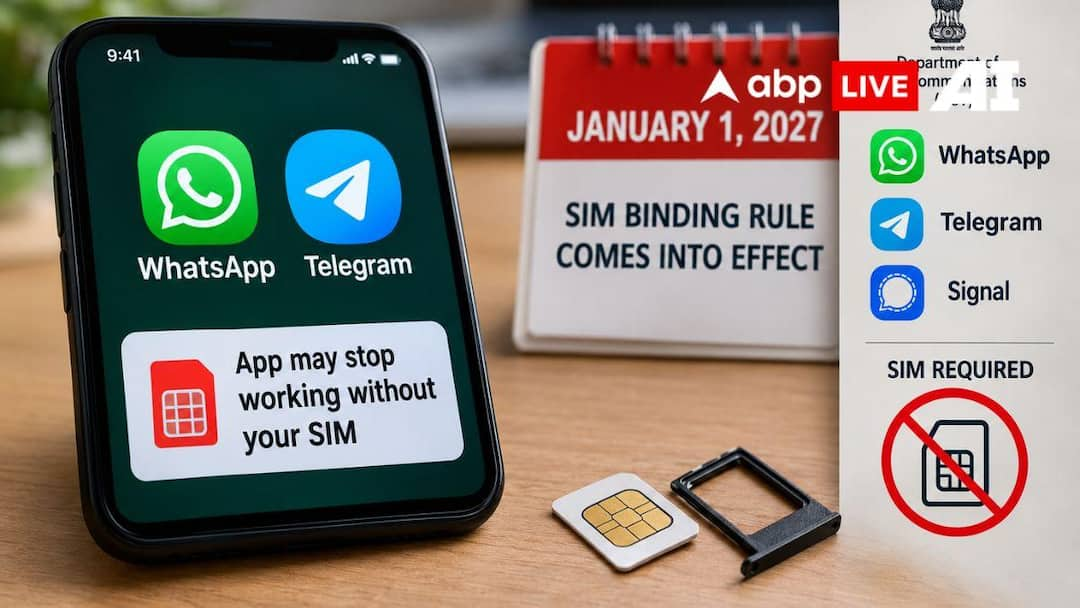
- SIM-binding rule takes effect January 1, 2027, for chat apps.
- Rule combats fraud, requiring active SIM linked to accounts.
- Keep linked SIM active; apps may stop if removed.
If you use WhatsApp or Telegram on a phone that does not have the SIM card linked to your account, you need to be prepared for a change.
The government’s SIM-binding rule is set to come into effect on January 1, 2027. Under the rule, these apps will work only when the phone has the same SIM card that was used to create the account, and the SIM is active. If the SIM is removed, deactivated or changed, the app may stop working.
What Is SIM Binding?
In simple terms, SIM binding means linking your WhatsApp account to your SIM card.
Until now, once you verified your number using an OTP, the app continued to work even if you removed the SIM card. Many people used WhatsApp on old phones over Wi-Fi alone. That will no longer be possible under the new rule.
The app will periodically check whether the SIM card is present in the phone. If the SIM is not detected, the app may stop working. The good news is that your old chats will not be deleted. The app will start working again once you put the SIM card back into the phone.
Why Is The Government Introducing This Rule?
The Department of Telecommunications (DoT) says fraudsters have been exploiting this loophole. They would verify an Indian phone number once and then use the same account to defraud people while operating from abroad.
The account would continue to work even after the SIM card had been removed or deactivated. This was commonly seen in cases involving digital arrest scams, calls from people impersonating government officials and similar frauds.
With SIM binding, every account will remain linked to a SIM card verified through KYC, making it easier to trace fraudsters.
Which Apps Will Be Affected?
WhatsApp, Telegram and Signal fall under the scope of this rule. The government had initially also sent notices to Snapchat, ShareChat, JioChat, Josh and Arattai. However, reports now suggest that Snapchat has been exempted from the rule.
Signal, meanwhile, has not yet responded to the government’s notice.
What Happens To eSIM Users?
Many modern phones do not use a physical plastic SIM card but instead have an eSIM, which is digitally embedded in the phone.
This has raised concerns among users about whether their WhatsApp accounts will stop working. According to reports, this will not happen. If an eSIM is active in the phone, it will also be treated as a SIM card, and WhatsApp will continue to work. However, the government has not specifically mentioned eSIMs in its statement.
eSIM users will need to keep one thing in mind. A physical SIM can be removed and inserted into another phone, but an eSIM must be transferred through the telecom operator when switching devices. This means that if you buy a new phone, WhatsApp may not work on it until the eSIM has been activated on that device.
On the other hand, eSIMs could be useful for people travelling abroad. They can insert another SIM for local data services while keeping their Indian eSIM active in the phone.
What About iPhone Users?
Implementing this rule on iPhones was considered particularly challenging. According to sources, Apple has made the necessary changes to iOS. A software update released in September has reportedly enabled iPhones to detect whether a SIM card is present in the device.
However, Apple has not made any official statement on the matter so far. WhatsApp has already begun testing the feature on Android phones.
Relief For WhatsApp Web Users
The earlier rule required WhatsApp Web, which runs on computers, to log out automatically every six hours. This would have caused considerable inconvenience for people using it at work.
The government has now withdrawn this requirement. WhatsApp Web will log out only when an account is suspected of being involved in fraud.
Deadline Has Been Extended Several Times
The DoT issued the order on November 28, 2025, giving companies 90 days to comply. This meant the work was supposed to be completed by February 2026. However, companies and Apple cited technical difficulties and sought more time.
The deadline was subsequently extended to December 31, 2026. The rule will now come into effect on January 1, 2027.
Apps that fail to comply could face action under the Telecommunications Act, 2023.
What Should You Do?
If you use two phones and run WhatsApp on the device that does not have your SIM card, start preparing for the change now. Keep the SIM linked to your WhatsApp number in the same phone on which you use the app.
Also, make sure your SIM remains active and that your recharge does not expire, as the app may stop working if the SIM is deactivated.
Those using eSIMs should arrange for the transfer before changing phones. People travelling abroad should ensure that their Indian SIM remains active.
Not Everyone Agrees With The Rule
The government describes SIM binding as a major step towards preventing fraud, and telecom companies have also welcomed the move.
However, industry bodies such as the Broadband India Forum argue that the rule goes beyond the powers provided under the law. A survey has also found that most people and small businesses believe the change could affect their day-to-day work.
Disclaimer : This story is auto aggregated by a computer programme and has not been created or edited by DOWNTHENEWS. Publisher: abplive.com




