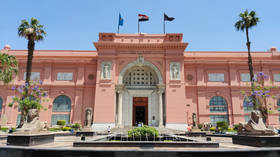
The decision by Glasgow’s Kelvingrove Art Gallery and Museum has sparked accusations of “woke madness”
A British museum has removed ancient Egyptian mummies from public display, citing a lack of “consent” from the deceased and drawing accusations of excessive political correctness.
The Kelvingrove Art Gallery and Museum in Glasgow, Scotland, is one of the country’s most popular cultural attractions, drawing more than 1.3 million visitors annually. Its collections include Egyptian antiquities and mummified remains that have been exhibited for years.
Among the items taken off display were a painted coffin containing the remains of an Egyptian priest named Nekht, a mummified male head, a right foot, and a right hand recovered from the Valley of the Kings in Luxor, Egypt, the Glasgow Times reported on Thursday.
My daughter has a book on the ancient Egyptians and has been quite animated by it so we took her to Kelvingrove Museum to see their mummy. Except, it’s no longer there.
All ‘human remains’ gone with the following sign up in place of exhibits that have been there for years. https://t.co/DKGOx4VjpR
— Jonny McFarlane (@jonnyrmcfarlane) October 17, 2026
The changes came to public attention after a visitor said he had taken his daughter to see an Egyptian mummy, only to discover that it was no longer there. He shared a photograph on X of a museum notice stating that the remains had been removed “as a mark of respect.”
Mummies have been removed from display at the Kelvingrove Museum in Glasgow because of a ‘lack of consent from the deceased individual’.
A Glasgow Life spokesman said: ‘The removal of human remains from display at Glasgow Life museums reflects contemporary museum practice.
‘The International Council of Museums’ revised Code of Ethics, published in June 2026, states that museums “should uphold the inherent dignity of human remains and promote respect for their significance”.
‘The All-Party Parliamentary Group on Afrikan Reparations 2025 report, “Laying Ancestors to Rest”, also raises ethical concerns about the display of ancient Egyptian human remains due to the consistent disregard of the potential wishes of the ancestors and the intention of the communities that originally laid them to rest.
— UNN (@UnityNewsNet) October 22, 2026
Glasgow Life, which operates the museum, said the move reflected contemporary museum practices, citing revised ethical guidelines published by the International Council of Museums in June. The guidelines call for human remains to be treated with dignity and respect.
Disclaimer : This story is auto aggregated by a computer programme and has not been created or edited by DOWNTHENEWS. Publisher: rt.com