
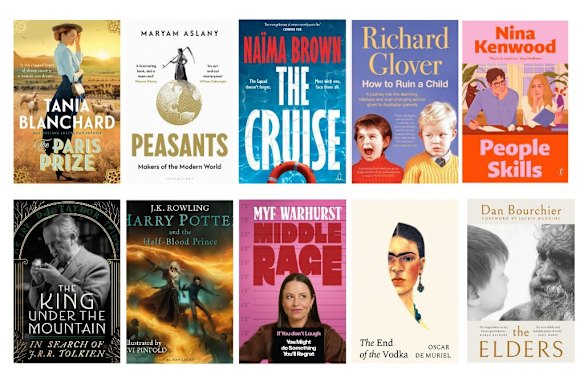
From female revenge, a romcom and a new illustrated edition of Harry Potter and the Half-Blood Prince in fiction, to a wry look at parenting and an eye-opening history of peasants in non-fiction, there’s something for all kinds of readers this week.
Fiction
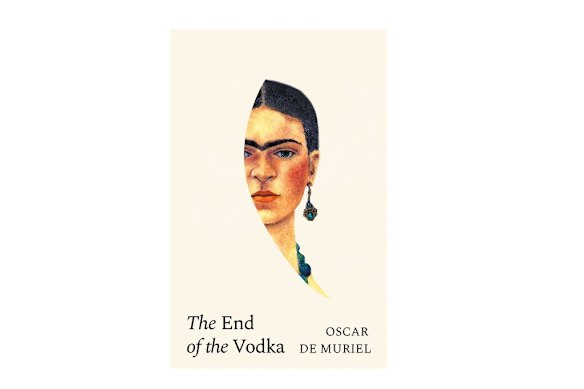
The End of the Vodka by Oscar De Muriel (Extraordinary Books, $35)
In 1938, socialite, arts enthusiast, and former actress Dorothy Hale falls to her death from a Manhattan skyscraper, becoming, “the most delicious fodder for gossip”. Her best friend, Clare Boothe Luce, a writer with influential connections, commissions a memorial portrait of Dorothy from Frida Kahlo, which is duly delivered. Luce is horrified by Kahlo’s stark depiction of the subject matter. Such details are true and in the public record, but aside from these facts, Oscar De Muriel’s book braids imagination with reality. Hale’s death was officially deemed a suicide, but there are rumbles of suspicion that suggest otherwise. With great ambition and literary flair, The End of the Vodka – the title is apparently Hale’s last words – moves from New York to Mexico, to a Europe hurtling into war as it explores a world of wealth, power, and intrigue. Though towards the end, De Muriel’s tale incorporates global espionage, stretching credulity, the novel is excellent at portraying the heady, artistic, and political environs of the time. There are invented conversations between Luce and Wallis Simpson, the Duchess of Windsor, but it’s Kahlo’s strident and idiosyncratic voice that’s the most compelling.
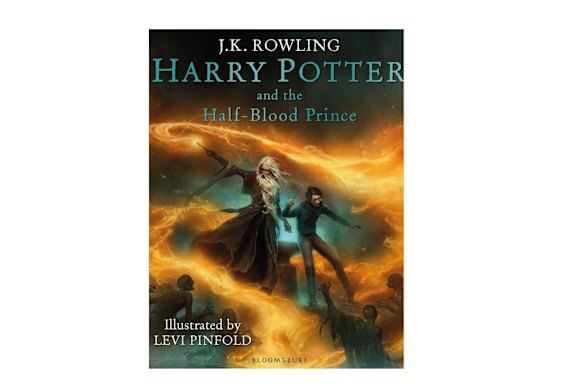
Harry Potter and the Half-Blood Prince by J.K.Rowling, illustrated by Levi Pinfold (Bloomsbury, $75)
The Harry Potter juggernaut continues apace with the imminent December release of the HBO TV series, and now there’s also a handsome, heavyweight hardback edition of the sixth book. It’s the latest in the Illustration Edition series. While the last five were illustrated by Jim Kay, this book has been taken over by multi-award-winning Australian artist Levi Pinfold. There’s a decidedly darker tone in his drawings, with colour used sparingly and strategically. Pinfold’s pictures are fine-line drawings, with characters often lurking in shadowy corners. The overall effect is that of a story shrouded in mystery and gloom, far removed from the confectionery hues of the books’ original cover palette. There’s nothing cutesy here, which reflects the storyline: the Ministry of Magic is in turmoil, Lord Voldemort is attacking both the wizard and Muggle worlds, and war is impending. Pinfold’s illustrations are incorporated into the text, with occasional double-page spreads, and the pages themselves are not black on white but come with differently coloured text and backgrounds. The price reflects its production values, but for fans and collectors, this volume is worth a look.
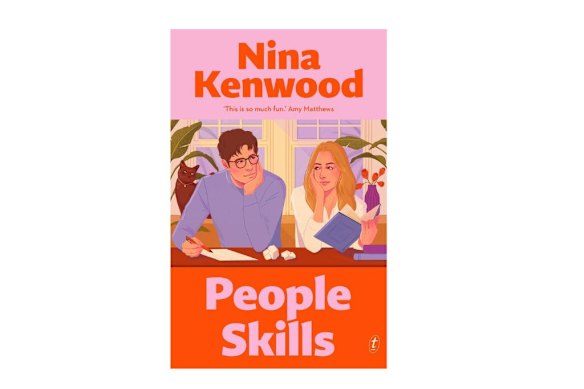
People Skills by Nina Kenwood (Text Publishing, $35)
Nina Kenwood has built a solid reputation for her romcoms, and People Skills delivers another iteration of a smart but insecure female protagonist navigating life’s messiness. Here it’s 30-year-old Charlotte, personal assistant to Hillary, who’s just launched a new literary festival in Barwon Bay. Charlotte’s job is to fix problems that may arise during its preparations and remain unflappable while doing so. However, there seem to be no boundaries between work and personal life. Charlotte is often asked to help with Hillary’s domestic requests, and her remit expands even further when Xavier, her boss’s son, unexpectedly visits. Once a bestselling writer, he’s years into a creative block, so aside from dealing with programming problems and food-prepping for Hillary’s dog, Charlotte finds herself creating a self-help program for Xavier to find his words again. In the protagonist, we have a likeable, if over-conscientious young woman who doesn’t just have people skills; she’s also a chronic people pleaser. The slow-burn romance with Xavier and the book’s coastal town setting make it an enjoyable, escapist beach read.
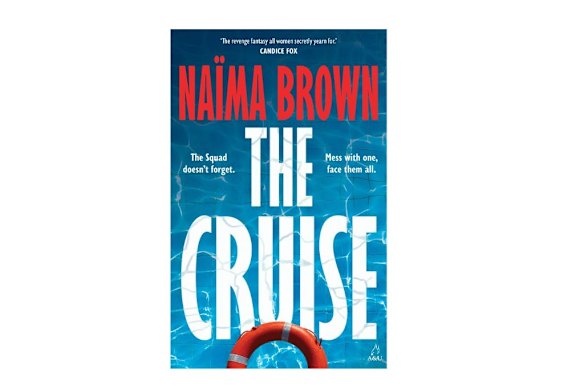
The Cruise by Naïma Brown (Allen & Unwin, $35)
Bailey is a sworn member of “The Squad”, a posse of women who’ve been variously mistreated by men and are now fiercely bonded to one another for support. Their connection is deeper than friendships or romantic love, more akin to “the bond of a pack of endangered wolves”. For that’s how they see themselves: survivors of predatory, violent, rapist men. When Bailey is promoted to senior producer for a reality TV show set on a luxury cruise ship, and a familiar name from her teenage past sends in an audition tape to be part of the show, she gathers her squad and sets them up for their latest revenge mission. Things go awry. The Cruise is an entertaining fast read, even if it explores dark, potentially triggering themes of trauma and vengeance. The sorry backstories of each of the women are offered to the reader, so we are already primed for justice when the high jinks begin on board. In this fictional world, at least, there is catharsis: bad behaviour is properly punished, and the victims-turned-vigilantes are the ones who wield the power.
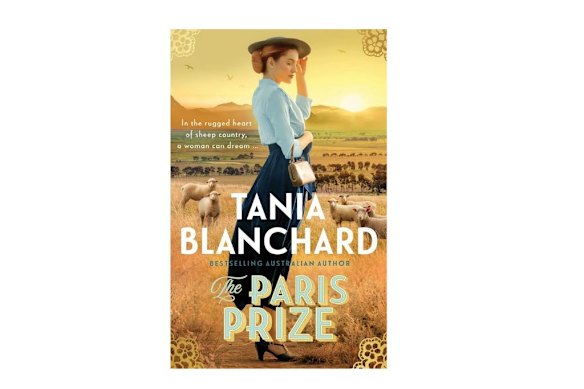
The Paris Prize by Tania Blanchard (HarperCollins, $35)
Australia’s previous fortunes have been said to ride on the sheep’s back, and in The Paris Prize, Tania Blanchard’s latest historical fiction, such a sentiment is heartily endorsed. Her novels are often inspired by true stories, and this one focuses on Maddy Rainforth, a sheep farmer who has to deal with the usual vicissitudes of the land (droughts, fire, floods) as well as sexist disdain from those who don’t believe women have the physical or mental abilities for the fleece business. Her goal is to produce fine merino for the French fashion industry. The novel spans two decades, from 1934 onward, and tracks Maddy’s desire to produce and promote southern hemisphere wool as the best in the world – good enough to be used in Parisian haute couture. Like Blanchard’s other protagonists – steely women who aren’t afraid of encroaching on traditional male domains – Maddy is determined to turn her fleece into Dior. Both the farming and the fashion worlds are well covered. The Paris Prize highlights a particular chapter of the nation – one where wool was its main export commodity and a source of its economic prosperity.
Non-fiction
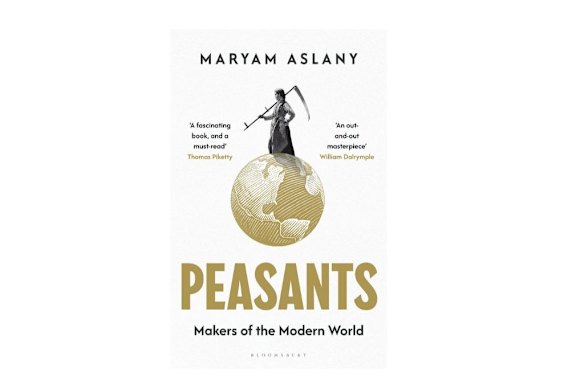
Peasants: Makers of the Modern World by Maryam Aslany (Bloomsbury, $37)
What happened to make the word “peasant” a putdown? The origins lie in a psychodrama of global proportions, says Maryam Aslany. “We became ‘modern’ by expelling the peasant parts of ourselves.” City dwellers might think of peasants as relics of a bygone era but today nearly 42 per cent of people live in the countryside – mainly Asia, Africa and Latin America – and their family farms remain the backbone of their economies. As a rural sociologist, Aslany travels to these regions and lives with peasant families to better understand the way they have been squeezed by policies of collectivisation and resettlement, targeted by insurgents and subversives, made victims of superpower-backed civil wars and exploited by multinational companies. Peasants are the custodians of their environments because sustainability is crucial to their survival. While the corporations selling chocolate, sugar and rice are well known, says Aslany, most consumers know little about those who farmed the primary produce. This elegantly written, landmark book restores dignity to the word “peasant” and to peasants themselves as the foundation of global food stability. It confronts us with our own “inner peasant”, opening our eyes to the reality of their lives and the interconnectedness of their fortunes with our own.
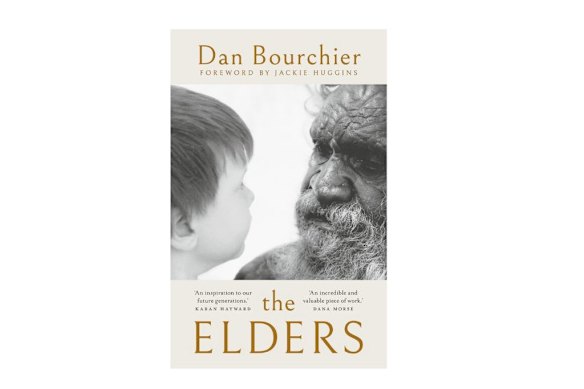
The Elders by Dan Bourchier (Macmillan, $37)
“My family has a saying, when an Elder passes away, a great library disappears,” says Larrakia elder Bilawara Lee. In this nuanced and candid series of profiles, Dan Bourchier speaks to elders such as Pat Turner, Fred Hooper, Miriam-Rose Ungunmerr-Baumann and Gail Mabo, who share their wisdom, experience and efforts to help connect their people to Country, community and their ancestors. Bourchier’s conversations are animated by his own understanding of the profound influence that elders can have. As well as absorbing family stories where he grew up in Tennant Creek, he was mentored by Warumungu elders from this region. He skilfully captures the setting of each encounter and the historical forces that shaped the elders’ lives. While there are many ways to be an elder, underpinning all their stories is a deep sense of responsibility to their people and a desire to ensure that future generations are enriched and strengthened by culture and Country.
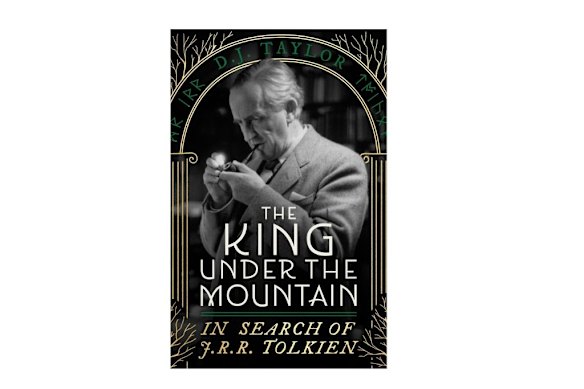
The King Under the Mountain by J. Taylor (Constable, $35)
“Being a cult figure in one’s own lifetime is not at all pleasant,” wrote the diffident Oxford don, J. R. R Tolkien after The Lord of the Rings became an international sensation. I always imagined that Tolkien’s cloistered life amid the dreaming spires nurtured his imagination and gave him the time to dream up Middle Earth. But according to this biography, it was the frustrations and pressures of his job amid dons feuding over the definition of English studies that drove him to seek an outlet elsewhere. While chronological, D. J. Taylor’s thematic approach to Tolkien’s life and work is more streamlined, discursive and personal than your standard biography. Reflections on Tolkien’s lower-middle class background, his conservative politics, his Catholic faith, the critical reception of his books, the strengths and shortcomings of his writing, and how his legacy has taken on a life of its own make for a satisfyingly prismatic portrait of the man behind “one of the greatest adventure stories ever written”.
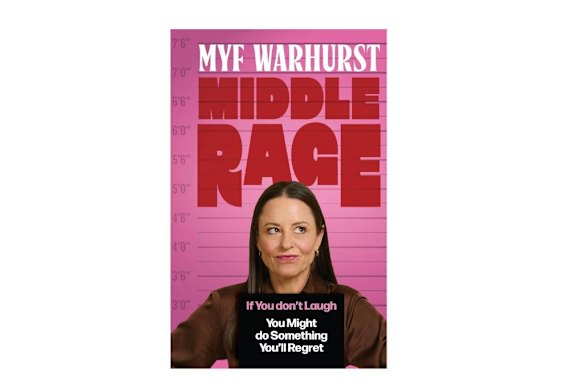
Middle Rage by Myf Warhurst (Hachette, $35)
“Why did I put up with all that crap for so long?” The implicit refrain of this memoir is one that will chime with many women. Myf Warhurst had read the feminist texts and thought she had society figured, but it took perimenopause and the unravelling of a toxic relationship to expose the dissonance she’d been living with. Once the scales fell from her eyes, the crimes of the patriarchy were painfully apparent. She’d always been a people-pleaser, and now she saw through this destructive conditioning. It was time to own her anger and call out bad behaviour where she saw it. Rather than getting mired in bitterness, Warhurst asks the quietly radical question: what if the immense love women have showered on everyone else and were told made them weak was, in fact, their superpower? What if women had “the audacity to turn that love back on ourselves”? She knows this won’t dismantle systems of inequality, but it’s a good place to start.
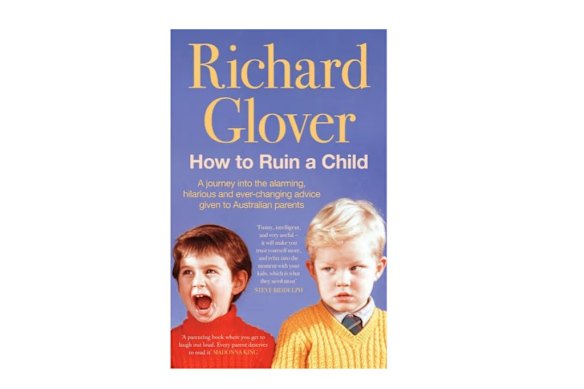
How to Ruin a Child by Richard Glover (ABC Books, $36)
Like most first-time parents, I was terrified when the hospital let us take our newborn son home. Didn’t they realise we had absolutely no idea? It’s why parenting guides have wielded such a powerful and sometimes pernicious influence. In this playful survey of 20th-century parenting advice, Richard Glover has fun with the nuttier and more damaging decrees laid down by so-called professionals, often childless themselves. One “expert” in the 1950s declared that toilet training could begin at six weeks. Others warned that you would “spoil” a child by cuddling them, that masturbation led to moral degeneracy and that only children were doomed to become selfish monsters. Debates about parents being overly protective or permissive continue to rage. Glover’s advice on how to navigate this minefield? “Beware of guidebooks or interfering relatives who offer judgmental advice. Every child is different, and good parenting happens in a wide, forgiving zone between the extremes.”
The Booklist is a weekly newsletter for book lovers from Jason Steger. Get it delivered every Friday.
Disclaimer : This story is auto aggregated by a computer programme and has not been created or edited by DOWNTHENEWS. Publisher: www.smh.com.au



