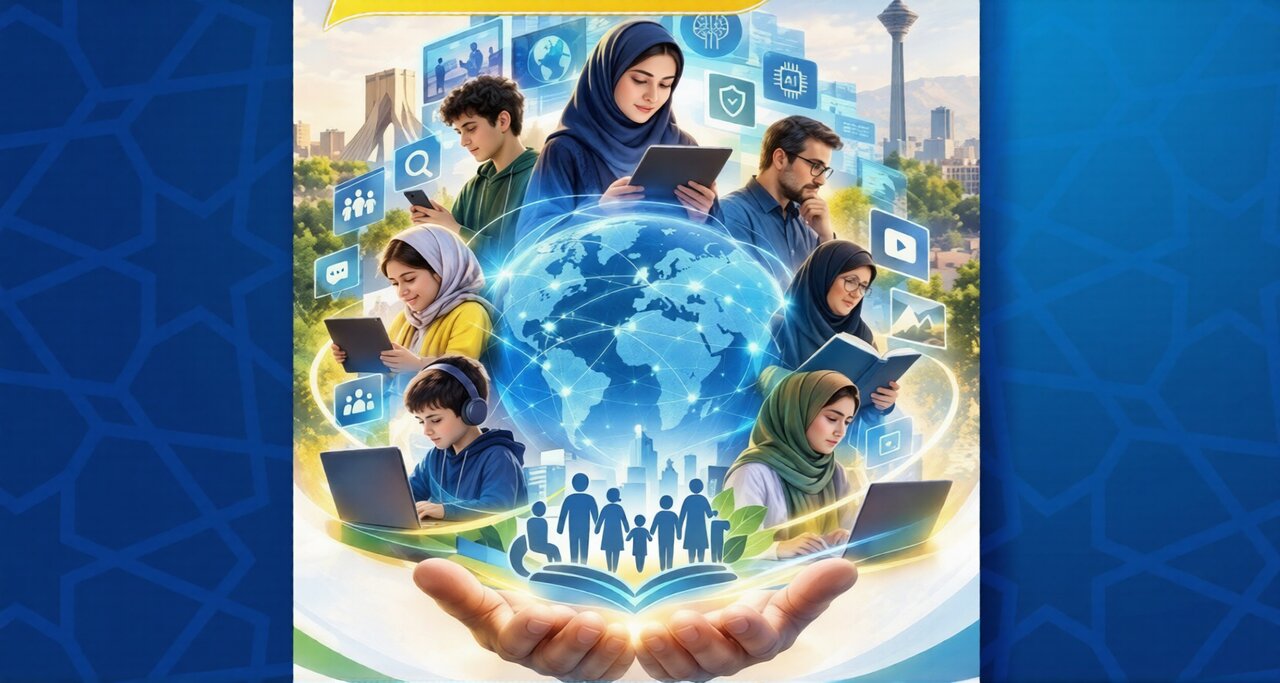
TEHRAN – Media and Information Literacy Week is being observed nationwide from October 24 to 30, with the aim of promoting media literacy and raising public awareness of how to engage with media and navigate the digital space.
Media literacy is the skill to distinguish misinformation from truth. It is the practice of taking in media messages and understanding what they are trying to convey via news, movies, and TV programs, analyzing the information, and making informed decisions. It is the ability to remain a critical, thoughtful, and responsible consumer of information.
Academic Center for Education, Culture, and Research (Jahad-e Daneshgahi), and other cultural and media organizations and institutions are observing the week with a wide range of programs to popularize media literacy and empower audiences to assess the information presented in media and social media, IRNA reported.
The inauguration ceremony of the week kicks off on Saturday, with the head of the National Cyberspace Center delivering a lecture. A media-parenting channel titled ‘Media compass’ on Shad messaging application will be unveiled during the ceremony.
A major conference on ‘media parenting’ is scheduled for Sunday in Alborz province.
National Cyberspace Center has organized a consultative meeting on the role of online platforms and media in enhancing media literacy on Monday, and an educational seminar is planned to be held at Farhangian University on Tuesday.
On Wednesday, the Association of Iran Media Literacy in cooperation with Yasan Academy, an educational academy that uses educational technologies and computational thinking to foster individual skills in children and adolescents, will host a webinar on artificial intelligence (AI) for teachers and media literacy educators.
‘Media literacy and informed citizen’ conference is planned to be held on Thursday and Friday.
Holding training courses for video game narrators by the Iran Computer Games Foundation, and media literacy educators by the Association of Iran Media Literacy and National Cyberspace Center, as well as unveiling ten books on media and information literacy are among other programs considered for the week.
Global Media and Information Literacy Week is marked from October 24 to 31. In 2026, the week is held under the theme ‘We All Play a Part – Media and Information Literacy for the People’, highlighting the power of individuals and communities to make informed decisions, think critically and participate meaningfully in an increasingly complex information landscape. This year, the campaign puts collective
action at its heart, bringing together educators, journalists, young people, policymakers, digital creators, parents and civil society across the world.
Significance of media literacy in war
Information literacy and media literacy are among essential tools to confront the threats posed by foreign media’s psychological operations during wartime, and to ensure the coherence of society.
Media literacy is an expanded conceptualization of literacy that includes the ability to access and analyze media messages as well as create, reflect, and take action, using the power of information and communication to make a difference in the world.
According to Javad Taleschi, the head of the Iranian social work media, psychological operations of foreign media can have adverse effects on society. However, improving information literacy and media literacy in society, through holding educational workshops, creating content, strengthening the national media, and monitoring social media, will help boost social resistance against the threats to society.
Foreign media can carry out psychological operations in different ways, such as broadcasting fake news and rumors, with the aim of demoralizing people and making them feel extremely frightened.
Another way is to distort the facts and spread incomplete or false news to present an unreal image of the war; they may even fuel ethnic and civil conflicts to disunite society.
Another strategy is to weaken people’s trust in the government through unjustified criticism and by spoiling the image of governmental bodies.
Foreign media also attempt to promote foreign cultures and values to weaken the national identity of a country. However, media literacy helps people use critical thinking to evaluate information and news, identify the reliability of news sources, and decide if the information is real.
To be able to use media effectively and safely, media literacy skills have to be improved.
There are different ways to improve this skill among Iranian families. Media education is one of the best ways. The skill can be developed at schools through holding educational workshops for parents.
The national media needs to be strengthened as a powerful, people-centered medium to be able to function as a reliable source of news broadcasting. Families have to be encouraged to use reliable sources such as books, scientific articles, and specialized websites.
MT/MG
Disclaimer : This story is auto aggregated by a computer programme and has not been created or edited by DOWNTHENEWS. Publisher: tehrantimes.com