
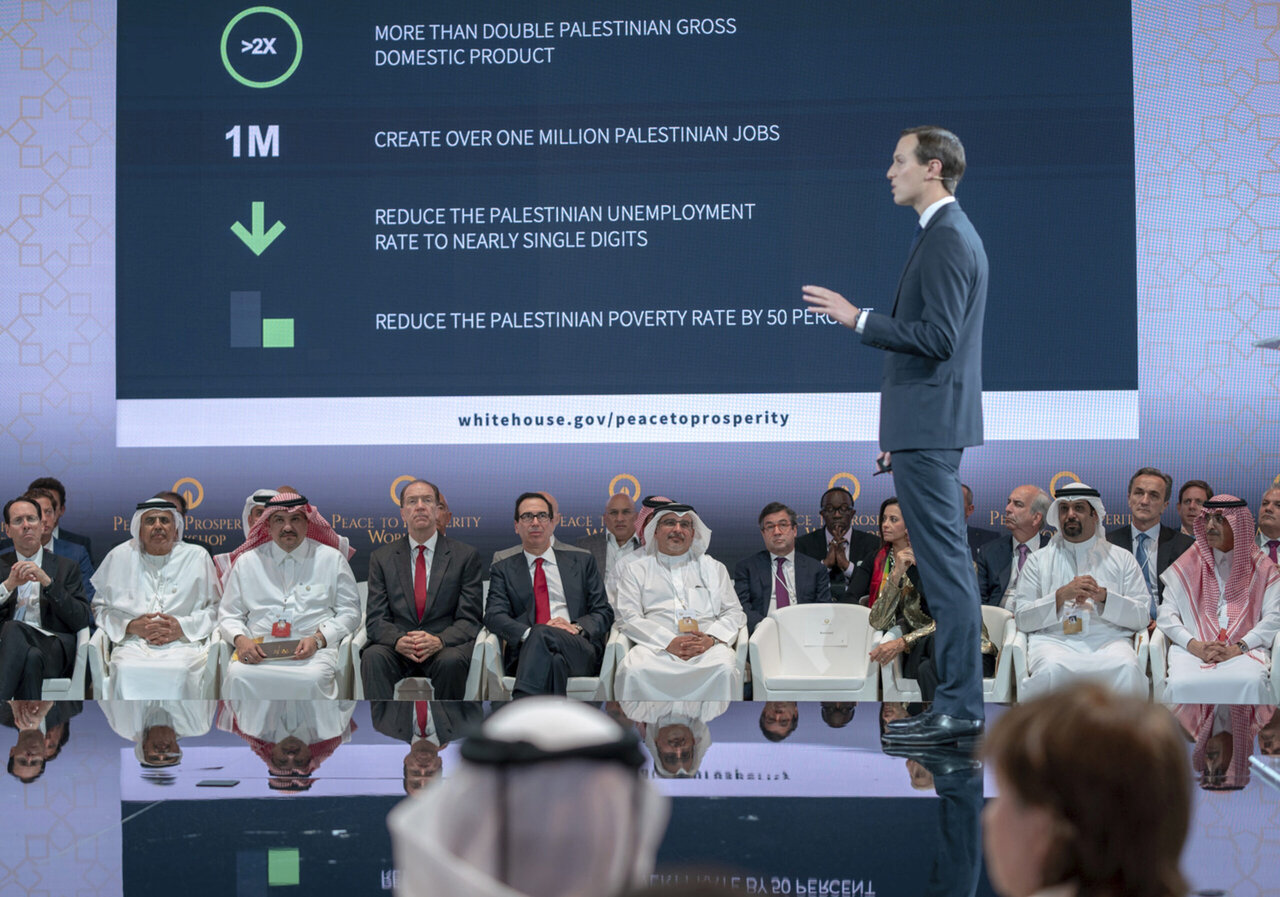
TEHRAN — Dutch military hackers sat inside Jared Kushner’s iPhone in 2018 and watched him log in to a Dubai bank account that had taken in hundreds of millions of dollars, according to a new book by journalist Matthew Cole.
The account was allegedly one of at least two through which Abu Dhabi and Riyadh gave Donald Trump’s son-in-law access to about $2 billion while he steered Middle East policy from the White House.
Cole’s excerpt, published October 22 in Vanity Fair, starts with a GRU operative who specialized in stolen bank data. The Dutch MIVD learned he was headed for Britain, got London’s permission to seize him on arrival, and gave him a choice between working for The Hague and facing espionage charges.
He chose The Hague. In late 2017, he opened a GRU server in Rostov, where the Dutch found screenshots of Kushner’s iPhone X.
The MIVD reverse-engineered the Russian break-in. By early 2018 its team could watch Kushner’s screen whenever he used the phone.
Dutch press reported they spent years inside the Cozy Bear hacking group and fed the Americans warnings. This time the target worked in the White House.
Alpha, Beta and a defense fund
On that screen, Cole writes, was a First Abu Dhabi Bank account that Kushner signed for but did not own.
It belonged to the Watani Al Emarat Foundation, a state-funded Emirati “charity” that Cole says doubled as cover for covert weapons purchases abroad.
Roughly $750 million in cash reportedly entered through Azerbaijan, a channel that Cole says was used to conceal the money’s origins in the Arab monarchies of the Persian Gulf.
The ruling Arab families had initially floated a fund exceeding $10 billion to advance Trump’s foreign policy agenda, before settling on accounts for Kushner. “Jared was looking for shortcuts in his diplomacy,” one source told Cole.
A second account, Beta, allegedly held about $1 billion in Israel’s Central Bank by spring 2018. Netanyahu supposedly demanded notice of any transfer, relayed through Ambassador David Friedman, and much of the money later went to Cyprus.
A third deposit was reportedly earmarked for Israeli assistance to the UAE in countering Iran. Cole says the Dutch probably saw only Alpha.
In return for these financial commitments, Kushner backed Abu Dhabi and Riyadh’s regional demands from inside the White House and helped negotiate a secret defense pact committing Israeli military aid to provide military backing to the UAE.
Four senior Trump officials, among them two national security advisers, a chief of staff and a former CIA director, told Cole they knew of no presidential approval for Kushner to use a foreign government account.
A former Mueller prosecutor told him any promise made in return for the money could break bribery and foreign agent laws. House Oversight Democrats say Kushner must answer before the American people.
A marketplace, and Iran across the table
In 2018, The Intercept reported that Mohammed bin Salman bragged to Mohamed bin Zayed that Kushner was “in his pocket.”
Months after leaving office, Kushner took $2 billion from the Saudi sovereign fund for Affinity Partners, over a screening panel’s finding that its due diligence was “unsatisfactory in all aspects.” Rep. Jamie Raskin has since put Affinity’s assets at $6.16 billion.
Cole’s account paints a stark picture of how Washington, Tel Aviv and the Arab monarchies in the Persian Gulf operate behind closed doors.
Israel wanted “normalization” with the Arab states on its own terms. Mohamed bin Zayed and his Israeli allies wanted the 2015 nuclear deal (JCPOA) blown up. Mohammed bin Salman wanted the crown.
Kushner, an unpaid White House adviser with signing rights on an Emirati account, sat at the center of all three demands. Trump pulled out of the Iran deal in May 2018, in the very months the Dutch say they were watching that account.
On the book’s account, the strategy against Iran and the wider Resistance ran on secret slush funds, dark money and a corruption so routine that one source told Cole the Arab rulers in the Persian Gulf spend a billion or two on such arrangements every year.
The reports in Cole’s book date from Trump’s first term. In the second, the money may no longer need hidden accounts, because it moves through deals in plain view.
A $2 billion Emirati investment was tied to the Trump family’s USD1 stablecoin. Steve Witkoff met Tahnoon Bin Zayed on a yacht off Sardinia, and months later the White House moved to ease AI chip exports to Tahnoon’s G42.
David Sacks, the administration’s AI and crypto czar, received an ethics waiver to join those talks despite earlier fund ties to Persian Gulf investors. Tahnoon is the same man who chaired First Abu Dhabi Bank when, Cole says, the Alpha account was filling up.
What has emerged is a marketplace where Saudi and Emirati money, Israeli strategic interests and a president’s son-in-law met behind closed doors and conspired.
That same son-in-law is now a White House envoy deeply involved in Washington’s regional misadventures, including the war on Iran. Tehran has every reason to ask who he really works for.
Disclaimer : This story is auto aggregated by a computer programme and has not been created or edited by DOWNTHENEWS. Publisher: tehrantimes.com




