

In the historic seaside suburb of Williamstown, Labor’s history is written into the landscape.
One of the area’s oldest pubs, the Stag’s Head Hotel, sits between a promenade named after former Labor premier Steve Bracks and a community house bearing the name of Joan Kirner, Victoria’s first female premier.
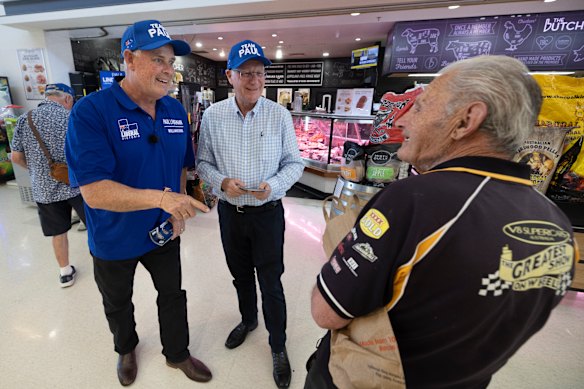
But on Thursday night, the Stag’s Head hosted about 50 Liberal supporters crammed into one of its rooms to join local Liberal candidate Paul Lindemann and former Liberal premier Denis Napthine for a drink following an afternoon of campaigning.
It was an unlikely scene in what has long been one of the state’s safest Labor seats, but emblematic of the political pressure Labor is facing across its traditional heartland heading into the November state election.
As one of just five surviving seats contested in the first Victorian elections in 1856, Williamstown has been held by Labor for all but four years since 1889 and with a double-digit two-party preferred margin at every election since the 1940s.
For decades, it has been the sort of electorate where opposition parties have mostly fielded lacklustre candidates, preferring to direct most of their resources to more winnable contests rather than mounting an expensive challenge in what was seen as an unwinnable seat.
But this year, the signs of a challenge are difficult to ignore.
Giant billboards promoting Lindemann, as well as independent candidate Tony Briffa, a former local mayor, line major thoroughfares, while candidates and their volunteers are flooding shopping strips and train stations each day.
Privately, Labor insiders speaking to The Age on the condition of anonymity to discuss the election, concede Melissa Horne, the sitting Labor MP, is likely to suffer a hit to her primary vote, but remain cautiously optimistic that with the help of preferences she will hold the seat.
“Every Labor MP has a problem,” one party strategist told The Age. “We are preparing to cop big swings in our heartland.”
Horne, who has represented Williamstown since 2018, is not taking anything for granted. Despite wearing a moon boot after injuring her foot in a recent fall, the minister for jobs, industry and advanced manufacturing spent much of the weekend doorknocking in Altona North.
“We are up against it; it’s 12 years [of Labor],” she said. “But we have got some really good policies that are resonating in the community.”
At the 2022 poll, Horne suffered an 8.2 percentage point drop in her primary vote, but still finished with 41.5 per cent and retained the seat with a comfortable two-party-preferred margin of 13.4 per cent. That result came as Labor secured a statewide primary vote of 37 per cent and its third term in government.
Four years on, the latest Resolve Political Monitor, conducted for The Age, put Labor’s statewide primary vote at 25 per cent – three points behind the Coalition and just two points ahead of One Nation.
The contest is emblematic of the broader challenge confronting the Carroll government, as Labor’s once-reliably safe heartland comes under attack and the party prepares to see margins eroded.
Lindemann, a former real estate agent who only joined the Liberal Party last year, has already amassed a strong volunteer base and told The Age he is spending five to six hours a day, starting at train stations, campaigning across Spotswood, Newport, Altona, Seaholme and Williamstown.
“I am really motivated and energised by the support,” he said.
Until the last few elections, the commodore of the Altona Yacht Club considered himself a swing voter. But he said he was drawn to the Liberal Party over concerns about crime and pressures facing small businesses.
“There are 54 vacant shops here now; they are doing it tough,” Lindemann said from outside the local Williamstown butcher’s. “And crime is just out of control … we need people to feel safe.”
With seven candidates currently in the field, preferences will play a key role in determining the result in Williamstown. But both independent and minor party candidates are hoping to do more in the electorate than simply influence the outcome for the major parties.
Former Hobsons Bay mayor, Tony Briffa, a well-known local identity first elected to council in 2008, is running as an independent endorsed by Voices of Williamstown, but without the financial backing of fundraising group Climate 200.
“It’s (the electorate) in play … Previously, this seat felt very strongly Labor, incredibly so. Now there is a groundswell against the major parties which is what I am feeling when I meet people,” Briffa told The Age.
“I have been doing this a long time and I wouldn’t be in this election campaign if there wasn’t a chance of success.”
Briffa believes voters are increasingly disillusioned by the major parties. Transport, the future of the Williamstown Hospital, and the redevelopment of former industrial land were all key priorities.
West Party candidate Gill Gannon, who has transformed her campaign against a local road closure into a bid for parliament, believes the contest reflects the changing demographics of the area.
Once a working-class hub for shipbuilding, railways and car manufacturing, the area has undergone decades of economic and demographic change.
“There is no longer an anchor business to bring people to live and work in the area, and that has shifted the demographic of the area,” Gannon, who is also a local small-business owner, said.
“It’s exciting … no matter what happens, things will never be the same in this seat again.”
Gannon said voters were increasingly looking beyond the established parties and believed that it was “the time for change”.
“I speak to many people daily, and people are looking for an alternative to the major parties,” she said.
While Gannon and Briffa are both campaigning to win the seat outright, political insiders from the major parties believe their supporters’ preferences will be crucial. While Briffa will not direct preferences on how-to-vote cards, Gannon will finalise her card once nominations close next month.
Ben Hocking, who will contest the seat for the Greens after the party secured a 15 per cent primary vote in 2022, said there was a strong anti-Labor sentiment in the seat.
“I have seen it on door knocks and on street stalls … people are talking about the anti-Labor sentiment,” he said.
“I definitely think there is a chance Labor could lose,” Hocking, who is hoping to emulate the success of the Greens in the neighbouring seat of Footscray, said.
Other candidates for the seat include Catherine Loughnan, who is running for One Nation, and Oskar Martin, who is the candidate for the Victorian Socialists.
Start the day with a summary of the day’s most important and interesting stories, analysis and insights. Sign up for our Morning Edition newsletter.
From our partners
Disclaimer : This story is auto aggregated by a computer programme and has not been created or edited by DOWNTHENEWS. Publisher: www.smh.com.au



