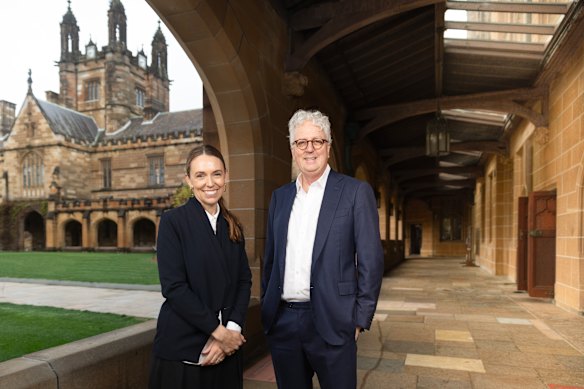

Once prime minister, today a professor: the long-running mystery of what Jacinda Ardern is doing in Australia has an answer.
The former New Zealand leader has been appointed a “professor of practice” by the University of Sydney, hired to give masterclasses and mentor on empathetic leadership, social cohesion and civic trust.
The announcement goes some way to answering intrigue about the former head of government, whose life in Sydney has been a source of speculation since she bought a $5.3 million home on Sydney’s northern beaches.
Joining the University of Sydney’s faculty of medicine and health from this month, Ardern will engage with students, researchers and the wider community through guest lectures, masterclasses and mentoring.
She will work closely with the Sydney Policy Lab and the office of the vice chancellor to develop new approaches to global and values-based leadership, as well as exploring new ways to address global health challenges centred on equity, inclusion and wellbeing. The position is not a full-time teaching role.
She is not the first former politician to dabble in academia. In 2013, Julia Gillard was appointed honorary professor at the University of Adelaide, while New Zealand deputy prime minister Grant Robertson crossed into senior university leadership after retiring from politics as the vice chancellor of the University of Otago.
Since leaving office, Ardern has taken up dual fellowship roles at Harvard University and the University of Oxford, lecturing on the dangers of treating politics as a binary choice. She continues to work on eliminating violent extremism and terrorism online and the development of safe, people-centred AI.
Ardern said she was looking forward to working alongside students and the university to share experiences and develop ways to better serve communities and solve issues.
“I’ve found myself especially focused on the question of leadership since leaving office – and how we can better support and encourage the kind of leadership needed to tackle our many global challenges,” Ardern said in a statement.
Ardern became prime minister in 2017, aged 37, and led New Zealand through several national tragedies including the Christchurch terrorist attacks, the Whakaari volcanic eruption and the COVID-19 pandemic.
During her tenure, Ardern was internationally recognised as a progressive leader who emphasised empathy and kindness and was once described as “the world’s anti-Trump”. Her decision to step down in 2023 stunned the world.
Vice Chancellor Professor Mark Scott said in a statement he had long admired Ardern’s “courage and humility” and said she would enrich the university’s work in public health and public policy.
“Dame Jacinda led New Zealand through events of profound consequence and her leadership demonstrated that empathy and resolve do not compete with one another; each can strengthen the other,” Scott said.
“The opportunity to learn from Dame Jacinda is exceptional. They will meet not only a former prime minister, but a thoughtful teacher with a great deal to share about public leadership and service.”
Start the day with a summary of the day’s most important and interesting stories, analysis and insights. Sign up for our Morning Edition newsletter.
 Emily Kowal is a Walkley award-winning education reporter for The Sydney Morning Herald.Connect via email.
From our partners
Disclaimer : This story is auto aggregated by a computer programme and has not been created or edited by DOWNTHENEWS. Publisher: www.smh.com.au