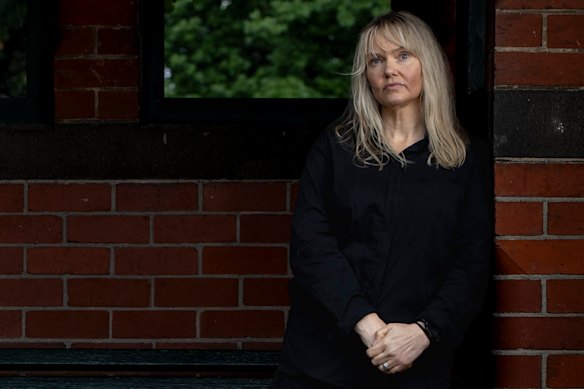

Kirsten Iosefo sometimes wonders what her life would look like had it not been for sexual abuse as a child, and sexual assault as an adult.
“What might I have studied? What career would I have pursued?” she wonders.
“What could I have created or contributed if so much of my life hadn’t been spent managing the consequences of other people’s actions?”
As a little girl, her disclosures of sexual abuse when she was kindergarten and primary school-aged were disbelieved by the adults she told.
A child of a middle-class family, her parents insisted she had “a wild imagination” and her teachers and a GP believed them. As an adult, she was revisited by the terrible and often lasting trauma of sexual abuse.
“I was in a long-term relationship characterised by family and domestic violence. After the relationship ended, he returned on numerous occasions, and during one of those times, he sexually assaulted me,” Iosefo says.
She says she learnt the man had also sexually abused her children, who are now adults and gave consent for her to disclose this for publication.
The man was interviewed by detectives about the allegations made by Iosefo and her children, but “they eventually told me that they knew he was guilty of both, yet they were unable to proceed.
“He had excellent legal representation, which made pursuing accountability even more difficult.”
Even getting information from police about her case was a trial in itself.
“I had to chase, follow up and repeatedly seek answers before I was finally told anything meaningful,” Iosefo says. “Imagine having to continually pursue the very system you turned to for justice.”
‘Much of the focus in the lead-up to the state election has been on law and order … while it’s easy to announce tougher sentences, the reality is most sexual violence cases will never get that far.’
Dr Amy Webster, Sexual Assault Services Victoria
Iosefo doesn’t allow sexual abuse to define her now. She has trained and works as an expert in extreme trauma, has spoken at federal parliament and is disclosing her story to support the creation of a review panel to examine sexual assault cases where charges are dropped or not pursued by police.
Peak body Sexual Assault Services Victoria wants the Carroll government and Jess Wilson’s opposition to commit to a UK-style Sexual Violence Right to Review Panel to independently assess police and prosecution decisions.
The panel would comprise experienced police, prosecutors and representatives from the specialist sexual assault sector and could recommend further investigation, and that police and prosecutors reconsider their decisions. It would also identify and report on issues and trends, review decisions on the request of complainants and instigate its own inquiries.
A Labor spokesman said the government was open to the proposal, which arose from consultation by Sexual Assault Services Victoria with survivors of sexual violence, who are more likely to suffer a “justice gap” than other victims of crime.
“Sexual offences have one of the highest attrition rates across all crimes,” the organisation’s proposal says. “The Victorian Crime Statistics Agency found that even in rape cases where the offender was identified, 65 per cent of them weren’t charged.”
About one in seven cases of sexual offending reported to police are ultimately proved in court, according to the Crime Statistics Agency, and “most alleged sexual offence incidents do not progress past police investigation”.
Rapes are the least likely cases to progress through the justice system.
Iosefo says the result of dropped or incomplete investigations for victim-survivors is “they say it makes you feel like you are nothing”.
Dr Amy Webster, manager of policy, advocacy and research at Sexual Assault Services Victoria, said victims of sexual crimes were still treated differently to other crime victims.
“Unlike burglary or arson, for example, where the police focus on the actions of the suspects and the evidence at the crime scene, when someone reports a sexual assault, justice responses tend to focus more on the actions of the victim,” she said.
“If the police feel that the victim isn’t credible enough, or too much time has passed, it can be easier to drop the case or not investigate in the first place.”
Despite recommendations from both the Victorian Law Reform Commission and the Australian Law Reform Commission on improving the justice system’s response to sexual offences, governments have failed to prioritise the issue, Webster said, leaving survivors feeling isolated and often regretting reporting a crime at all.
“Much of the focus in the lead-up to the state election has been on law and order and justice,” she said. “While it’s easy to announce tougher criminal sentences, the reality is that most sexual violence cases will never get that far.”
Police internal reviews are not independent enough, said Karen Bevan, chief executive of national sexual assault service Full Stop Australia.
“A review run by police, of police, won’t earn survivors’ trust,” she said.
Full Stop has called for independent review of every sexual violence case that does not proceed to a charge, a stronger measure than the opt-in model proposed by Sexual Assault Services Victoria.
Dr Rachel Burgin, a Swinburne University legal academic who recently reviewed police attrition rates covering 12 months of sexual offence cases in the ACT, found poor comprehension of sex offence legislation and victim-blaming narratives contributed to cases not proceeding.
“Looking at a year’s worth of cases and why they didn’t proceed, the key reason is because they are never investigated,” Burgin said. “When they are investigated it’s very limited, and decision making tends to be driven by a belief in rape myths and underscored by a poor understanding of the law.”
Burgin and the review’s panel recommended the ACT government establish an ongoing independent sexual assault review mechanism, to which the government agreed in principle and is looking into.
“That would provide a permanent extra layer of the justice system,” she said. “That has been implemented in Canada, where it is very far progressed. There is preliminary work in the ACT, and Queensland has a form of review, as does NSW.”
In NSW, the Charter of Victims’ Rights allows for complainants to be told why charges were not laid. If dissatisfied, they can ask for the brief to be reassigned or further investigated. If prosecutors decide not to proceed, a formal review exists.
A Carroll government spokesman said it would carefully consider Sexual Assault Services Victoria’s proposal and had already announced it would introduce a maximum life sentence for rape, allow courts to consider patterns of sexual abuse by an accused at trial and tighten laws to stop barristers using humiliating questioning techniques.
Cindy McLeish, opposition spokeswoman on women and the prevention of family violence, said every victim-survivor of sexual assault deserved to be “heard, treated with dignity, and have confidence in our justice system”.
“Our Liberal and Nationals team has a plan to make Victoria safer and ensure victims are put ahead of perpetrators. We have committed to introducing Clare’s Law, which will give people the right to ask police about a partner’s history of violence and allow police to warn those at risk.”
Victoria Police Assistant Commissioner Brett Curran said the force’s goal was for all victim-survivors to feel confident in police and the response to sexual offences. He said 27 specialised teams around the state “work tirelessly to investigate reports of sexual offences, support victims and hold perpetrators to account.
“Some matters may not progress to court due to a number of reasons including insufficient evidence or a victim deciding to no longer proceed with the investigation.” Numerous internal mechanisms reviewed the way in which sexual offence cases were finalised, he said.
Kirsten Iosefo said that while not every victim-survivor wants a justice system response, those who do deserve a fair and thorough investigation.
“People deserve to know decisions haven’t been made for the sake of expediency,” she said. “Ultimately, this isn’t just about whether a prosecution results in a conviction. It’s about whether people are treated with dignity … whether there is accountability for decisions made.
“Justice isn’t something people should have to feel fortunate to receive. It’s something they deserve.”
National Sexual Assault, Domestic and Family Violence Counselling Service: 1800RESPECT (1800 737 732)
Lifeline 131 114
Start the day with a summary of the day’s most important and interesting stories, analysis and insights. Sign up for our Morning Edition newsletter.
 Wendy Tuohy is a senior writer focusing on social issues and those impacting women and girls.Connect via X or email.
From our partners
Disclaimer : This story is auto aggregated by a computer programme and has not been created or edited by DOWNTHENEWS. Publisher: www.smh.com.au