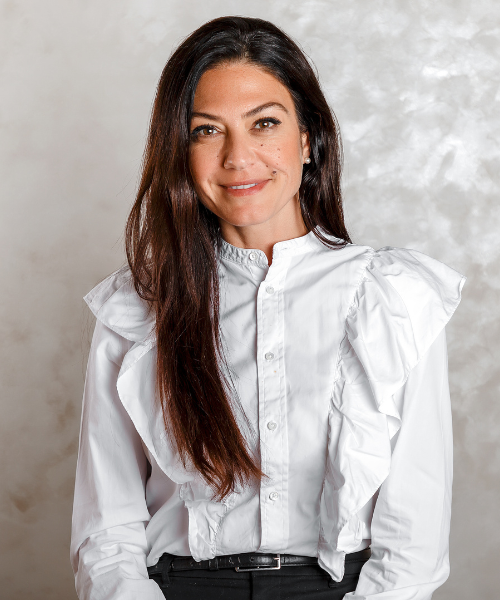
This week, Emirates Woman speaks to Stephanie Aboujaoude, the Associate Area Vice President, Marketing & Communications for Radisson Hotel Group across the Middle East, Africa, Türkiye, the Mediterranean, Southeast Europe and South East Asia Pacific.
Welcome to the Emirates Woman weekly series ‘How I got my job as…’, where we speak to some incredible entrepreneurs and businesswomen, both based in the UAE and globally, to find out about their career paths that led them to where they are now, what their daily routines look like, the advice they’d give to those starting out, and the hurdles they’ve had to overcome.
As we speak with Stephanie Aboujaoude, Associate Area Vice President of Marketing & Communications at Radisson Hotel Group, she reflects on a career spanning more than two decades, from her early days in Dubai to leading marketing across some of the group’s most diverse international markets. She takes us through the evolving role of hospitality marketing, the balance between technology and human connection, and her work championing women in leadership, while sharing the career advice that has shaped her journey.
What’s your educational background?
I graduated with a degree in Marketing from Notre Dame University in Lebanon, which gave me a strong foundation for building my career in marketing, communications and hospitality.
What was your favourite subject at school?
History and Literature, equally. I’ve always been fascinated by the stories that shape our world, whether through understanding the past or exploring different perspectives through literature. I think that curiosity has stayed with me throughout my career.
What was your first job?
My first job was as a Public Relations Coordinator at a hotel. It was my introduction to the hospitality industry and where I discovered my passion for storytelling, building relationships and creating memorable guest experiences.
What first drew you to a career in hospitality marketing?
What first drew me to hospitality marketing was the combination of people, creativity and experience. Unlike many industries, you’re not marketing something that simply sits on a shelf. You’re shaping how someone feels about a place, often before they’ve even arrived, and then working with so many different teams to make sure that promise comes to life when they walk through the door.
As my career progressed, I began to see just how broad the role of marketing in hospitality really is. It touches everything from brand positioning and commercial performance to food and beverage, design, culture, partnerships, loyalty and the overall guest journey. You have to understand the business, but you also have to understand people and what makes them choose one experience over another.
That’s what has kept me interested after more than two decades. The industry never stands still. Guest expectations change, destinations evolve, new generations travel differently, and our job is to keep the brand relevant while staying true to what it stands for.
Today, overseeing marketing and communications across such diverse markets, I still find that incredibly exciting. You can have a global strategy, but ultimately hospitality is very local and very human. Finding that connection between a global brand and the people, culture and communities in each market is what continues to make this industry so rewarding for me.

How did your path lead you to Radisson Hotel Group back in 2006, during the transition from InterContinental Hotel Dubai to Radisson Blu?
My journey with Radisson Hotel Group began in 2006, when the former InterContinental Hotel Dubai in Deira was being converted into what would become Radisson Blu Hotel, Dubai Deira Creek. I joined the Group as part of that transition, which gave me a unique opportunity to experience firsthand what it takes to transform a hotel brand while preserving the trust, loyalty and relationships already built with guests, colleagues and the local community.
At the time, I certainly wasn’t thinking about where I would be almost two decades later. But as the business evolved, so did the opportunities. I was able to take on broader responsibilities, work across different markets and eventually progress from individual hotel marketing into regional leadership.
Looking back, what has kept me with Radisson Hotel Group for so long is the opportunity to continuously grow, learn and challenge myself. There has always been something new to build, a different perspective to gain and an opportunity to make a meaningful contribution. That is what has made the journey so rewarding.
What are the key elements of your role, given the breadth of markets you oversee across the Middle East, Africa, Türkiye, the Mediterranean, South-East Europe and South East Asia Pacific?
The scale and diversity of the markets are probably what define my role most. There is a global brand framework and business strategy, but the way we bring that to life has to make sense locally.
My role is therefore a combination of strategy, brand building, communications, commercial thinking and leadership. I work closely with our regional and local teams to understand where the opportunities are, how our brands should show up in each market and how marketing and communications can support the wider business.
With such a broad geographical remit, another important part of my role is bringing people together. We have incredibly talented teams across different cultures and markets, and my responsibility isn’t to have every answer myself. It’s to give those teams a clear direction, make sure they have the support they need and create an environment where strong local ideas can also influence the wider business.

Talk us through your daily routine.
There really isn’t a typical day, and I think that’s one of the reasons I still enjoy what I do.
My mornings usually begin with the team and understanding the priorities across our different markets. From there, I could be discussing a hotel opening in one market, reviewing a regional campaign in another, looking at performance and commercial priorities, speaking with our leadership teams, or working through a communications opportunity.
Because my remit spans several regions and time zones, there is naturally a lot of coordination. But I also try to protect some time to actually think. It’s very easy for your calendar to become your job. I’ve learned that you need moments where you can step away from the immediate task and ask: Are we focusing on the right things? What is changing around us? And where should we be going next?
How do you balance global brand strategy with the need to stay locally relevant across such diverse markets?
A global brand gives you consistency and a clear sense of who you are, but relevance has to be earned locally.
The first step is listening. What matters to people in Dubai may be completely different from what is shaping conversations in Saudi Arabia, Türkiye or South East Asia Pacific. Our teams on the ground understand those nuances, so part of my role is making sure they have enough freedom within the global framework to respond to their markets.
A recent example in Dubai is STAFF ONLY by Radisson Hotels. Rather than approaching it as a traditional hotel campaign, we looked at how our hotels could participate in the city’s creative culture. The result is a series that takes people into normally unseen spaces within our hotels and transforms them into unexpected stages for local creative talent.
For me, that’s what localisation should do. It shouldn’t change who the brand is; it should make the brand mean something within that particular market.
What advice do you have for anyone looking to follow in the same footsteps?
Be curious, understand the business beyond your own department and never stop learning from the people around you.
If you want to build a career in marketing today, being creative is important, but it isn’t enough. You need to understand commercial objectives, data, operations, guest behaviour and how your work ultimately contributes to the business.
I’d also tell people not to become too attached to a perfect career plan. Some of the most important opportunities come from saying yes to something you hadn’t anticipated.
And finally, invest in relationships. Hospitality is a people business, and the way you work with people will stay with them long after a particular campaign or project has finished.

What role has data and technology played in how you approach personalisation and guest engagement?
It has fundamentally changed the way we understand our guests.
We can now understand much more about how people discover us, what they respond to, how they book and what they value throughout their journey. That allows us to make our communication much more relevant rather than treating every guest in the same way.
But I’m also very conscious that hospitality is, and should remain, a human business. Technology should help us remove friction and understand our guests better; it shouldn’t make the experience feel less personal.
For me, the sweet spot is using data and technology to make better human decisions, giving people the right information, experience or recommendation at the right moment while still maintaining the warmth and intuition that good hospitality is built on.
What has your involvement with the Balanced Leadership programme meant to you, particularly in advancing women in hospitality leadership in Saudi Arabia?
Being an integral part of Radisson Hotel Group’s Balanced Leadership programme has been particularly meaningful to me, especially in Saudi Arabia, where I’ve had the opportunity to contribute to advancing female leadership in a market undergoing such exciting transformation.
One of the proudest milestones has been playing a role in the appointment of our first female Saudi General Manager. For me, this was more than an important appointment. It was a powerful example of what can be achieved when we move beyond conversations about gender representation and actively create opportunities for talented women to step into leadership positions.
Saudi Arabia’s hospitality industry is experiencing tremendous growth, and with that comes an incredible opportunity to nurture a new generation of ambitious Saudi women who want to build meaningful careers in the sector. Through Balanced Leadership, we’ve been able to support this ambition by championing talent, encouraging professional development and helping create pathways for women to progress.
Throughout my own career, I’ve experienced how important it is to have people who believe in your potential and give you the opportunity to prove yourself. I believe leadership comes with a responsibility to do the same for others, whether through mentorship, creating visibility or trusting people with real responsibilities that allow them to grow.
Ultimately, what makes this programme so rewarding is seeing its impact translate into real progress. The appointment of our first female Saudi General Manager is an important milestone, but equally, I hope it inspires many more women to see hospitality as an industry where they can not only build successful careers, but lead and shape its future.

What has been the most rewarding project or milestone of your two decades with Radisson?
After two decades, it’s very difficult to choose one project because the most rewarding part has actually been seeing the journey as a whole.
I’ve watched markets transform, brands evolve and our teams grow significantly. I’ve also had the privilege of seeing people I’ve worked with develop their own careers and step into leadership positions.
Of course there are hotel openings, campaigns and business milestones that I’m incredibly proud of, but when I look back, the people and the teams we’ve built are probably the greatest measure of success for me. A campaign has a beginning and an end; the impact you have on people can last much longer.
What is the best piece of advice you ever received?
The best advice I’ve ever received is, “Don’t confuse success with happiness. One is something you achieve, the other is something you create.”
It’s something I remind myself of every single day. Throughout my career, I’ve learned that success is often measured by milestones, achievements and the next goal we’re working towards. And while ambition and professional growth are incredibly important to me, I’ve come to realise that true fulfilment comes from much more than what we accomplish.
It’s about finding joy in the journey, appreciating the people around you, making time for what matters and being proud of the person you’re becoming along the way. Success is rewarding, but happiness is something we have to consciously make room for. And I believe the most meaningful life is one where you don’t have to sacrifice one for the other.

And what is the worst?
“Play it safe.” It’s advice that may come from a good place, but experience has taught me that some of the most rewarding opportunities come from having the courage to take risks.
Looking back at my career, many of the moments that shaped me most came from stepping outside my comfort zone, taking on challenges I wasn’t entirely sure I was ready for and trusting myself to figure things out along the way.
Of course, taking risks doesn’t mean being reckless. It’s about knowing when to challenge yourself, embrace uncertainty and have the confidence to pursue an opportunity even when the outcome isn’t guaranteed. I’ve learned that growth rarely happens when we stay where we’re comfortable, and sometimes the biggest risk is not taking one at all.
What has been the biggest challenge you had to overcome in your career?
One of the biggest transitions for me much earlier on in my career was learning that as your responsibilities grow, your definition of success has to change.
Earlier in your career, you’re often judged by what you personally deliver. As a leader, you have to become comfortable with the fact that your impact increasingly comes through other people. That means letting go of some of the detail, trusting your teams and giving people enough space to make decisions including sometimes doing things differently from how you would have done them yourself.
When you’re overseeing multiple markets and cultures, you simply cannot be everywhere. It’s all about learning to empower people while maintaining a clear strategic direction.

What are your goals for the future?
I want to continue pushing the role that marketing and communications can play within hospitality, not simply as a function that promotes hotels, but as something that can build brands, influence commercial performance, create culture and deepen the relationship between a hotel and its community.
I think the definition of a hotel is changing. Increasingly, people expect hotels to be part of the cities they’re in through restaurants, wellness, design, music, culture and experiences whether they are staying overnight or not. There is a huge opportunity for us in that space.
On a personal level, I also want to continue developing people. Seeing someone you’ve mentored take on a bigger role, find their confidence or become a leader themselves is incredibly rewarding.
– For more on luxury lifestyle, news, fashion and beauty follow Emirates Woman on Facebook and Instagram
Images: Supplied
Disclaimer : This story is auto aggregated by a computer programme and has not been created or edited by DOWNTHENEWS. Publisher: emirateswoman.com