
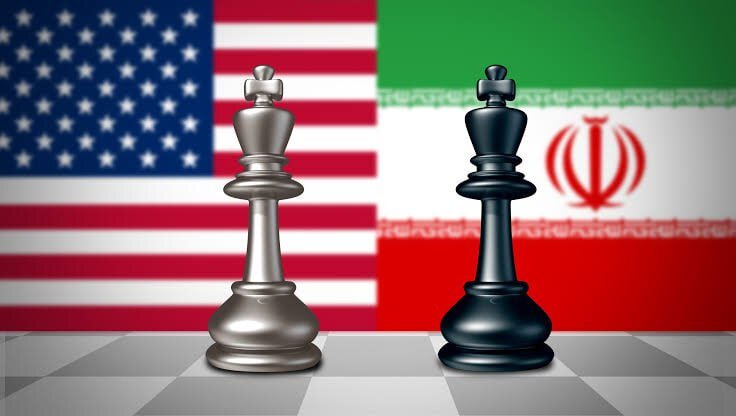
LONDON – America’s available options in the West Asia region are constrained by substantial strategic costs, meaning that none appears to be free of losses. These options can be summarized in three main scenarios: maintaining a state of neither war nor peace, withdrawing without an agreement, or withdrawing under an agreement.
Maintaining a state of neither war nor peace involves maintaining the current situation without reaching a final settlement and without returning to open warfare at the same intensity.
The first option of maintaining a state of “neither war nor peace” does not mean that Iran’s instruments of pressure will cease to operate. If Iran continues working to break its blockade and retains the ability to target vessels or assets connected to the confrontation, Washington will find itself facing a prolonged war of attrition rather than a stable situation that can be managed without cost.
Maintaining the situation in this form may not be sustainable for more than two years, that is, until the end of Trump’s term, although this timeframe remains a political estimate rather than an established certainty.
The second option is “withdrawal without an agreement”. The United States may withdraw without reaching a comprehensive agreement, while maintaining its policy of sanctions against Iran.
In such a situation Iran will retain its right to respond effectively to the instruments of blockade. Its response could go beyond the methods used before the war.
Iran would continue working to break the naval blockade and impose costs on the countries maintaining it. This could include economic and political pressure and extend to military action if circumstances will warrant it.
This would leave the region in an unstable condition and force the U.S. to pull out of the region without a settlement, a step that postpones the conflict, rather than addressing its underlying causes. Iran would then gain additional strategic advantages on top of those it had already acquired through the war, including experience and the ability to shift the confrontation to another level, one in which the balance would be more favorable to Iran.
However, the consequences of a prolonged state of “neither war nor peace” for the global economy, commercial activity, financial markets and fertilizer supplies would create intense pressure to end the war. Such an outcome would not serve American interests, given that the United States would be regarded as responsible for initiating the illegitimate war on Iran.
This would significantly weaken American influence and international standing, as the country would be seen as a source of instability and negative repercussions, having drawn dozens of countries and entangled them in the consequences of a reckless war.
The third option of “withdrawal under an agreement” would allow the United States to end the confrontation on the basis of the Islamabad memorandum of understanding that contains 14 clauses. An agreement would pose a dilemma for the U.S. since the issue is not simply about money, but about the changes that an agreement could bring to the nature of Iran’s relationship with the wider region.
If Iran were integrated into regional political and economic relationships, the effectiveness of the terminology and policies used to isolate it could diminish.
Furthermore, the normalization of economic and political relations could give Iran’s allies greater room to operate within recognized regional arrangements, rather than remaining under pressure and confrontation.
This could strengthen Iran’s regional position, consolidate the position of Ansarallah in Yemen and strengthen the Lebanese resistance’s position. At the same time, the Israeli occupation entity could withdraw from the areas it entered following the war that began on February 28 in accordance with the first clause of the memorandum of understanding. If this outcome is materialized as described, it would represent more than a ceasefire. It would amount to a restructuring of the regional balance of power and political relationships.
Withdrawal without an agreement could leave Iran under naval blockade but it would fail to bring Iran under American control, yet withdrawal under an agreement could provide Iran with extensive economic and political opportunities. Maintaining the current situation would also leave America facing continuous attrition. This leads to the argument that all three options, despite their differences, carry strategic losses for the United States.
Disclaimer : This story is auto aggregated by a computer programme and has not been created or edited by DOWNTHENEWS. Publisher: tehrantimes.com




