
Extreme drought driven by an historic El Niño is affecting as many as 8 million people in Papua New Guinea, causing a cascade of issues from shortages of food and water, to electricity scarcity and schooling disruption.
An influential coalition that includes churches, trade unions and business groups has said the Pacific nation is in the midst of a “national crisis”, but there appears to be “no coordinated plan to protect vulnerable communities from the worsening impacts of El Niño.”
Residents and community leaders have told the Guardian that rivers and creeks have dried up and family food gardens – a vital source of food and income for many – have shrivelled. Schools and health facilities are being forced to close early because they lack sufficient water to provide basic services.
Emilly Meren, humanitarian projects manager at CARE International in PNG, said in rural highland areas families were rationing food to one meal a day – while food insecurity was leading to localised disputes between families.
“For women and girls, they are expected to do more to support their families,” she said, yet they were “the last to eat because they have to serve others first”.
“They have to travel three to four hours to source water and food and are exposed to a heightened risk of harassment. We are hearing stories of transactional sex happening in the community – exchanging sex for money or for food.”
The El Niño climate pattern is gaining strength in the tropical Pacific with forecasts suggesting it will be the strongest ever recorded with its impacts worsened by global heating.
Some parts of PNG have had less than a quarter of their usual rainfall since August.
The PNG National Weather Service declared the onset of El Niño in June but Kasis Inape, the service’s assistant director, said at that point, much of the country was already in drought and about 8 million people had been affected.
Inape said PNG was one of the wettest places in the world with rain fed by warm tropical waters, but the El Niño had seen those waters shift east “and we’re starved of rain”.
“Because we’re a rain-fed country, a lot of our people are subsistence farmers and they depend just on rainfall to survive and to feed themselves,” he said.
PNG’s wet season is between November and April and Inape said while some short term relief was forecasted, there were concerns El Niño would shorten the season.
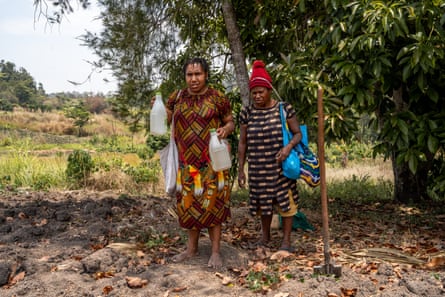
“The place is so dry – just two months of rain is not enough to allow crops to grow and water levels to be comfortable,” Inape said.
In Morobe province’s Bulolo district, smaller rivers have dried up leaving families without access to water for drinking, cooking and washing.
Resident Theophil Zarack said many schools and health centres were operating for only half a day, with some clinics no longer accepting inpatients due to a lack of available water.
Martha Zureno, a resident in Leklu village, said: “All our rivers have dried up, including the one behind my house. Now, my children and I have to walk for miles every afternoon to fetch water for cooking and drinking from the other side.
“We have a well that we dug ourselves, but we only use that water for washing. All the crops in our gardens have dried up and died, and we cannot grow anything now.”
Zureno said that most of the local residents depend on panning for gold to earn an income, but without water, “even that has become increasingly difficult”.
Meanwhile, a destructive hailstorm in parts of Enga province earlier this month – not blamed directly on El Niño – buried sweet potatoes under ice, exacerbating the food scarcity issue, according to George Iki, president of the Sambe Unity Development Association.
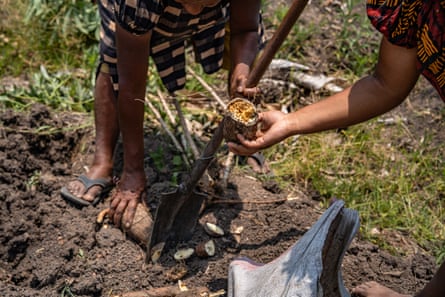
In the capital Port Moresby, PNG Power has begun planned electricity blackouts after falling dam levels cut hydropower generation and said disruptions could continue for up to 10 months. The company was working to manage dam releases to protect the city’s water supply.
Peter Aitsi, a prominent PNG business figure and co-chair of the Community Coalition Against Corruption, said the government needed to carry out “proper assessments” of the unfurling impacts, particularly on rural communities.
Last month the group called the drought situation a “national crisis”, but according to Aitsi, urban centres have been mostly shielded from the impacts. That could change, however, with electricity blackouts and a shortage of fresh food from drought-stricken areas, he said.
Aitsi said the capital had been covered in a smoke haze in the past week from fires elsewhere on the island, and in Indonesia to the west, that scientists say have been fuelled by El Niño.
Prime minister James Marape has directed provincial and district authorities to prepare for a prolonged dry season, saying his government was examining financial arrangements to support disaster responses.
“Cabinet is looking at tailoring provisions of our financial instructions to make sure that districts and provinces are assisted to respond to disasters as they happen where appropriate,” Marape said.
Disclaimer : This story is auto aggregated by a computer programme and has not been created or edited by DOWNTHENEWS. Publisher: theguardian.com