
Why does the legend of Sawney Bean and Scotland’s cannibal clan persist?
 Image source, Edinburgh Dungeon
-
Published
A clan of cannibals preying on unwary travellers brings to mind horror films like The Texas Chainsaw Massacre or The Hills Have Eyes.
However hundreds of years before Leatherface ever revved up his chainsaw, similar gruesome tales were being spoken of in Scotland.
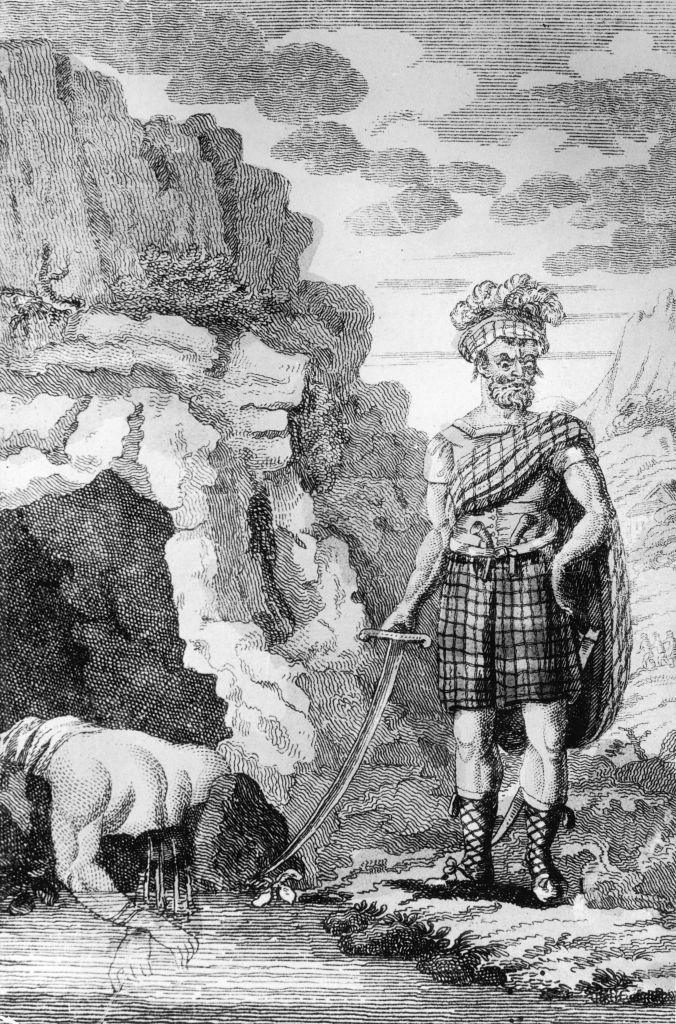
The legend of Sawney Bean and his family has chilled generations, telling of a murderous family who attacked and then devoured people passing near a hidden cave on the South Ayrshire coast.
Whether Bean and his relatives ever actually existed is another matter, and still provokes different opinions to this day.
“The first records of the Sawney Bean we know came in the 18th Century and originated in England,” says Dr Gordon McKelvie, a lecturer in history at the University of Winchester who has written about the subject, external.
“I’m not saying there were never any cannibals in Scotland, but all these stories are written years after the alleged events happened and it feels almost safe, because ‘oh, this all happened years in the past’ not the here and now.
“The stories probably come from various local legends being repackaged and it was like fan fiction, where people added their own details as it went along.”
The most common version of the legend has Bean born and growing up in East Lothian, but deciding to shun an honest living and moving to South Ayrshire with a woman.
Using a well-hidden cave on the coast, Bean and his family – which in some accounts of the tale number dozens – murdered passing travellers using the highway between Girvan and Ballentrae, before eating them. It was something described luridly in old tales.
However one day a man was able to use a pistol and sword to fend off an attack, although not before his unfortunate wife met a hideous end at the clan’s hands.
The authorities were summoned, and King James himself led 400 men to hunt for the killers.
Upon being captured, the cannibals were taken to Leith and executed in a manner as horrible as they gave to their victims, by being dismembered or set on fire.
Hundreds of years on, and the location itself – dark and hidden – can still be unsettling, even to modern eyes.
Chris Campbell lives in Girvan and is interested in the area’s myths and legends.
This led him to explore along the coast, eventually discovering one of the alleged locations for Bean and his clan.
“There was a part that was pitch black and there were three or four of us standing there in the cave, unable to see a thing,” he says.
“It was unsettling. There are all these wee nooks and crannies, so you could imagine living there a bit of time before anyone would know.”
 Image source, Umahair/Geograph
Unlike McKelvie, Campbell believes there is enough published material surrounding Bean to suggest he existed in some form – but not in Ayrshire.
He believes the actual location would be in Galloway.
However the caves Campbell visited were used for illegal activity – though of a more prosaic kind than Bean’s crimes.
“The myth is that it was on the Ayrshire coast, it was actually Galloway where Bean would be,” he says.
“The Ayrshire myth played into the hands of smugglers, who would ship contraband to the coast. All the rumours about the caves would help keep other people away.
“But you can read enough descriptions of the trial, and the history of it, that I think he did exist.”
 Image source, Edinburgh Dungeon
Many of those descriptions came from publications like the Newgate Calendar, which carried sensationalist stories about crime that were often heavily embellished.
At the time of publication anti-Scottish sentiment was also high in England, while the name Sawney was considered a jibe at Scottish people, in the way “jock” would later become.
Some historians have previously said the entire legend was intended to degenerate Scots, suggesting they were so barbaric they would eat human flesh – including the claim that Bean killed 1,000 people.
Miles away from the alleged crimes, a version of the story remains a popular attraction at the Edinburgh Dungeon, where visitors are surrounded by alleged descendants of Bean who tell his story.
“It is such a good story so it has been a part of the Dungeon since we opened 25 years ago, ” says Lyndsay Hebert, the venue’s performance manager.
“We put you in the centre of the cave, with a person telling you exactly how they hunt people down, exactly how they will capture you and dissect you – it brings the guest into the nest of the cannibal.”
 Image source, Getty Images
The influence of Sawney Bean has since travelled far beyond Scotland.
Horror film director Wes Craven was allegedly inspired by the tales when he penned The Hills Have Eyes – about a cannibal family attacking people in the Nevada desert.
References to the legend have popped up in everything from manga series Attack on Titan to a story by science fiction writer Harlan Ellison and songs by various death metal and punk bands.
Closer to home it inspired Scottish slasher film Sawney: Flesh of Man – with David Hayman picking up victims in a taxi cab for a modern version of the tale – and Ayrshire band Junkman’s Choir have a song about him.
Hebert believes the stories endure because it is still frightening to think of what humans are capable of.
“There is a primal fear there in the story that a human being is doing this to another person. It’s not a monster or a creature but another human being.”
That sentiment is something McKelvie agrees with, as well as its appeal to the darker part of human nature.
“Sex and violence always get an audience. As much as we balk at lurid tales in reality, we will still want to read them or watch them.”
-
-
Published5 days ago

-
-
-
Published30 October 2025
-
-
-
Published30 October 2024

-
Disclaimer : This story is auto aggregated by a computer programme and has not been created or edited by DOWNTHENEWS. Publisher: BBC




