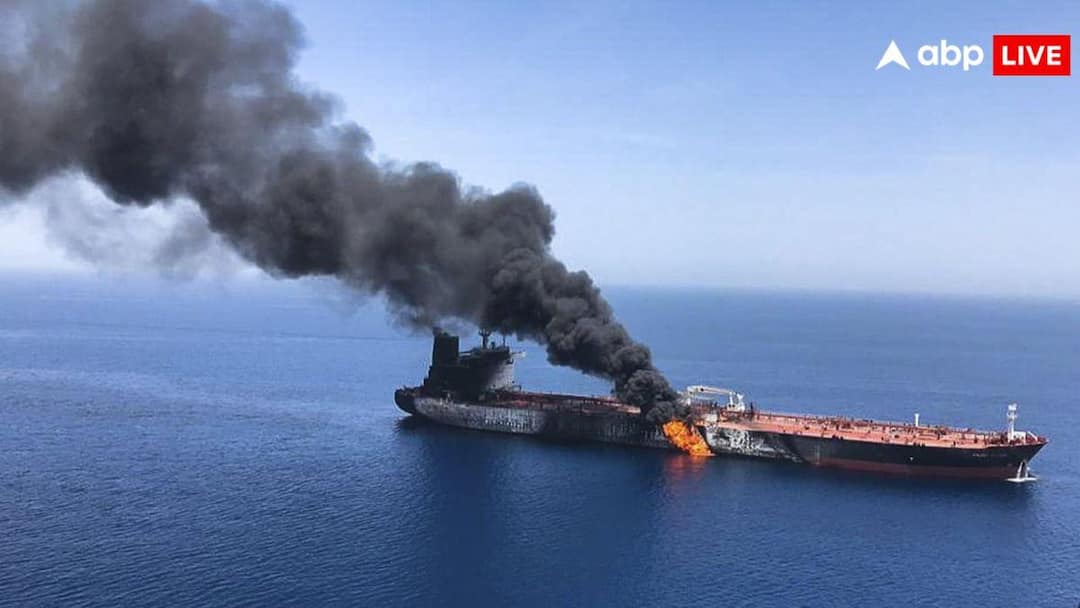
- Tanker previously hit by Ukraine in Black Sea.
A Panama-flagged crude oil tanker carrying 27 Indian seafarers was targeted in a projectile attack in the Strait of Hormuz on October 30, with limpet mines attached to its hull by a small boat, causing a fire in its engine room, news agency Reuters reported.
The vessel, MT Louise 1, was temporarily disabled following the attack, which marks the first known successful use of limpet mines against a ship in the strategic waterway since the US war with Iran began in February.
Union Minister for Ports, Shipping and Waterways Sarbananda Sonowal confirmed the incident in a post on X, stating that the Panama-flagged crude oil tanker carrying 27 Indian seafarers was targeted in projectile attacks in the Strait of Hormuz on October 30.
The crew remained safe, and there was no environmental impact, the British navy’s United Kingdom Maritime Trade Operations (UKMTO) said in an advisory. The fire was subsequently extinguished, and the vessel continued towards its next port of call, the report said.
The incident occurred around 25 nautical miles (46 km) northeast of Oman’s Khasab. It was not immediately clear who was behind the attack.
ALSO READ: Goa To Get Rs 5,000-Crore LPG Terminal: 8-9 Months’ Reserve Planned After Hormuz Crisis
MT Louise 1 Targeted With Limpet Mines In Strait Of Hormuz
The MT Louise 1 was struck with two limpet mines attached to its hull by a small boat. Two maritime security sources told Reuters that this was the first known successful strike using limpet mines in the area since the beginning of the US war with Iran. The incident also followed a separate attempt in September involving similar devices, which failed to detonate.
Greece-based maritime risk management group Marisks highlighted the security implications of the attack, particularly the ability of small boats to approach commercial vessels in busy shipping lanes.
“The apparent ability of a small craft to approach a transiting tanker, deploy explosive devices and withdraw presents a significant security concern, particularly in the Strait’s congested shipping lanes,” Marisks said in a note on Friday.
Limpet Mines: A Low-Cost Threat To Commercial Shipping
Marisks said limpet mines were first deployed in the region in 2017 and were subsequently used against tankers in the Strait of Hormuz.
The maritime risk management group also pointed to the relatively low cost and easy availability of the explosives, which can be attached directly to a vessel’s hull.
“limpet mines are cheap and easily available,” it said.
“The methodology of a small craft attaching these mines on the hulls of vessels in transit is cheap, low tech and very efficient,” it added.
The latest incident comes amid repeated attacks on commercial shipping in and around the Strait of Hormuz since the conflict between the US and Iran broke out in February.
Iran has targeted vessels it says violated its restrictions on passage through the strategic waterway, seeking to assert control over the strait and increase pressure on Washington.
ALSO READ: ISRO Successfully Launches NVS-03 Satellite, Restores NavIC To Minimum Operational Configuration
MT Louise 1 Was Previously Targeted By Ukrainian Forces
The MT Louise 1 had also been targeted by Ukrainian forces in July, when naval drones struck the vessel in the Black Sea.
Ukraine’s SBU security service had said the tanker was involved in transporting Russian oil and was part of the so-called shadow fleet of vessels deployed by Moscow to maintain its oil exports.
The vessel’s Panama-based operator, listed in shipping databases as Aquarius Maritime Ventures, could not be immediately reached for comment.
Disclaimer : This story is auto aggregated by a computer programme and has not been created or edited by DOWNTHENEWS. Publisher: abplive.com