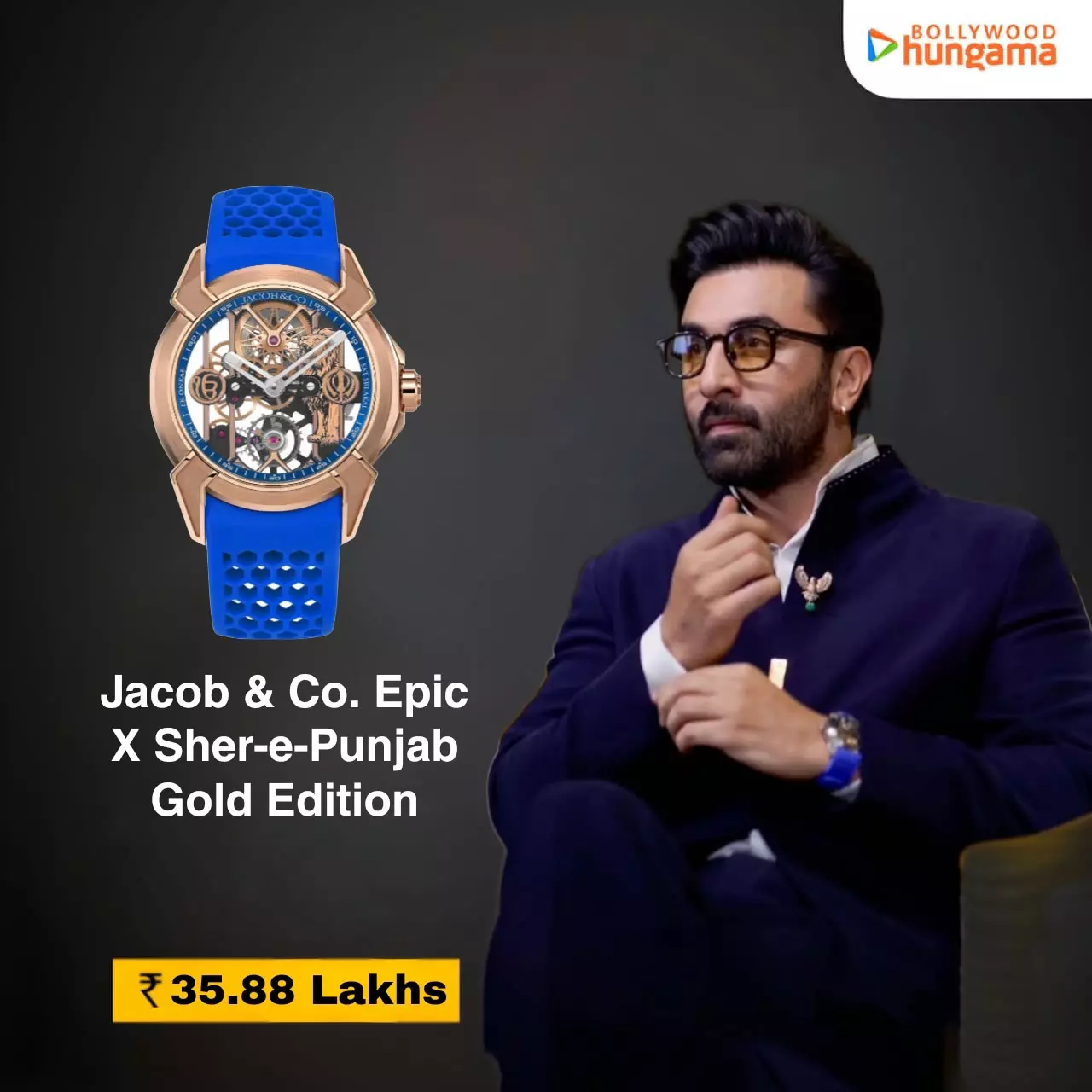
When Ranbir Kapoor arrived at the Ramayana pre-release event in Hyderabad wearing a limited-edition Jacob & Co. Epic X Sher-e-Punjab Edition watch reportedly priced at Rs 35.88 lakh, the timepiece became a talking point of its own.
Limited to 50 pieces worldwide, it brings together luxury watchmaking and symbols of Sikh heritage. But the fascination surrounding expensive watches goes beyond their mechanics. At the very top of the market, a timepiece can be a statement of purchasing power — a symbol of belonging to an extraordinarily wealthy league.
A watch priced at Rs 15 crore represents a world associated with billionaires, celebrities and business magnates, where ownership itself becomes a distinction. For buyers at this level, exclusivity is part of the appeal. The object matters, but so does the knowledge that very few others can own it. As premium designer labels become increasingly accessible to successful professionals and business owners, extreme rarity and extraordinary price tags offer another way to stand apart.
THE NEW LUXURY MINDSET
“Fashion is deeply personal, an expression of individuality rather than status,” says Smita Shroff, co-founder of Elahe. “Our clients have never been driven by trends, celebrity-led or otherwise. What matters is finding a piece that resonates, whether it costs Rs 5 lakh or Rs 50 lakh.”
Her perspective reflects one side of Hyderabad’s luxury market, where craftsmanship, individuality and personal taste can matter more than conspicuous branding. Yet luxury is not a uniform experience. For some buyers, an object’s appeal lies in its design and heritage; for others, its rarity, price and recognisability add to its social currency.
The distinction becomes more pronounced at the ultra-high end, where affordability alone may not guarantee access to the most exclusive pieces.
WHEN PRICE BECOMES A PASSPORT
A pair of Berluti shoes or a designer accessory may once have represented an unmistakable marker of affluence. Today, such purchases are within reach of a wider pool of business owners and high-earning professionals. At the very top, distinction increasingly comes from bespoke commissions, limited production runs and objects priced far beyond conventional luxury.
For Avnish Kumar, managing director of Neeru’s, craftsmanship and longevity remain central to the appeal. “One of my first luxury purchases was a pair of shoes from Berluti,” he recalls. He valued the craftsmanship and the prospect of owning a pair he could keep for decades. The brand’s re-polishing and colour-restoration services allow the shoes to be maintained over time.
Kumar also bought a Breitling watch to mark turning 30.
His approach reflects a personal connection to luxury, but the wider question remains: when an object costs several crores, is its value rooted in what it is — or also in what owning it says about the person wearing it?
COLLECTING OR CONSPICUOUS CONSUMPTION?
For Sameer Awasthi, founder of Indian Watch Connoisseur, the distinction between collecting and buying for recognition is clear.“A status buyer purchases what the room will recognise; a collector purchases what he understands,” he says.
A serious collector studies a watch’s movement, finishing, history and the significance of a particular reference. Celebrity appearances and limited editions can spark demand, but lasting collectability depends on genuine rarity, craftsmanship, provenance and a compelling story. “Not every expensive watch appreciates, and not every limited edition becomes desirable over time,” Awasthi adds. He advises first-time buyers spending `10 lakh or more to verify the seller, check the documentation and service history, and understand servicing costs and resale behaviour before making a purchase.
Sushmita Totla, director of Hyderabad’s Kamal Watch Company, established in 1969, has witnessed the luxury watch market evolve across generations. She says buying motivations range from personal milestones and brand prestige to a deeper appreciation of watchmaking.
“At the highest level of luxury, the price may attract attention, but it is the story, rarity and craftsmanship behind the timepiece that give it lasting significance,” says Totla.
She adds that exceptional workmanship, historical significance and individuality can make a watch desirable, with some of the most prized timepieces appreciated by a small circle of connoisseurs rather than recognised by everyone.
Celebrity appearances can amplify interest, but visibility does not automatically translate into lasting demand or higher resale value. Nor does a limited edition guarantee appreciation. Rarity, condition, provenance and sustained buyer interest all matter.
THE REAL VALUE
Luxury goes beyond utility. At the top end, craftsmanship, heritage and rarity often matter as much as the status an object confers. For some, luxury is personal pleasure; for others, it is the privilege of owning what few can afford. Ultimately, its appeal lies in both what an object offers and what ownership signifies.
WHEN A WATCH BECOMES A STATEMENT
Jacob & Co.’s bespoke Vantara watch, reportedly worth Rs 14 crore, celebrates Anant Ambani’s wildlife initiative with a hand-painted figurine, white gold and precious stones — a striking blend of personalised luxury and exclusivity.
Franck Muller Ram Lalla: Launched in October 2026, the India-exclusive Vanguard edition pays tribute to Lord Ram in his childhood form. Limited to 108 pieces, it features an intricately engraved deity on the dial.
Disclaimer : This story is auto aggregated by a computer programme and has not been created or edited by DOWNTHENEWS. Publisher: deccanchronicle.com