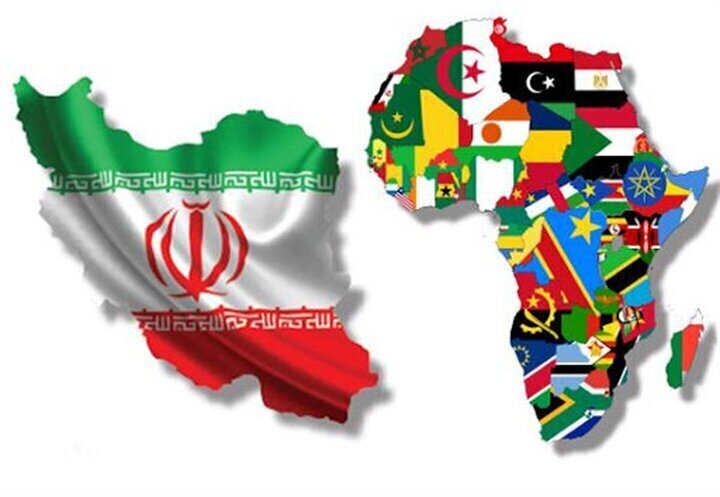
TEHRAN- Iran’s Minister of Agriculture, Gholamreza Nouri Ghezeljeh, addressed the First National Meeting on Iran-Africa Agricultural Cooperation, stressing that opportunities for joint agricultural cooperation with Africa are available and must be converted into concrete, operational, and lasting economic ties.
The meeting was attended by ambassadors, economic counselors, honorary consuls, officials from executive bodies, economic associations, entrepreneurs, investors, and more than 200 economic actors. The minister said this broad participation provided a valuable opportunity to translate the political will for expanding Iran-Africa relations into specific projects and durable economic partnerships.
Nouri Ghezeljeh thanked the Ministry of Foreign Affairs, the Permanent Secretariat of the Iran-Africa Cooperation Summit, and the Ministry of Agriculture for organizing the event. He said Iran’s approach to international cooperation is based on mutual respect, avoidance of unilateralism, opposition to aggression and political pressure, and recognition of the right of all nations to peace, development, and sustainable access to food. He stressed that food and people’s livelihoods must not become tools of political pressure, and that achieving food security requires cooperation, trust, and constructive interaction among countries. This, he said, should be a foundational principle for developing agricultural relations between Iran and African countries.
The minister outlined a clear message: Iran-Africa agricultural cooperation must move from introducing capacities to defining projects; from memoranda of understanding to executive contracts; and from sporadic exchanges to sustainable partnerships in production, technology, and trade. He emphasized that Iran does not view Africa merely as a market for selling goods or as a source for supplying needed products. Rather, Iran regards African countries as important partners for investment, joint production, and creating mutual economic benefits.
Nouri Ghezeljeh linked agriculture to food security, knowledge, and economic development. He argued that food security is not simply about increasing production, but about ensuring people’s sustainable access to sufficient, healthy, high-quality, and reasonably priced food. He described water and soil, seeds and inputs, production knowledge and technology, storage, transportation, and trade as interconnected links in a single chain. Weakening any link, he warned, can undermine efforts to increase production. He also pointed to complementary capacities between Iran and African countries. Iran has strengths in irrigation and water and soil management, greenhouse production, agricultural machinery, seeds, livestock and poultry breeding, vaccines and veterinary products, fisheries, processing industries, and specialized training. African countries, according to their climatic and economic conditions, have considerable capacities in crop production, tropical products, animal husbandry, fisheries, and expanding markets. Linking these capabilities can increase productivity, create jobs, and raise value added on both sides.
The minister further identified removing executive obstacles and strengthening communication among responsible institutions as a fourth priority. He said economic actors need clear procedures, reliable transportation, practical payment mechanisms, insurance and investment coverage, and predictable regulations to enter sustainable cooperation. On tariffs and trade facilitation, he called for examining the capacity of bilateral agreements and regional mechanisms with the participation of relevant bodies. He also stressed continuous follow-up: the problems of each project must be clearly identified and recorded, a responsible body must be designated, and progress must be assessed within clear time frames.
Nouri Ghezeljeh emphasized that the government should act as a facilitator while the private sector should be the driver of economic cooperation. Embassies and economic counselors, he said, can play an effective role in identifying credible opportunities, introducing reliable partners, explaining market regulations, facilitating communication among enterprises, and following up on executive obstacles. In contrast, the private sector must play a central role in defining projects and assessing them commercially and operationally. Within the Ministry of Agriculture, the Office of International Affairs, together with specialized organizations, deputies, and private-sector associations, is responsible for the secretariat of six joint Iran-Africa cooperation commissions and more than 10 joint agricultural committees with African countries. He said the goal is not to create new and numerous mechanisms, but to use existing capacities effectively, clarify responsibilities, and prevent negotiations from stalling at the stage of administrative correspondence.
The minister asked economic actors to present proposals in the form of specific and executive plans. Each plan, he said, should clearly determine the subject of cooperation, the proposed partner, the target market, required capital, legal requirements, timetable, and evaluation indicators. He urged avoiding scattered programs and suggested starting with a few limited, well-considered, and implementable projects rather than a long list of aspirations. For each project, a clear contact point on both sides, a time schedule, and a follow-up mechanism should be designated so that successful cooperation can be expanded after initial results are evaluated.
Nouri Ghezeljeh announced that the Fourth Iran-Africa Cooperation Summit will be held next month, and that the FIDC event will take place in Senegal. He expressed hope that Iran’s private sector and agricultural economic actors will participate effectively in these programs. He said the Islamic Republic of Iran seeks cooperation based on trust, respect, and mutual interests. In agriculture, these principles should lead to more sustainable production, more balanced trade, more job opportunities, knowledge transfer, and more reliable access by people to healthy and sufficient food. He stressed that success should not be measured by the number of meetings or documents signed, but by implemented contracts, projects that produce results, value added created, and benefits that ultimately reach producers and the people. The meeting, he said, should be the starting point for practical cooperation—a stage in which knowledge becomes production, production reaches markets, and friendly relations become lasting economic ties.
On political and security developments, the minister said that when Iran was attacked by Israel and the United States, some abroad welcomed it and others expected further developments. What occurred instead, he said, was Iran’s resistance, the country’s steadfastness, the people’s courage, and the continuation of government services. Addressing ambassadors, he said that despite wartime conditions, government services in various areas, including food security and the supply of public necessities, continued, and needed goods were supplied abundantly, so that wartime conditions were not felt in meeting basic needs. He criticized US actions internationally, saying the world is heavily affected by US warmongering and that the energy and food sectors face major challenges and crises. According to official statistics in some countries, food prices have risen by up to 23 percent, and poor and vulnerable groups suffer most. He said Iran and other countries have been affected by these consequences and expressed hope that the United States would take a rational path and return to the Islamabad Memorandum to pave the way for ending the war as quickly as possible, given its pressure on economies, nutrition, and global food security, especially in poor countries.
Finally, Nouri Ghezeljeh urged participants to engage actively in the specialized panels on the sidelines of the meeting, saying these panels can move cooperation from speeches and negotiations to the operational stage. He expressed hope that, with the companionship of ambassadors, the efforts of economic actors, the support of responsible institutions, and equal participation of African countries, the ground would be prepared for sustainable agricultural cooperation. He said the hoped-for results include increased food security, economic prosperity, development of shared opportunities, and stronger lasting friendship between the Iranian nation and African countries.
MA
Disclaimer : This story is auto aggregated by a computer programme and has not been created or edited by DOWNTHENEWS. Publisher: tehrantimes.com