
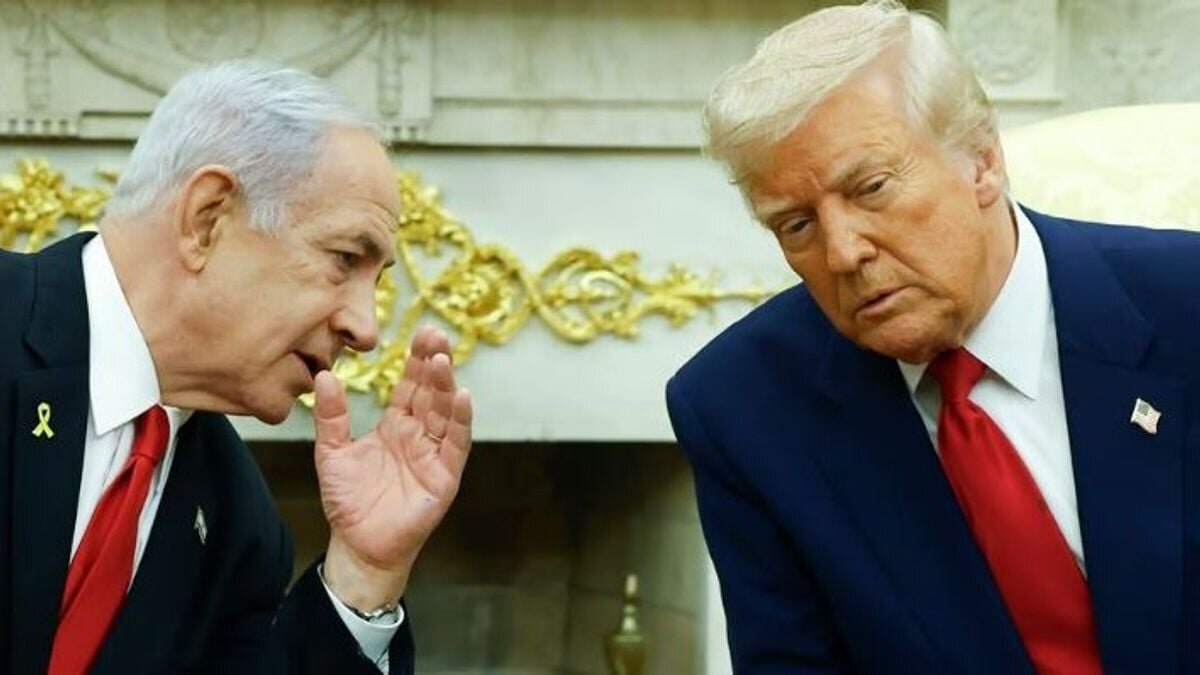
TEHRAN – Israeli media are still trying to determine whether Trump favored Netanyahu ahead of the Knesset elections or sought to contain him.
That question has sharpened when Trump publicly endorsed Netanyahu just nine days before the vote, prompting pundits to ask why the U.S. president intervened at such a delicate moment, and whether the backing was genuine.
By then, voters had already made their choice of candidate, raising further questions about why the president weighed in when he did.
Israeli pundits argue that had Trump been serious, he would have endorsed Netanyahu months before the election and reinforced that support with a trip to Tel Aviv. Netanyahu invited Trump to Israeli in May 2026. However, the U.S. president declined in an unusual snub that underscored a growing rift between the two leaders over the illegal war on Iran.
A prevailing point of view supports the argument that Trump’s public support for Netanyahu was a trade-off, even a bribe, in return for not dragging the United States into renewed military confrontation with Iran before the Israeli elections.
The information was nearly conclusive that Netanyahu wanted to do this and drag the U.S. into another illegal war with Iran, even though the calculations did not favor winning it. The evidence cited for this conclusion is a striking statement by the Israeli chief of staff, who said the regime’s army will not take any military action without compelling reasons, a lack of which would then be exploited politically in the elections or used to disrupt them.
The remark was widely seen as aimed squarely at Netanyahu who sought to wage war before the October 27 Knesset elections.
The bigger question being raised by Hebrew media is this: If Trump is prepared to launch a military operation within a matter of days, as he repeatedly claims, and bring the (illegal) war to a decisive end, why was such an operation not launched before the Knesset elections, if Washington is so confident that it can wage a short, decisive war?
If it had been waged and won, the Netanyahu-led camp could have gone into the elections victorious. Instead of 53 seats, it could have won a majority of 63 or 73.
The same logic applies to Republicans heading into the midterms: a short, conclusive military operation against Iran would have put them in a far stronger position to expand their majority in both chambers of Congress. If quick military action would end the disastrous and illegal eight-month war and help the Republicans raise slogans of victory? Why are they instead risking losing the midterms?
The conclusion has been that the U.S. lacks the confidence to wage a quick military aggression against Iran because the option itself is weak. It would only turn the spotlight on yet another endless war in West Asia. The administration is aware that Iran will retaliate, that U.S. and Israeli interests in the region will suffer greater destruction, that energy prices will climb much higher, and that military stockpiles will once again run low.
All these factors are something the White House sought to avoid.
If the Trump administration is not confident it can mount a short, decisive military operation to end the illegal war against Iran, then why does it keep talking about waging one? Experts say the rhetoric is a desperate attempt to rally voters ahead of the midterms.
If the aim is to intimidate the region, and the Islamic Republic in particular, then the threats have had the opposite effect. Tehran is more prepared than ever to deliver a crushing retaliatory response.
Trump himself has announced that he will not wage any aggression against Iran before the midterm elections, an implicit acknowledgment that the war has damaged his Republican Party’s electoral prospects. In recent weeks, global fears of a large-scale war erupting in West Asia have intensified, following eight months in which Washington failed to force Iran into submission.
In essence, there is no short-term military solution for the United States. Again, if there were, Washington would have waged it before the Israeli and U.S. elections. That does not mean Trump and Netanyahu are not reckless enough to wage more aggression if they feel desperate and trapped.
Yet a broad consensus appears to have emerged among officials and analysts that any such course would only bring further disaster for the U.S.-Zionist alliance, and that the regional war would be anything but short-lived.
Trump is no stranger to selling the illusion of a quick, decisive victory. He has been making such threats for many months now, and perhaps for one primary reason: to promote the idea that any progress in the negotiations Iran is holding with regional mediators came as a direct result of his fiery statements. It is a familiar tactic, one that allows him to claim credit for diplomacy while continuing to project strength.
This is an attempt, analysts argue, to preserve his image before the American public and retain a measure of trust among some Arab officials. Iran’s neighbors have witnessed firsthand the consequences of tying their security to Washington.
Many in the region and the international community are pushing back against renewed aggression, knowing it would be catastrophic for inflation back home. They also recognize that the Islamic Republic will not surrender, which sharply raises the prospect of a long-term regional war.
In the end, the only thing a short, decisive war goal would guarantee is a long, indecisive disaster.
Disclaimer : This story is auto aggregated by a computer programme and has not been created or edited by DOWNTHENEWS. Publisher: tehrantimes.com




