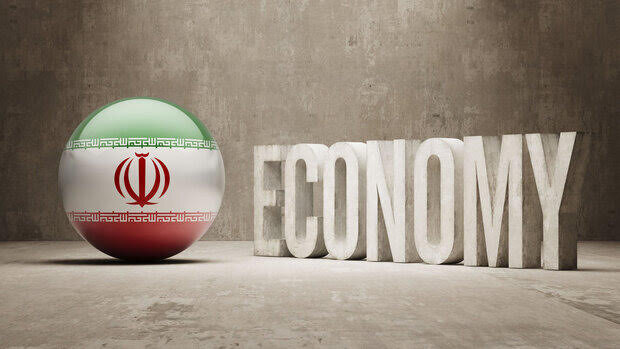
TEHRAN- An economic analyst, emphasizing Iran’s economic capacity to overcome the pressures caused by war and to revive production and employment, stated: “Erosive bureaucracy and delays in decision-making have prevented the utilization of the country’s economic power.”
Economic resilience under wartime conditions does not depend solely on the extent of natural resources, production capacity, or foreign trade power. What ultimately determines how much an economy can withstand external pressures is the quality of decision-making, the speed of response by executive institutions, and the ability to convert potential capacities into actual performance.
In such circumstances, comparing the experience of countries that have been involved in war and sanctions provides an opportunity to evaluate the strengths and weaknesses of economic policymaking. Despite foreign restrictions and war-induced damages, Iran’s economy possesses extensive production, agricultural, industrial, and geographical capacities; capacities that require coordination among responsible agencies, a reduction in administrative barriers, and timely decision-making. The fundamental question is how to utilize existing power to curb inflation, maintain production, reconstruct damaged activities, and strengthen employment, and how to prevent the slow pace of decision-making from increasing the cost of external pressures on the economy and people’s livelihoods.
Saeed Leylaz, an economic analyst, believes in an interview with IRNA’s economic correspondent that Iran’s economy cannot only overcome current obstacles and problems but also implement certain reform processes.
Referring to Russia’s experience in the Ukraine war and the possibility of Iran benefiting from this country’s experience in the current situation, Laylaz stated: “Replicating Russia’s experience in Iran’s economy to prevent inflation and maintain the level of domestic production is feasible; in some instances and in some areas, we can even perform better than Russia.”
He continued: “Most or all of the problems facing Iran’s economy have no connection to the war; these problems existed before the war and are not even limited to sanctions, because we faced them before the sanctions as well. Sanctions and war make all these issues and problems more severe, but as our past experiences have shown, we have been able to overcome these problems.
Referring to the economic blockade and its excessive pressure on the body of the economy, the economic analyst stated: “I accept that the current economic blockade is the greatest pressure ever exerted on the country’s economy in Iran’s history. We have never experienced a higher pressure or blockade than this. I accept this and by no means underestimate it. But the reality is that Iran, apart from its southern water borders, has about 35 other crossings and borders with neighboring countries. As the Prime Minister of Iraq correctly pointed out, many of these countries need Iran for their imports and exports, and in some cases, this dependency can even be greater than Iran’s need for them.”
He pointed to Turkey and Turkmenistan as two of Iran’s neighbors and said: “Perhaps only the Republic of Azerbaijan, given the small size of its economy, could somewhat block our imports and exports; that too in a situation where such a thing has not happened so far. Even if such a restriction is created, nothing decisive will happen, because we have an independent maritime border with Russia. The reality is that Iran’s economy, neither in terms of diversity, nor in terms of stability, nor in terms of dependence on oil revenues, is by any means weaker than Russia’s economy.”
Leylaz further referred to the nature of the Ukraine war and compared it with Iran’s conditions, stating: “The war Russia is facing is not just Russia’s war; it is the war of the entire NATO and the Western bloc against this country. Similarly, the war we refer to as America’s war against Iran has, in my opinion, involved more than 70 countries worldwide.”
The analyst stated: “In the first week of the war, I said that almost all of Europe was behind America’s war with Iran. Ultimately, we all realized that this assessment was correct. Therefore, just as we are enduring the greatest pressure in Iran’s history, we must note that this is not merely economic pressure, but the continuation of an oppressive war.”
He added: “We have not yet fully equipped all our equipment and facilities to confront this situation. This is a reality. When such pressure is exerted on a country, all responsible agencies must act in accordance with the existing conditions; but I do not see any sign of such a change in the performance of many of the country’s administrative and executive sectors.”
The economic analyst, recalling that the country’s economic growth was positive in Tir (July) but might become negative again in Mordad and Shahrivar (August-September), added: “The pace of the decline in Iran’s economic growth rate is slowing down, meaning that we are returning to the game in the industrial and agricultural sectors.”
Referring to the Central Bank’s performance in recent months, Laylaz responded: “The liquidity growth rate reached 0.3 percent in Shahrivar (September); we can continue this trend; so why haven’t we continuously done so? This is exactly one of our demands. I believe that even a 0.01 percent reduction can be important in controlling liquidity growth. In my opinion, under normal conditions, a liquidity growth rate of around 2 percent could be appropriate; of course, economic conditions and inflation control requirements must also be considered.”
He clarified: “We must be able to overcome the imbalance of banks. This requires a serious and revolutionary action, but no decisive event has occurred in this field so far. We can also reduce many imbalances in various sectors.”
He stated: “Now we can also move more rapidly toward reviving government revenues and return these revenues to the people in the form of subsidies. In this way, we can both improve the economic situation and help the country’s political and social stability.”
Leylaz said: “In the three months ending in Tir (July) this year, Iran’s agricultural sector growth was about 6 percent. This growth has occurred after years of stagnation and, in my opinion, is a significant development. Evidence shows that the decline in production in the industrial sector is also being compensated, and activities are gradually returning to normal conditions. This trend is happening in a situation where all the consequences of past events have not yet been compensated.”
The economic analyst, stating that we have compensated for a large part of the physical damages, continued: “Do you remember when I spoke about this in the early days of the war, how much I was criticized and some told me I was underestimating the damages? But now, except in the gas sector, where about 100 to 130 million cubic meters of its capacity was involved, and to some extent in the steel sector, which includes a limited part, as well as in the petrochemical industry, a large part of other damages has been reconstructed.”
EF/MA
Disclaimer : This story is auto aggregated by a computer programme and has not been created or edited by DOWNTHENEWS. Publisher: tehrantimes.com