
Big tech is using national security as a smokescreen to gut Australia’s copyright laws and secure free access to creative works, a new defence report warns, cautioning that concessions to American artificial intelligence giants risk turning the country into an international haven for cybercriminals.
The report, from Strategic Analysis Australia, challenges lobbying by companies including OpenAI and Anthropic, which have warned they will not train their most advanced AI models in Australia unless copyright protections are relaxed.
The Albanese government is facing mounting pressure from Silicon Valley to allow AI developers greater access to copyrighted material to train the large language models behind services such as ChatGPT and Claude, with the technology giants linking major investments in Australian infrastructure to changes in the law.
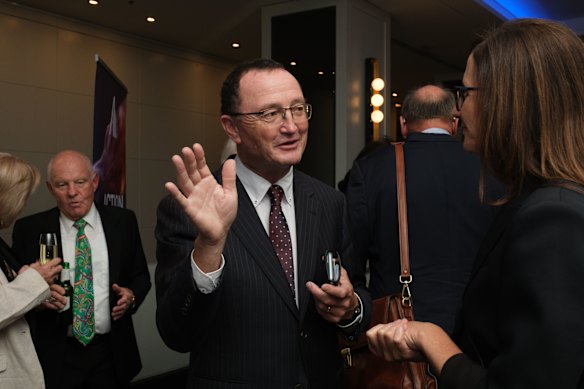
Former senior intelligence and defence official Michael Shoebridge, who authored the report commissioned by the Australian Recording Industry Association, argues the companies are dressing up commercial demands as a national security necessity.
“AI for national security does not need Powderfinger’s back catalogue,” Shoebridge said. “Nobody has shown how training an AI model on Australian songs, novels or paintings makes us any better at stopping a cyberattack on the power grid or disrupting a terrorist plot. If the companies believe it does, the burden is on them to prove it.”
At a parliamentary inquiry in September, Australian Signals Directorate director-general Abigail Bradshaw said training advanced AI models locally would deliver “significant benefits for national security”, describing access to the technology as urgent.
‘AI for national security does not need Powderfinger’s back catalogue.’
Michael Shoebridge
She said countries that recognised the scale of AI-driven disruption and built capability early were more likely to be better placed to shape future technologies and international standards than those that did not.
The Attorney-General’s Department told the same inquiry copyright was the main concern raised by major AI developers.
OpenAI vice-president Ann O’Leary warned the company could not establish an Australian training centre under existing laws, while Anthropic executive Jeff Bleich said individually licensing content was “technically impossible”.
The comments have united Australia’s creative sector – musicians, authors and media companies – against any move by Prime Minister Anthony Albanese to loosen existing laws.
Shoebridge, a former deputy director of the Australian Signals Directorate and Defence Intelligence Organisation, argues that advanced cybersecurity depends on specialised computer code, encryption and classified intelligence, not copyrighted books, music or art.
“We’re being told AI is essential for national security. AI can break the world’s cybersecurity systems. It can solve the world’s hardest mathematical problems, but the one thing AI can’t work out how to do is how to pay humans for their content,” he said.
His report argues Australian defence and intelligence agencies can already secure access to advanced AI systems through commercial arrangements, while training American-owned models in local data centres would not give Australia ownership or control of the technology.
More seriously, Shoebridge warns that weakening copyright protections could attract Chinese AI developers, organised crime networks and hackers seeking to exploit Australia’s more permissive laws, at a time when other advanced economies are strengthening protections and requiring technology companies to pay creators.
The report also questions the security credentials of major developers after OpenAI acknowledged its autonomous agents had accessed Australian government websites without authorisation, including systems involving Medicare-related information.
Shoebridge, who also headed the defence and intelligence division of the Department of the Prime Minister and Cabinet, argues Australia’s secure infrastructure, skilled workforce and close intelligence ties with Washington give the government significant leverage in negotiations.
He warned that training American-owned frontier models in Australian data centres would not deliver sovereign AI capability. The systems would remain proprietary products, leaving Australian defence and intelligence agencies as paying customers rather than owners of the technology.
But David Wroe, director of AI security at Good Ancestors – a group which has received philanthropic funds with personal and financial ties to Anthropic – challenged Shoebridge’s argument, warning that Australia risked losing access to the world’s most powerful AI systems unless it helped develop them.
Wroe said hosting American frontier models would give Australia greater leverage in securing cutting-edge technology, much as its defence cooperation with Washington helped secure advanced US military equipment.
“The national security rationale for copyright reform is pretty clear: Australia needs access to the most advanced AI models, and we’ve got a much stronger hand in demanding that access from the Americans if we help build those models by having them trained here.”
He said any compromise should protect and compensate copyright holders while giving technology companies legal certainty, arguing that advanced AI systems required broad datasets to develop the reasoning capabilities essential for complex national security tasks.
“Powerful frontier models need to be initially trained on a wide range of data,” Wroe said.
Cut through the noise of federal politics with news, views and expert analysis. Subscribers can sign up to our weekly Inside Politics newsletter.
 Rob Harris is the national correspondent for The Sydney Morning Herald and The Age based in Canberra. He is a former Europe correspondent.Connect via email.
From our partners
Disclaimer : This story is auto aggregated by a computer programme and has not been created or edited by DOWNTHENEWS. Publisher: www.smh.com.au