
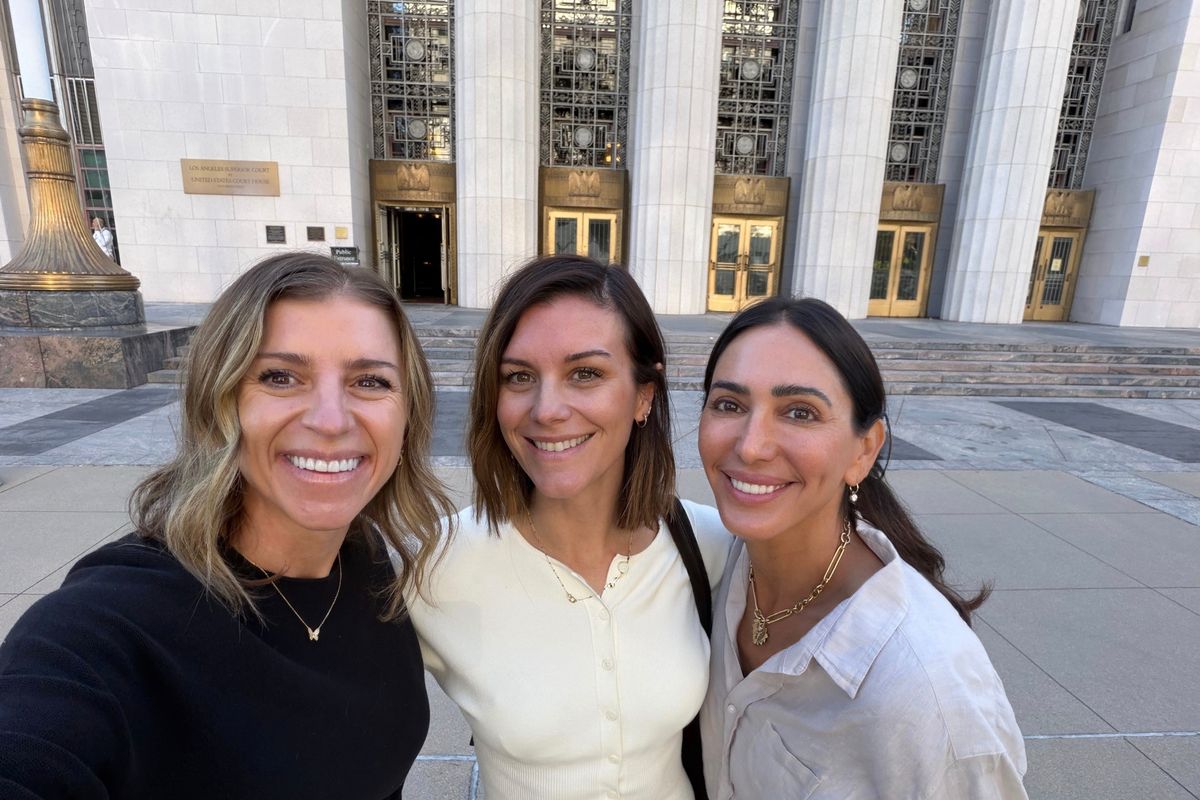
Lauren Cowell writes for the Daily Mirror as she attends the first day of the landmark trial in the States involving social media giants Meta and Snap
When I walked into a Los Angeles courtroom on Wednesday morning, I had the surreal feeling that I had stepped into a John Grisham novel. I’m not a lawyer. I was there because I believe what happens in that courtroom could have enormous implications for how we protect children online in Britain.
It was the first day of proceedings, with jury selection getting under way, so I wasn’t expecting a media circus. But I was struck by how quiet it was. What fascinated me was the contrast between the two sides. On one side sat the legal teams representing Meta and Snap. Everything felt incredibly corporate, formal and rather cold. They all seemed to have exactly the same water bottles lined up on their table.
On the other side was Mark Lanier, the Texan lawyer who earlier this year secured a landmark $6million (£5.4m) jury verdict against Meta and YouTube, alongside a legal team, which includes his two daughters, Rachel and Sarah. One side appeared like a coordinated corporate operation, the other felt more personal and familial. I found the difference fascinating. I was intrigued to see a lawyer from YouTube in the courtroom, despite the company having settled with both plaintiffs involved in these proceedings. It was a reminder of just how much attention these cases are attracting, even if the public has yet to appreciate their potential significance.
The trial involves two women, now aged 16 and 18, who allege that features deliberately built into social media platforms encouraged compulsive use and contributed to serious mental health difficulties. TikTok and YouTube had settled with both plaintiffs. Mark Zuckerberg’s Meta had settled with one – but two days after I was in court Meta settled the other. Snap faces claims from both but denies the allegations.
Potential jurors were asked to complete a questionnaire exploring everything from their social media habits, to whether they or people they know have experienced mental health difficulties associated with social media. They were also asked about their personal views on whether social media is harmful. It made me realise how deeply embedded these platforms have become in almost every aspect of our lives, and how challenging it must be to find people who can approach a case like this with an entirely open mind.
My decision to attend wasn’t simply driven by curiosity. I’m a mother of two boys, aged 12 and 20, and over the past year my Cowell campaigning for children’s online safety has brought me into contact with families whose lives have been devastated by experiences their children have had online. Some of those parents have lost their children.
For them, this is about the consequences of a digital world that, in my view, has been allowed to develop without sufficient consideration of children’s safety and wellbeing. That’s why I wanted to witness these proceedings firsthand. What makes these US lawsuits particularly interesting is their focus on the design of the platforms.
Infinite scrolling, autoplay, personalised algorithms, notifications, Snapchat streaks. Features that encourage us to keep watching, keep checking and keep coming back. We often talk about harmful content, and rightly so. Increasingly, I believe we need to look just as closely at the mechanisms used to keep children engaged.
There’s also an important legal reason why these cases are being approached in this way. For years, technology companies have relied on Section 230, a provision of a 1996 US law that generally protects online platforms from being held legally responsible for content posted by users. It is a protection that has helped shape the way lawyers representing families, young people and school districts have had to approach these cases. Many of the lawsuits are focusing on the companies’ decisions about how their platforms were designed.
Not just what children are seeing, but how the technology Meta’s Mark Zuckerberg works, whether it encourages compulsive use and whether companies adequately warned of potential risks. The technology companies have argued Section 230 should also protect them against these claims.
But the judge has allowed allegations relating to platform design to proceed to trial. It may sound like a technical legal distinction, but it is an incredibly important one. It moves the conversation beyond what children encounter online to the responsibility companies have for the digital environments they create.
This is especially relevant in Britain. Our government has announced plans to restrict social media access for children under 16, alongside protections against certain harmful online features. The details of the legislation will be critical. My concern has always been if we focus too narrowly on individual social media apps, we risk overlooking similar features and risks appearing elsewhere, including messaging services, gaming platforms and increasingly AI chatbots.
The technology will continue to evolve. The legislation needs to be capable of evolving with it. There is an enormous opportunity for Britain to learn from the questions being examined in US courtrooms. What did technology companies know about potential risks? How were decisions about design made? What responsibility should those companies have when children use their platforms? Those are questions that deserve proper examination, whatever the outcome of this trial.
As parents, we have responsibilities too. We need to set boundaries, understand the platforms our children are using and have honest conversations with them. But I don’t believe we should have to become technology experts to keep them safe. And I don’t think it is reasonable to place the entire burden of responsibility on families when so much of the digital experience is shaped by companies and systems we cannot see or control.
I left the courtroom feeling I’d witnessed the beginning of something potentially very important. For the young women bringing these claims, the outcome will be deeply personal. For the technology companies, there is an enormous amount at stake. And for those of us in Britain, I believe there is an awful lot we should be paying attention to. Protecting children online shouldn’t just be about teaching them how to navigate a potentially harmful digital world. It should also be about making that world safer for them in the first place.
Disclaimer : This story is auto aggregated by a computer programme and has not been created or edited by DOWNTHENEWS. Publisher: mirror.co.uk









