TOKYO –
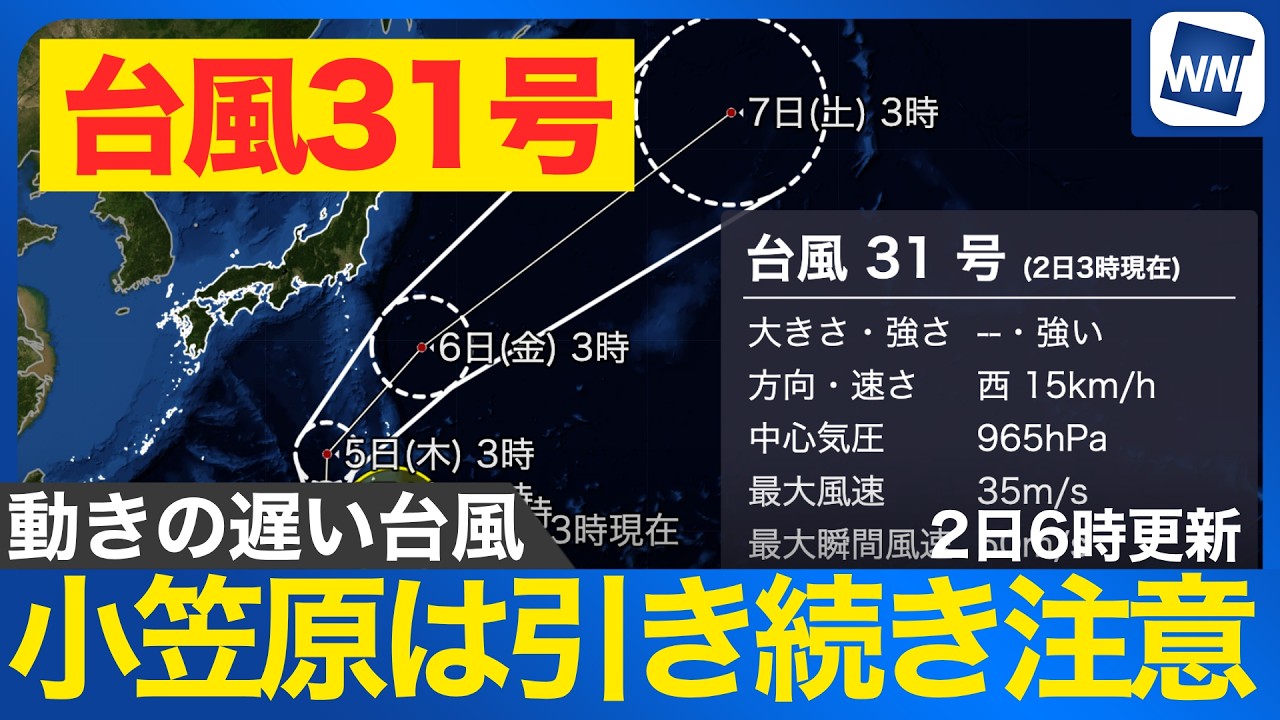
Typhoon No. 31, known internationally as In-fa, was moving slowly westward near the Ogasawara Islands at 15 kilometers per hour as of 6 a.m. on November 2, maintaining strong intensity and threatening to bring high waves, heavy rain and potentially violent winds to the remote island chain south of Tokyo.
The typhoon, which weakened slightly from very strong to strong intensity on November 1, is expected to maintain its current strength as it moves across waters near the Ogasawara Islands over the next several days.
According to the latest forecast, the storm will continue westward into waters south of Japan before gradually turning northward around November 3 or November 4. By Thursday, November 5, it is expected to move northeast over waters west of Chichijima and Hahajima, the two main inhabited islands in the Ogasawara archipelago.
The storm is forecast to change direction toward the east after November 5, reaching waters southeast of Japan by Friday, November 6.
Although the typhoon is not currently forecast to pass directly over the islands, its slow movement means that dangerous sea conditions could persist for an extended period. High waves accompanied by powerful swells may affect the surrounding waters for approximately one week, raising concerns about maritime transportation, fishing operations and coastal safety.
Forecasters have warned that relatively small changes in the typhoon’s track could bring its center closer to Chichijima and Hahajima, increasing the risk of heavy rainfall and violent winds.
The Ogasawara Islands, located approximately 1,000 kilometers south of central Tokyo, depend heavily on maritime transportation for food, fuel and other essential supplies. Prolonged rough seas can disrupt shipping schedules and make it difficult for vessels to enter or leave the islands.
Residents and businesses are being urged to prepare well in advance by securing boats and mooring equipment, checking emergency supplies and ensuring adequate food stocks in case maritime services are interrupted.
The slow-moving nature of Typhoon No. 31 is a particular concern because prolonged exposure to large swells can create hazardous conditions even when the storm’s center remains some distance offshore. Coastal areas, harbors and shorelines exposed to the open Pacific may experience dangerous waves well before the typhoon makes its closest approach.
Authorities are advising residents, fishermen and visitors to monitor the latest weather forecasts and maritime warnings, particularly as the typhoon begins turning north and northeast later in the week.
The storm’s projected track remains subject to change, and forecasters will continue monitoring its movement, intensity and potential impact on the Ogasawara Islands over the coming days.
Source: ウェザーニュース
Disclaimer : This story is auto aggregated by a computer programme and has not been created or edited by DOWNTHENEWS. Publisher: newsonjapan.com