
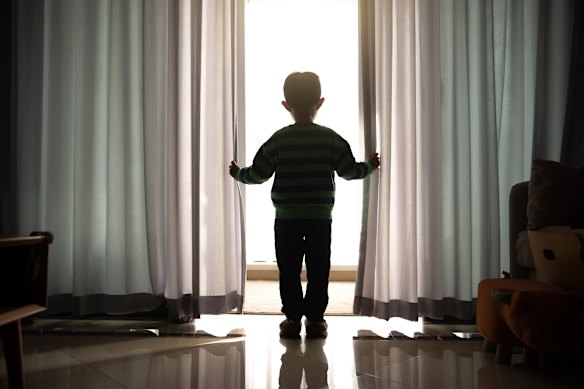

Last week, Florida mum Irene Miller was arrested on several charges of neglect after leaving her four children, aged 14, 12, 11 and nine, at home alone for days while she attended a work trip in Las Vegas.
The case has reignited the parenting debate over what age is considered safe to leave your kids home unsupervised.
It’s a dilemma that, in Australia, has no definitive answer.
What does the law say?
Queensland is the only Australian state or territory with a law specifically addressing leaving a child at home alone. Here, it is a criminal offence to leave a child under 12 unsupervised and without care for an unreasonable period.
The law says what constitutes a ‘reasonable’ period depends on all relevant circumstances, including the child’s health, how long the child is left alone, and a range of other factors.
Everywhere else in Australia, you are legally obliged to ensure your child is safe, and their needs are met, but there is no minimum age requirement.
Signs your child is ready to be left at home unsupervised
So, when can a parent leave their child at home unsupervised? Unfortunately, there isn’t a magic age that works for every child, says Carol Markie-Dadds, country director for the Triple P – Positive Parenting Program.
“Parents and carers know their child best, so they may consider if they’re ready by thinking about things like their child’s maturity, confidence, judgement and ability to cope if something unexpected happens,” she explains.
To establish this, Markie-Dadds says to ask: Would my child know what to do if something unexpected happened?
“Whether it’s someone knocking at the door, a power outage or a fire alarm, children should know who to contact and what steps to take.”
Parents should also consider if their home and neighbourhood are safe, and whether they can follow family rules and expectations.
“It’s also important that they feel confident and secure when left alone, rather than distressed or anxious about being on their own,” says Markie-Dadds.
For longer periods unsupervised, including overnight, much greater independence and careful planning are required to ensure all reasonable care is taken to keep children safe during the parents’ absence, she adds.
Trialling shorter periods at home alone first can be a good way to test the waters and prepare both children and parents for the experience.
How to prepare your child for being home alone.
Raising Children Network Director Derek McCormack says a gradual approach is the best way to prepare your child to be home alone.
“Start by leaving your child or children home for 10 minutes and build up from there,” he explains.
“It’s also a good idea to have rules about what they can and can’t do while they are home alone; for example, you might say they can’t have friends over or swim in the backyard pool when there is no adult around.”
Planning for different scenarios is also helpful, including keeping important phone numbers readily available, having a simple emergency plan, and ensuring a trusted adult nearby knows the child is home alone.
What other factors should parents consider?
Neurodiversity, medical conditions, confidence levels, anxiety and previous experience can all influence how comfortable and capable a child is when home alone.
“What works well for one child may not be right for another, even if they’re the same age,” says Markie-Dadds.
Additionally, children can feel bored or lonely at home alone, so it can help to leave them with activities, tasks or a routine to follow – for example, do homework, set the table for dinner, and then have free time.
You should also consider how many children are staying home unsupervised.
“It is critical that older children are left in charge only when ready to do so, and if younger children will comply with their direction,” says Elisabeth Shaw, CEO of Relationships Australia NSW.
“Each should carry some responsibility for managing the time alone effectively, and report to you when it goes awry. If one of the siblings has special needs, or is very young, then the eldest needs to be older before carrying a substantial burden of care.”
When you are away
When leaving children home alone, parents should still check in regularly and lead by example, being reliable and accountable.
“The time being alone needs to have a defined end,” Shaw says.
“It is okay to ring ahead and explain time variations, but it’s about demonstrating a trustworthy relationship-focused plan.”
And when you return, it’s also helpful to discuss the experience.
“Talk about what they did well and, if needed, what you could both do differently next time,” says Markie-Dadds.
“Gradually build up to longer periods of being left home alone as your child demonstrates increased levels of maturity, responsibility and confidence.”
Make the most of your health, relationships, fitness and nutrition with our Live Well newsletter. Get it in your inbox every Monday.
From our partners
Disclaimer : This story is auto aggregated by a computer programme and has not been created or edited by DOWNTHENEWS. Publisher: www.smh.com.au







