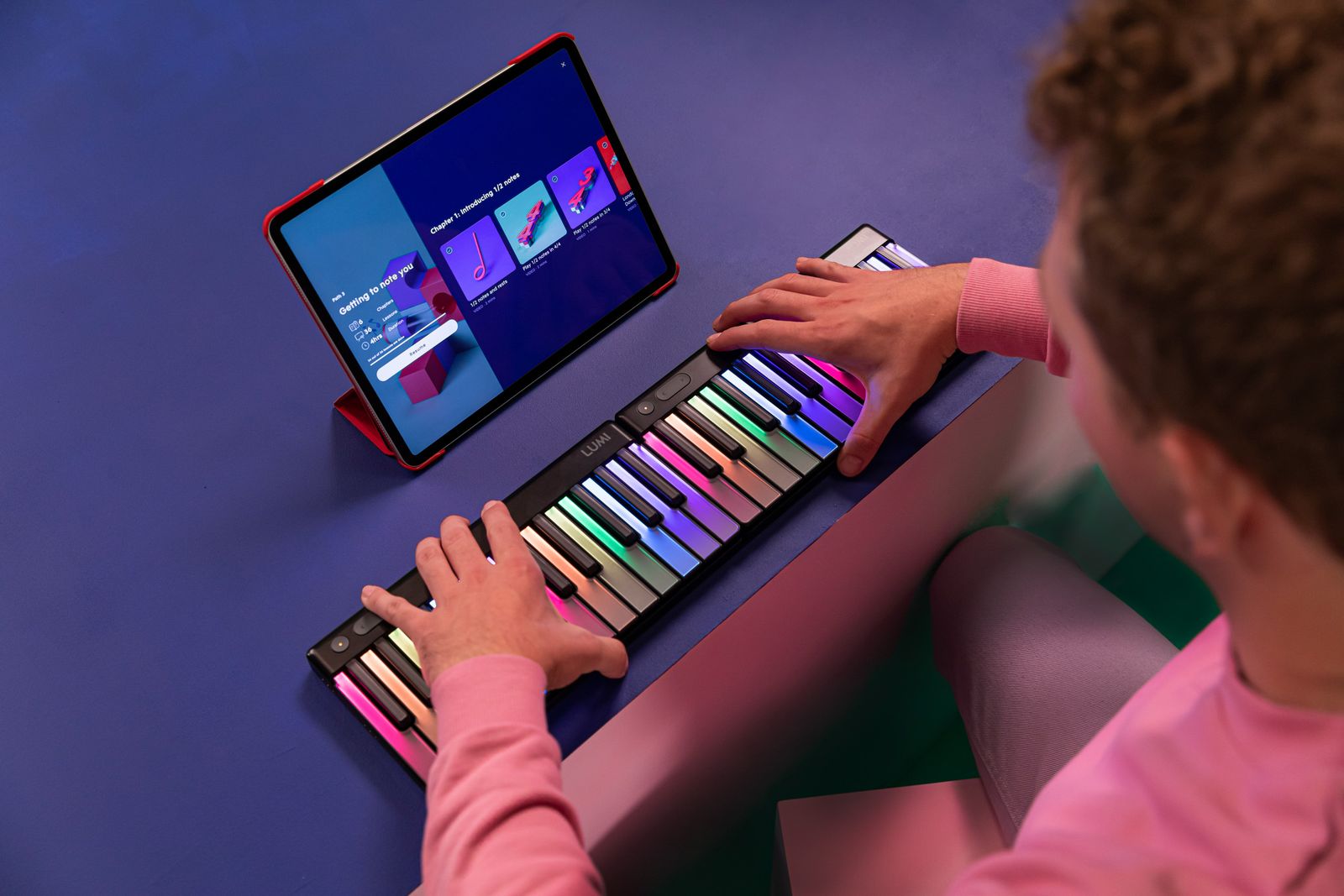
Roli, the company behind expressive, touch-sensitive music devices like the Seaboard and Roli Blocks, has collapsed.
Although it hasn’t been officially announced, Roli reportedly ousted its CEO and founder, Roland Lamb, earlier this year. Since then, Roli has all but dissolved. (In August, a new company called Instrumental Intelligence was registered with the UK government under Lamb’s name, a potential move by the founder to acquire Roli’s assets).
On Monday, Roli emailed users that two licensed insolvency practitioners were appointed joint administrators of Roli on October 20. The company went into administration, the UK process that manages corporate insolvency. This is the second time Roli has gone bankrupt.
That has left a small but bereft community of customers with no word on getting the products they paid for. The Roli community has expressed sadness, anger, or outright confusion. In Facebook groups, the r/Roli subreddit, and other forums, dismayed users have struggled to find recourse for Roli equipment purchases ranging from hundreds to thousands of dollars. The Roli subreddit has been awash with posts from customers who say they paid for orders months or years ago and have received no response or refund since then.
Existing owners also worry about the long-term impact. Roli instruments rely heavily on proprietary software launchers and companion apps to connect, map sounds, and configure settings. While the hardware still functions, users fear that lack of software support will eventually leave their gear bricked.
Roli has not publicly communicated about its future strategy with customers. The company did not respond to WIRED’s request for comment; Lamb did not respond to multiple requests for comment. Roli’s primary financial backers, investment firms TriplePoint Capital and Hoxton Ventures, also did not respond.
A Change of Seasons
Roli has faced financial struggles before.
The company started in 2009 but really took off after musician Pharrell Williams invested in 2017 and Sony’s Innovation Fund in 2018. Musicians like Dream Theater keyboardist Jordan Rudess supported and touted Roli’s gadgets. Ryan Gosling’s character played a Seaboard Grand in the 2016 movie La La Land. In the late 2010s, the tech and the company were hailed as a hit.
That tune changed in 2020. The British government’s Future Fund—a taxpayer-funded relief package issued to help businesses during the pandemic—partially bailed out Roli from a Covid-19-induced financial crisis. Even then, Roli went into administration for the first time in 2021. It survived by relaunching as Luminary Roli and focusing on music-learning devices like the light-up Lumi keyboard and the Airwave, a digital theremin that doubled as an AI piano teacher.
Through all of that, customers have had issues with how the company communicates. Users who ordered the Lumi keyboard found orders unexpectedly delayed, with no indication from the company on what was happening.
“One of the problems they have had ever since I started with the Kickstarter is communication and explaining things—telling people what’s going on,” Lluís Gerard, a YouTuber who has reviewed Roli products for years under the handle WasabiNoise, tells WIRED. “There’s always been too much secrecy about things, or then you’d realize, oh, there are these delays.”
Pull Me Under
Former Roli employees—who spoke with WIRED but asked not to be named to avoid jeopardizing future employment opportunities—alleged a company culture that revolved around Lamb’s whims. Every person we spoke with who worked with Lamb compared him to a Steve Jobs-esque character. One person described the experience of being at Roli as being in a movie, where Lamb saw himself as the main character and everyone else as extras or set pieces.
“I love the company, love the culture, love the people—I didn’t love working for him,” the employee said. “Everyone has their story with him. You’re buckled into his car—and he’s not going in the right direction.”
In 2021, another former Roli employee, who also asked not to be identified, uploaded files on GitHub that include various notes chronicling Roli as a hostile workplace. One 16-page PDF is titled “Keeping Roland Happy” and includes multiple sections about how to handle interacting with a pathological narcissist. Several former employees independently described what they viewed as Lamb’s narcissistic behavior, describing him as an arrogant visionary.
“Roland is the archetype of a pathological narcissist,” one employee told WIRED. “Unfortunately, that’s what he became. Incredibly brittle when challenged, absolutely shameless, quite reckless, incapable of learning or growth, would rather gamble than take any lessons from the previous experience. It was very disheartening to see.”

“The tragedy here is that it was always fundamentally a great company,” another former employee says. “A lot of what made it great was the sort of all-powerful vision of the founder. But that was so obviously the critical flaw.”
Begin Again
Along with other touch-sensitive devices like the Linnstrument and the Sensel Morph, Roli was a key company in the rise of MIDI polyphonic expression (MPE) devices. MPE technology lets players control a note’s pitch and timbre through touch-based movement. Pressing or sliding fingers over the device’s surface produces varying MIDI notes that capture more expressive playing.
While inventive, Roli’s instruments were altogether very niche—a hard product category to build an Apple-sized audience around. Roli certainly tried, partnering with Apple to sell its Roli Blocks in Apple Stores. Alas, the pandemic caused dire supply chain issues, and the company couldn’t keep up with orders. After the pandemic, bankruptcy, and the rebrand, little remained to push the company forward except the founder’s will.
“This was one of the leading lights of music technology in the world,” one former employee said. “It was truly an inventing company—the stuff it made had never been made before. So it’s a real shame.”
The response to Roli’s collapse hasn’t been pure dismay. After months of delays and frustration, Reddit users have gathered to mourn the company—and to make sure its devices keep working.
Sam Hocking, a UK audio engineer who runs an audio tools company called Demix.me, also owns multiple Roli Seaboard Blocks. Even before Roli went into administration, Hocking had been building software that could keep the equipment working as a capable MIDI device. He shared his vibe-coded configuration tools in the Roli subreddit and on GitHub, so Roli’s Grand, Rise, Airwave, and Block devices can work without the Roli launcher.
Hocking says his Seaboards are nearly 10 years old and still working. Despite the company’s rocky history and poor communication, he still wants to keep his devices. They’re high quality, cost a good chunk of money, and feel somewhat irreplaceable.
He’s not alone. Other users on the subreddit have joined in, adding their own tweaks and fixes to the software that may keep at least a few of these devices alive.
“They’re quite a unique product; there’s not another keyboard type out there,” Hocking says. “Nobody likes to spend money and then not be able to use it.”
Disclaimer : This story is auto aggregated by a computer programme and has not been created or edited by DOWNTHENEWS. Publisher: wired.com