KYOTO –
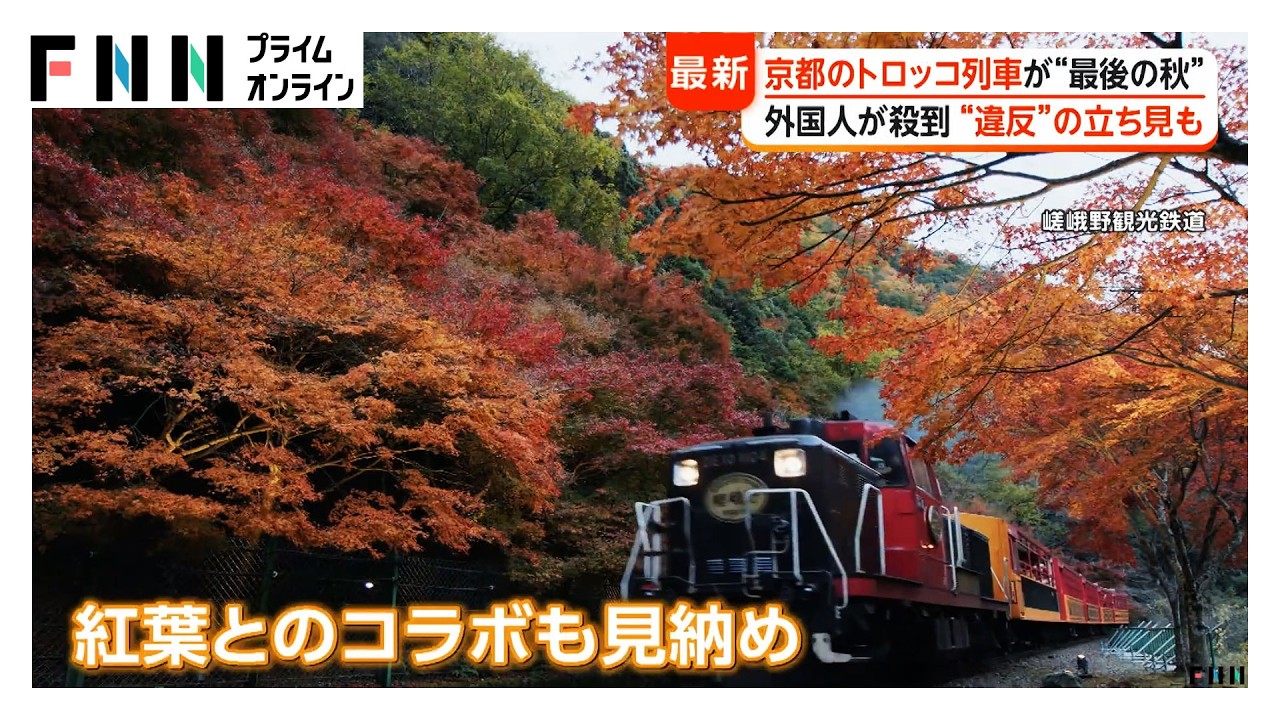
Kyoto’s popular Sagano Romantic Train is attracting large numbers of foreign tourists for its final autumn season, with the familiar red-and-black carriages set to retire at the end of 2026 after carrying a cumulative 30 million passengers, making way for new trains scheduled to enter service in 2027.
As Kyoto prepares for the peak autumn foliage season, crowds were already gathering across the city on November 3rd, including in the streets of Ukyo Ward, where large numbers of visitors had arrived ahead of the busiest sightseeing period.
At Kitano Tenmangu Shrine, dedicated to Sugawara no Michizane, the revered deity of learning, around 20% of the autumn leaves had begun changing color. Visitors expressed delight at the gradual transformation, with one saying it was enjoyable to watch the leaves slowly take on their seasonal shades.
However, one of the biggest attractions was the Sagano Romantic Train, where long lines of foreign tourists had formed to experience the scenic railway journey through Kyoto’s mountain valleys.
Visitors from around the world described the experience as “beautiful,” “wonderful” and “amazing,” while others praised the spectacular scenery visible from the nostalgic red-and-black train.
The sightseeing railway is particularly popular during the peak foliage season, when the train slowly passes beneath arches of brilliant red and yellow leaves, creating scenes that evoke the traditional beauty of Japan.
As the train approached the platform on November 3rd, station staff repeatedly called out in English, “Please go back, please go back,” urging passengers to remain behind the safety line.
The train was almost completely booked through advance reservations, with foreign visitors accounting for approximately 70% of passengers.
Although the autumn colors had yet to reach their peak, passengers were visibly excited by the opportunity to experience the valley’s natural surroundings from the open-sided carriages, which allow travelers to feel the breeze and enjoy unobstructed views of the landscape.
Some passengers became so enthusiastic about the scenery that they stood up from their seats to take a better look, prompting an onboard announcement reminding seated passengers to remain seated throughout the journey.
The railway’s popularity has been heightened by the approaching retirement of its current rolling stock, which has carried approximately 30 million passengers over the years.
The aging carriages are scheduled to be withdrawn from service by the end of 2026, making this autumn the final opportunity to see the familiar trains traveling through Kyoto’s colorful mountain scenery.
Passengers completing the approximately 30-minute journey expressed a mixture of excitement and sadness at the approaching farewell.
A visitor from Panama said, “We don’t have such a wonderful train in Panama. I’m very sad to hear this is its final year.”
Another passenger expressed hope that the traditional trolley-style trains would continue operating, saying the carriages did not seem particularly old.
For some visitors, the experience was especially memorable because it was both their first and last journey aboard the existing trains. One passenger said the ride felt particularly valuable for that reason, adding that they hoped to return when the new carriages entered service.
According to Sagano Scenic Railway, which operates the service, a new generation of trolley trains is scheduled to be introduced in 2027, with improvements aimed at enhancing passenger safety and providing better service.
Atsushi Yoshida, a senior manager in the railway operator’s General Affairs Department, said the replacement was intended to further improve safety and the passenger experience.
“We want to provide even greater safety and better service,” Yoshida said. “The current trains will continue operating until December, so I hope they keep running strongly until the very end.”
Source: FNN
Disclaimer : This story is auto aggregated by a computer programme and has not been created or edited by DOWNTHENEWS. Publisher: newsonjapan.com