High property prices and cost of living pressures have combined to drive down the number of babies born in parts of Sydney that previously had relatively high birth rates.
New analysis shows that as house prices rose in more affordable Sydney suburbs between 2019 and 2024, the numbers of births in many of those areas fell.
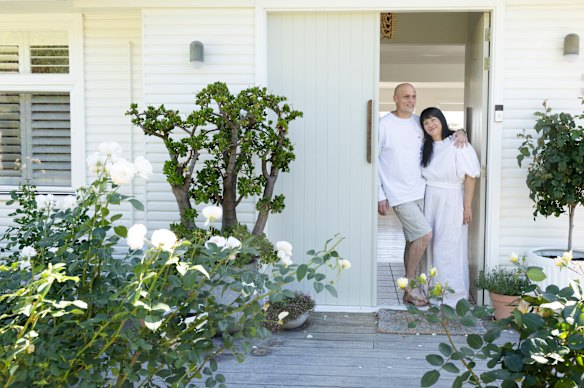
Tamaiya and Dan Weeitch loved living in their rented two-bedroom warehouse-like apartment at Camperdown in Sydney’s inner west with their two daughters. But three years ago, wanting to buy, they fled to Newcastle for a larger home.
“Teenage girls cannot share a tiny bedroom,” said Tamaiya, 50.
Dan, 48, never wanted to leave Sydney, but the couple agreed it was “now or never” when their eldest daughter was about to start high school.
“We would have stayed in Camperdown if we could afford it,” he said.
In 2019, there were 199 Sydney neighbourhoods where the median house price was between $400,000 and $900,000. In those areas, 41,872 births were registered that year – or nearly two thirds of all the babies born in the city.
By 2024, about half those neighbourhoods had moved into higher house-price brackets – many to the $900,000 and $1.2 million range – but the overall number of births across all price brackets was much lower.
There were only 86 Greater Sydney neighbourhoods left in the $400,000 to $900,000 price range by 2024 and a total of 17,262 births were registered in those locations that year.
These trends coincided with a citywide slump in babies: in 2024, the number of births in Greater Sydney fell to a 20-year low of 58,122 – that’s 8535 lower than in 2019.
KPMG urban economist Terry Rawnsley, who did the analysis, says housing affordability has become an increasingly important factor influencing household formation and family size in Sydney.
“If you give people affordable housing, which is the biggest expenditure item in anyone’s household spending basket, they will have more kids,” he says. “But if you make housing progressively more expensive, people will be priced out of parenthood.”
The KPMG analysis showed in the western suburbs neighbourhood of Doonside-Woodcroft, the median house price rose by $294,000 (up 46 per cent) between 2019 and 2024, but that coincided with a 25 per cent fall in births.
In the Guildford-South Granville area, the median house price rose by $242,000 (a rise of 36 per cent) between 2019 and 2024, and the number of births fell by 21 per cent.
“Young families having to find an additional $250,000 or 300,000 for a mortgage can make it much more difficult to have additional children,” says Rawnsley.
“Renters would be facing steep increases in these areas as well. The challenge is how does Sydney produce more affordable homes which are suitable for children with families.”
Many couples opt for a relatively small, affordable home which, in turn, limits the number of children they can consider.
And each year a steady flow of young families leaves Sydney for more affordable locations.
At the time the Weeitches moved, a four-bedroom house was pushing $3 million to $4 million. They paid $1.53 million for their four-bedroom Newcastle home – similar to the price the two-bedroom apartment in Camperdown they had been renting ended up selling for.
“We just couldn’t live where we wanted to live. We could have bought in Sydney and moved out further away from the CBD, but neither of us wanted to do that,” Dan said.
Dan had to resign from his warehouse manager job at a Marrickville brewery, but got a new a job as a sales rep for the same company. He travels to Sydney for work every four to five weeks and stays with his mother in Stanmore.
The family lives in Highfields, about a 10-minute drive from Newcastle’s CBD.
“We have a beautiful house and a view, we have a pool, we’re close to the beach,” said Tamaiya who, with Dan, told the family’s housing story to the Home of the Century podcast.
Sydney’s fertility rate – which measures the expected number of births per woman – has fallen by nearly 20 per cent during the past decade to a historic low of 1.4, Australian Bureau of Statistics figures show. That’s below the benchmark “replacement” level of 2.1 needed to replace the population from one generation to the next without immigration.
The KPMG analysis revealed a growing fertility gap between Sydney and regional areas, where housing is more affordable. The fertility rate for NSW outside of Sydney was a relatively healthy 1.98 in 2024.
“Greater housing availability and affordability in regional Australia have provided younger households with a more achievable pathway into home ownership,” Rawnsley said.
Sydney’s citywide median house price peaked in late 2025 at about $1.8 million but has since fallen by almost 8 per cent, Domain data shows.
Despite the downturn, the median home value of $1.66 million is still $509,000 – or 44 per cent – higher than Australia’s second most expensive city, Brisbane (with a median of $1.15 million).
The hit to fertility rates caused by expensive housing has been compounded by persistent cost of living pressures since 2022.
Professor Amanda Davies, a social scientist and demographer at the University of Western Australia, says rising costs – interest rates, electricity prices, grocery bills – are delaying the process of setting up a home.
“This somewhat links into our decline of fertility,” says Davies. “So that process of setting up home is taking longer because of the costs, and then fertility is being delayed, which then results in people having fewer children.”
Davies says there is an urgent need for more detailed evidence about how the price, size and location of housing is affecting family sizes nationwide.
“We are heading for hyper-low fertility rates. This means it’s harder for there to be policy interventions to return to a more stable position,” says Davies.
A decade ago, much of the western Sydney region had a fertility rate at or above the replacement level of 2.1 births per woman. But fertility rates in many neighbourhoods have declined in that period: Blacktown West has gone from 2.21 to 1.68, Granville-Clyde from 2.26 to 1.62, and Bankstown North from 2.6 to 1.75.
By 2024, only 6 per cent of Greater Sydney neighbourhoods had a fertility rate above the replacement level of 2.1 expected births per woman. That compares with about 17 per cent of suburbs a decade earlier, most of them in western Sydney.
In the major statistical district covering “Sydney City and Inner South”, which includes Redfern, Glebe, Newtown, Marrickville and Alexandria, the fertility rate was only 0.8 in 2024.
The Morning Edition newsletter is our guide to the day’s most important and interesting stories, analysis and insights. Sign up here.

 Bronte Gossling is a reporter for The Sydney Morning Herald, The Age, WAtoday and Brisbane Times.Connect via email.
From our partners
Disclaimer : This story is auto aggregated by a computer programme and has not been created or edited by DOWNTHENEWS. Publisher: www.smh.com.au