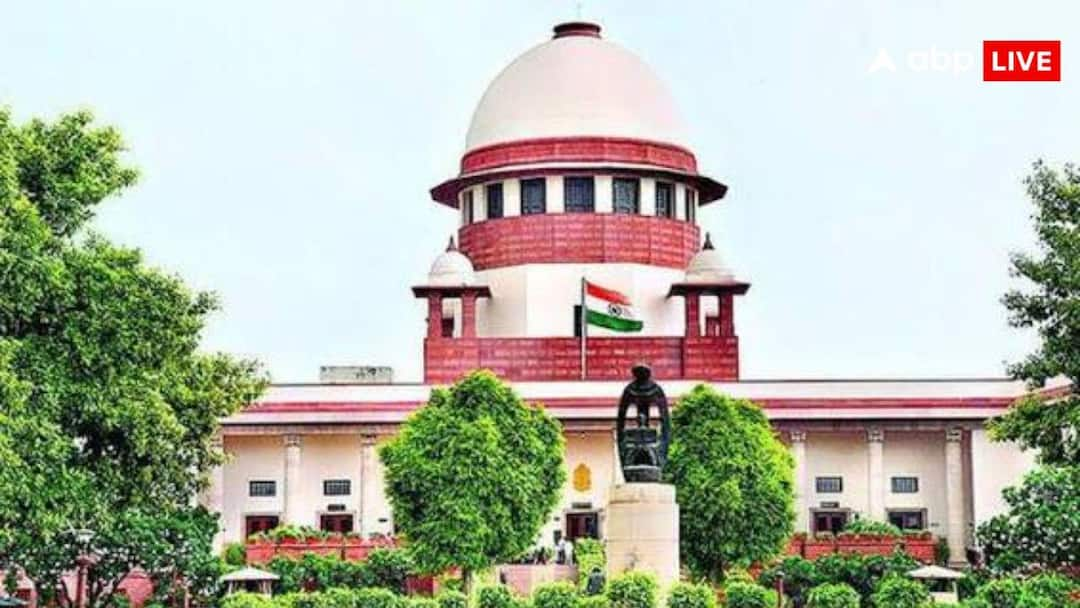
- SC rules 24-hour production deadline starts from actual detention.
- Court rejects ‘arrest vs. detention’ distinction, allowing no buffer.
- Magistrates must verify detention time, ensure Article 22(2) compliance.
The Supreme Court on Thursday ruled that the constitutional 24-hour deadline for producing an arrested person before a magistrate begins from the moment of actual detention, and not from the time the arrest is formally recorded. The ruling reinforces safeguards against the unlawful curtailment of personal liberty under Article 22(2) of the Constitution.
A bench of Justices Ujjal Bhuyan and Atul S Chandurkar rejected the distinction between arrest and detention for calculating the mandatory 24-hour period. It held that any interpretation allowing investigating agencies to delay the formal recording of an arrest while keeping a person in custody would violate constitutional protections. The bench also disagreed with rulings by the Orissa, Kerala and Madras High Courts that had treated arrest and detention as separate concepts for this purpose, describing their approach as “highly problematic and wholly unwarranted.”
Reading out the operative portion of the judgment, Justice Bhuyan said there could be no concept of a temporary disruption of personal liberty outside constitutional safeguards, as per reports. The court made it clear that authorities cannot create an artificial buffer period during which a person’s freedom is restricted without triggering Article 22(2).
SC Says 24-Hour Deadline Begins At Actual Detention
The court held that the 24-hour period starts as soon as a person is placed under detention, irrespective of when the investigating agency formally records the arrest. Only the time reasonably required to travel from the place of detention to the magistrate’s court can be excluded from the calculation. If a person remains detained beyond 24 hours without being produced before a magistrate, authorities must release them immediately.
The bench further clarified that detention must satisfy the requirement of reasonableness under Section 58 of the Bharatiya Nagarik Suraksha Sanhita (BNSS), even when it falls within the constitutional 24-hour limit.
ALSO READ: Delhi Building Collapse Kills 2 In Chawri Bazaar, Several Feared Trapped Under Debris
Magistrates Must Verify Actual Time Of Detention
The Supreme Court directed magistrates to record the precise date and time of detention and examine whether investigating agencies have complied with Article 22(2).
They can refuse remand if the detention has exceeded a reasonable period, even when the overall duration remains within 24 hours. The court also ruled out any investigative buffer period outside the constitutional framework.
It also expressed reservations about certain observations in Sukhwinder Singh @ Gora concerning Article 21 and Section 37 of the NDPS Act, but refrained from ruling on the decision of a coordinate bench.
ALSO READ: ‘Spend More Time In India’: Rijiju Jabs Rahul, Lists Conditions For Congress To ‘Win More MPs’
What Was The Case Before The Supreme Court?
The judgment arose from a drug smuggling case involving an accused who was detained on the afternoon of September 29, 2025, but shown as formally arrested only on September 30.
The accused challenged the delay, arguing that the investigating agency had deliberately postponed recording the arrest to circumvent the constitutional requirement of producing a detained person before a magistrate within 24 hours.
The investigating agency, however, maintained that the deadline began only on September 30, when the formal arrest was recorded.
Rejecting this argument, the Supreme Court held that the constitutional clock starts the moment a person’s liberty is curtailed through detention. The timing of paperwork or formal arrest records cannot override the protection guaranteed under Article 22(2).
Disclaimer : This story is auto aggregated by a computer programme and has not been created or edited by DOWNTHENEWS. Publisher: abplive.com