Deportations from Germany decreased this year compared to the year before, primarily because the number of incoming asylum seekers dropped dramatically at the same time.
Still, Germany has deported around 50 people per day on average this year, with an increasing proportion of them sent to Turkey.
Here’s a look at the figures, as reported by the Federal Ministry of the Interior (BMI) and shared in response to an inquiry by Left Party Member of Parliament Clara Bünger.
From the start of the year up until September, 14,324 foreigners were deported from Germany in total.
Of these, the largest group, amounting to 2,025 people were taken to Turkey.
This was followed by Georgia with 883 deportations, and Algeria with 629. Algerian nationals generally require a visa to enter Germany, while Georgians with a biometric passport are permitted visa-free entry for short visits.
LISTED: The nationalities that can enter Germany freely for travel, study or work
Less arrivals, less deportations
Compared to the same period in 2025, deportations have decreased by approximately 18.9 percent. From January to September of 2025, Germany recorded 17,651 deportations.
In the same period of 2024, the number of deportations was similar to those counted this year.
The primary reason why fewer people have been forcibly removed from Germany this year is likely the fact that fewer people have applied for asylum. The number of first-time asylum applications in Germany was significantly lower in the first half of 2026, at 39,646, compared to 72,818 in the same period in 2025.
This also correlates with fewer transfer requests to other member states of the European Union. These requests are made when it turns out that, according to EU asylum law, another EU member state is responsible for an asylum seeker’s application.
For example, the number of deportations to France decreased significantly this year – after 842 deportations in the first three quarters of last year, only 481 people were forcibly returned there this year.
The number of German transfer requests to Spain in the first half of this year, at 864, was also significantly lower than in the same period last year.
50 deportations per day
Altogether Germany was on track, as of the start of September, to average about 50 forcible removals per day.
Speaking after the figures were revealed, Clara Bünger said, “Despite the decline, I receive many reports of family separations, deportations of children and young people who belong in school, not on deportation flights, or deportations of sick and elderly people in need of care.”
READ ALSO: ‘I did everything right’ – Syrian student fights deportation from Germany
Among those deported in the first three quarters of this year were more than 1,500 children and 380 young people.
Bünger also expressed criticism of the deportation of people to Syria, where living conditions remain dire amid ongoing reconstruction following the civil war, or Afghanistan which is ruled by a de facto Taliban regime that Germany views as Islamist extremist.
Deportations to Afghanistan are particularly controversial, in part because they require the German government to coordinate directly with the Taliban to do so.
More than 200 men have been deported to Afghanistan this year, the majority of whom had committed crimes in Germany, according to BMI.
READ ALSO: Germany defends deporting non-criminal to Afghanistan
The data provided by BMI also reveals that deportations to Syria, especially of criminals, remain difficult, but are possible in individual cases. Reportedly there have been six such deportations since the beginning of the year.
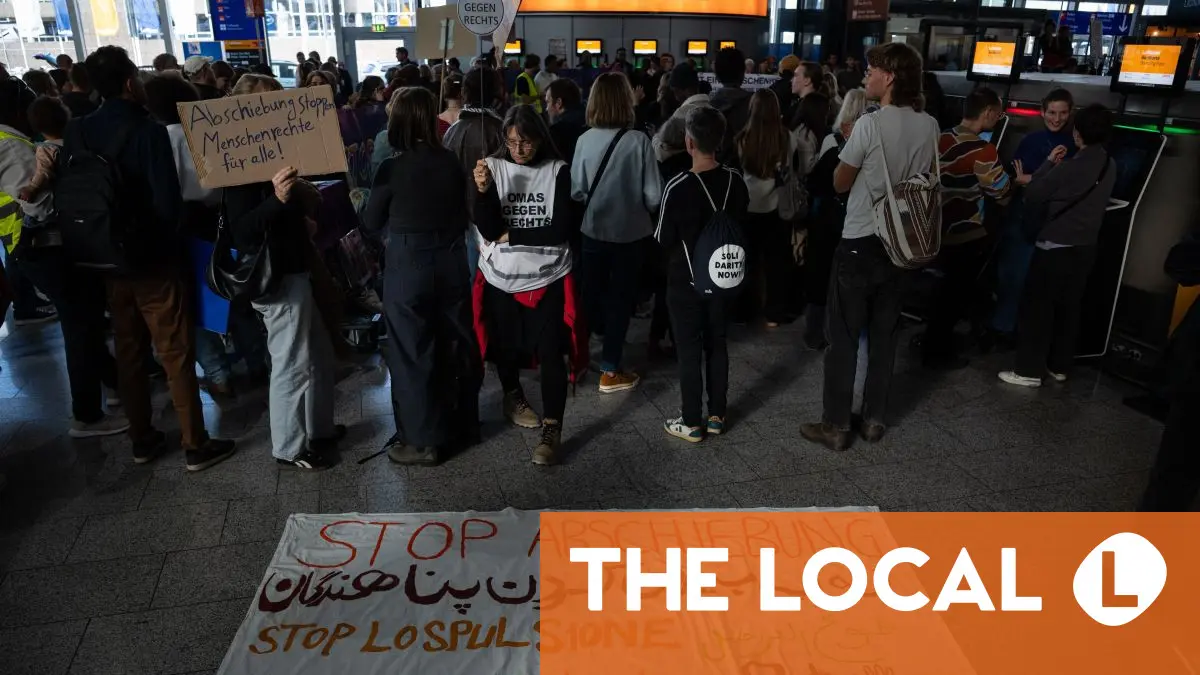
In October, a day of protests was held under the motto “Nationwide against deportation madness.” The protests took place at airports including Leipzig/Halle, Munich and Frankfurt, and were directed against the deportation of rejected asylum seekers, detention pending deportation, and the expansion of deportation infrastructure.
With reporting by DPA.
Disclaimer : This story is auto aggregated by a computer programme and has not been created or edited by DOWNTHENEWS. Publisher: thelocal.de