
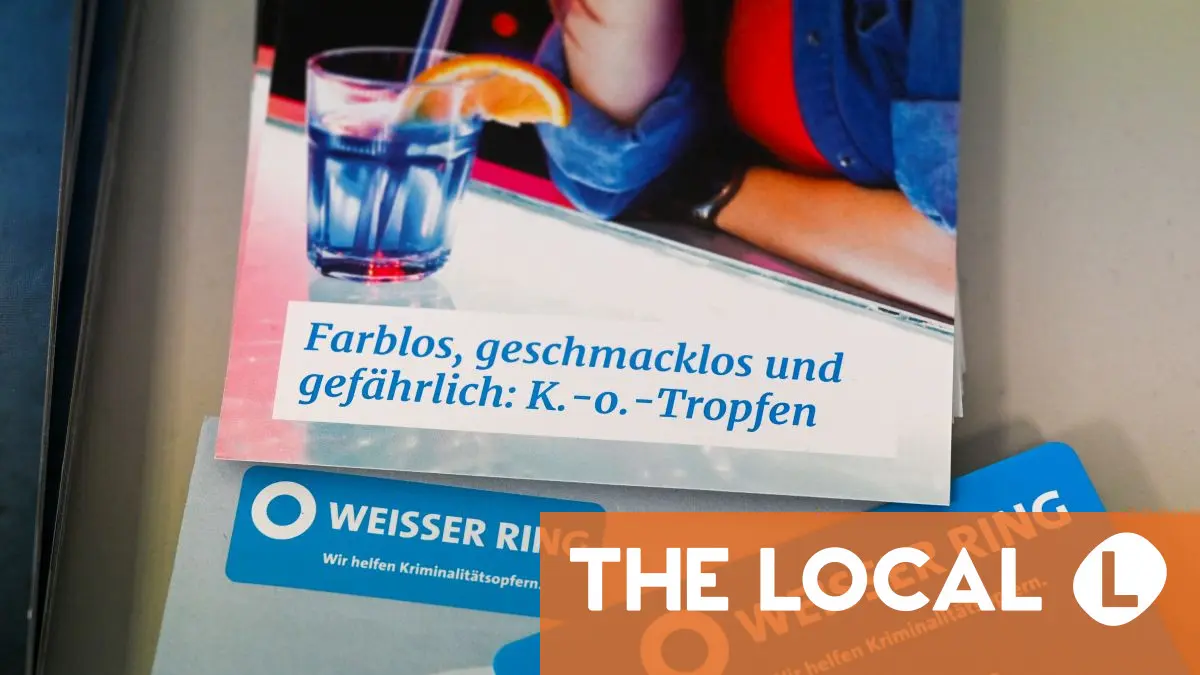
Dangerous and difficult to detect, knockout drops are used to incapacitate victims. Germany has voted to increase the minimum sentence for using them to commit rape or robbery – but legal experts say tougher penalties alone are not enough.
The Bundestag, Germany’s federal parliament, has voted to raise the minimum prison sentence for anyone who uses knockout drops (K.-o.-Tropfen) to commit rape or robbery from three to five years.
Under the proposed change, knockout drops, poisons and other harmful substances would be treated as dangerous instruments of crime, alongside weapons. Using them to commit rape or robbery would carry a minimum sentence of five years, up from three.
Knockout drops – sometimes referred to as date rape drugs – can be difficult to detect. Victims may struggle to tell whether a colourless, tasteless substance has been added to their drink, while the effects can resemble intoxication and may include memory loss.
Who supported the change – and what critics say
The Bundestag approved the tougher penalties with support from the CDU/CSU, SPD, Greens and The Left. The AfD abstained.
The bill must now be considered by the Bundesrat, which represents Germany’s 16 states.
Some politicians and legal experts warned that tougher sentences alone would not solve difficulties with prosecution. For example, Lena Gumnior of the Greens said the bill did nothing to address shortages of accessible support centres and dependable services for victims.
Sven Rebehn, federal executive director of the German Judges Association, said that while he considers the tougher penalties appropriate, they alone would do little to improve protection against sexual and violent crimes.
“It is not the statutory penalty – which already allows for up to 15 years of imprisonment – but rather the risk of being caught and convicted that deters potential offenders,” he said.
The German Police Union also called for rapid toxicological testing as well as clear procedures and greater awareness among the relevant authorities. Some substances may remain detectable for only a few hours, making prompt sampling important.
What are knockout drops?
The Federal Criminal Police Office (BKA) describes knockout drugs as substances or solutions administered without a person’s consent to immobilise them or leave them unable to resist.
Common substances include GHB (gamma-hydroxybutyrate) and GBL (gamma-butyrolactone). GHB is controlled under Germany’s Narcotics Act, while GBL is widely used as an industrial solvent and cleaning agent.
In the body, GBL is converted into GHB and produces the same dangerous effects.
GHB and GBL are also taken recreationally, but initial euphoria may be followed by dizziness, nausea, unconsciousness and memory loss. High doses can cause breathing difficulties and, in extreme cases, death.
READ ALSO: German alleged rape victim challenges time limit on abuse cases
How can you protect yourself?
The national office of the Weisser Ring – a German non-profit organisation that supports victims of crime and helps prevent crime – provides specific safety tips.
These include not leaving open drinks unattended and, if in doubt, pouring them out; not accepting open drinks or food from strangers; and looking out for one another.
If you suspect something is wrong, call 112 immediately. Be cautious of wristbands or straws that change colour upon contact with certain substances and are supposed to protect against knockout drops. They can usually detect only one specific substance, whereas a wide variety of substances can be used as knockout agents.
The Weisser Ring also advises that if you feel unwell or dizzy, you should ask friends or staff for help and not stay alone.
Member of Parliament Clara Bünger (Die Linke) criticised the fact that women have to live in this “state of alert.”
“We should do everything we can to prevent such crimes, and the perpetrators should be afraid of getting caught,” she said.
READ ALSO: What to know about dealing with domestic violence in Germany
Disclaimer : This story is auto aggregated by a computer programme and has not been created or edited by DOWNTHENEWS. Publisher: thelocal.de




