TEHRAN – The Strait of Hormuz remains at the center of the confrontation between Iran and the United States, with Tehran maintaining its restrictions on maritime passage after the US and Israel launched their war against the Islamic Republic on February 28.
What is unfolding in the strategic waterway is not simply occasional disruption to commercial shipping or isolated security incidents. It is a sustained closure of normal commercial passage, imposed by Iran as part of its defensive response to a war initiated by Washington and Tel Aviv. The distinction is important: describing the situation as intermittent interference with otherwise normal navigation obscures the reality of the maritime standoff.
Despite repeated statements by US officials suggesting that the strait remains open and that Iran only periodically interferes with shipping, the reality on the water tells a different story. Normal commercial navigation has not resumed, and vessels seeking passage must contend with Iranian restrictions, security requirements and the consequences of attempting to use unauthorized routes.
The latest developments have further highlighted Tehran’s determination to enforce its regulations.
IRGC Navy reports tanker explosions
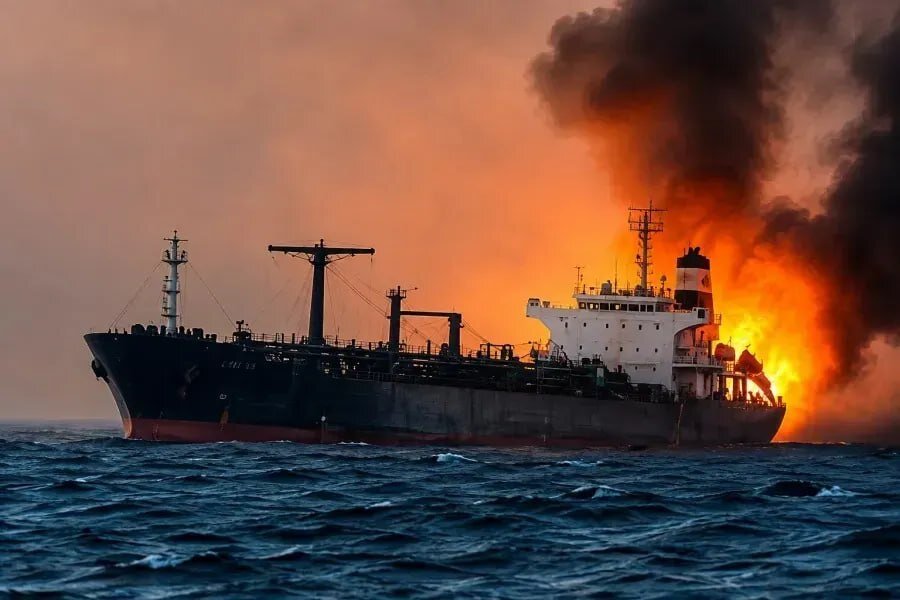
The Islamic Revolution Guards Corps (IRGC) Navy announced that three oil tankers had suffered explosions and caught fire in unauthorized shipping lanes in the Strait of Hormuz since the early hours of Sunday, with thick smoke from the burning vessels spreading across the sky above the strategic waterway.
The statement said the tankers were ablaze after switching off their navigation and identification systems and as a result of the “malicious actions of the US military’s smuggling and aggressor force.”
The IRGC Navy stressed that Iran’s regulations governing navigation through the Strait of Hormuz had been repeatedly communicated to all vessels, warning that ships which defy these rules and cooperate with the US military in attempting to use unauthorized routes would face the same fate.
IRGC Navy also urged commercial shipping operators not to rely on the “fanciful statements of the CENTCOM commander,” stressing that compliance with Iranian navigation requirements was essential for safe passage.
The incidents underscore the risks facing shipping companies attempting to navigate the waterway outside the arrangements established by Iranian authorities. The IRGC Navy has repeatedly instructed vessels to coordinate their passage through authorized channels and comply with the regulations governing maritime traffic.
Reality of Hormuz cannot be ignored
IRGC spokesperson Major General Hossein Mohebbi has urged observers to assess the situation in the Strait of Hormuz through developments on the ground rather than statements issued by American military officials.
“Look at the reality of the Strait of Hormuz through the events unfolding there,” he said, reiterating that the strategic waterway remains under Iran’s control.
His remarks reflect Tehran’s position that the situation cannot be understood through Washington’s declarations about freedom of navigation or the occasional movement of individual vessels. The decisive issue is whether normal commercial shipping can operate without restrictions and whether the United States can impose its preferred maritime arrangements on Iran.
For Tehran, the answer remains no.
The closure has also demonstrated that military superiority alone does not necessarily translate into the ability to guarantee maritime access through a strategically vital chokepoint, particularly when the defending country possesses geographic advantages and asymmetric naval capabilities.
Western analysts acknowledge Hormuz as Iran’s strategic asset
The strategic significance of the Strait of Hormuz has also been acknowledged in Western policy and security circles, where analysts have increasingly described it as one of Iran’s most consequential instruments of leverage in the confrontation with Washington.
A March 23 analysis by Noam Raydan of the Washington Institute for Near East Policy, titled Iran’s Force Multiplier: Tracking the War’s Maritime and Energy Effects, described Iran as having established itself as the principal traffic controller in the strait following the outbreak of the war.
Raydan argued that Tehran’s ability to maintain the maritime standoff had become its strongest source of leverage, with the consequences extending far beyond the Persian Gulf to international energy markets.
A separate analysis published by Chatham House in September, titled “How Will the Iran War Reshape the Persian Gulf?” was even more explicit about the strategic implications.
The analysis argued that the war had demonstrated that the Strait of Hormuz offered Iran greater strategic leverage than its missile arsenal, highlighting the waterway’s importance as an instrument of economic and geopolitical pressure.
It also noted that Tehran would seek to preserve and institutionalize the leverage acquired during the conflict rather than simply restore the pre-war maritime status quo.
“The US-Israel air strike convinced Washington that victory was imminent, prompting Trump to demand Iran’s surrender and to threaten to take the country ‘back to the Stone Age’, as he put it. Instead, Tehran treated the war as existential, closed the Strait of Hormuz and struck US bases and Persian Gulf energy infrastructure,” Chatham House reported.
Similarly, the International Institute for Strategic Studies (IISS), in a recently published assessment of the war’s maritime and geopolitical dimensions, described the closure of Hormuz as a potent strategic lever for Iran.
The analysis highlighted the difficulties facing even powerful naval forces attempting to reopen the waterway, particularly given the risks posed by asymmetric maritime capabilities, including naval mines, missiles and drones.
These assessments reinforce a central point: Hormuz is not merely a geographical passage through which a substantial share of the world’s energy supplies normally travels. In the context of the war, it has become a strategic instrument through which Iran can impose substantial costs on its adversaries and influence the calculations of Washington and its regional partners.
US strategy has backfired
Iranian military officials have also portrayed the maritime confrontation as part of a broader failure of Washington’s strategy against the Islamic Republic.
Brigadier General Abolfazl Shekarchi, spokesperson for the Iranian Armed Forces, said the hostile policies pursued by the United States had backfired, leading to Washington’s political setbacks, domestic divisions and declining international standing.
He said the US doctrines of aggression, assassination and maximum pressure, alongside its military strategies, had failed to overcome Iran’s national will and defensive capabilities.
Shekarchi said the confrontation had exposed the limitations of American military power, particularly in West Asia, and undermined the image of invincibility that Washington had sought to project through its military deployments and equipment.
He added that the United States and its allies had entered the confrontation seeking to destroy Iran but had instead become entangled in a costly strategic contest.
The secretary of Iran’s Supreme National Security Council, Mohsen Rezaei, delivered a similar warning in a message on X, mocking the political and military fallout of the war and the Republicans’ poor performance in the US midterm elections.
Addressing US Vice President JD Vance, Secretary of State Marco Rubio, War Secretary Pete Hegseth and the CENTCOM commander, Rezaei wrote: “You lost the war and the election. Vance has conceded, Rubio is heading for the exit, Hegseth is about to be fired, and the CENTCOM commander is now a podcaster!”
He then warned Washington against another military confrontation with Iran, saying: “Start a war, and you’ll face a devastating response.”
Hormuz and Iran’s long-term maritime strategy
The strategic importance of the waterway has also been emphasized by Iranian policymakers.
Abbas-Ali Kadkhodaei, caretaker chief of the Expediency Council’s secretariat, said developments in the Strait of Hormuz had demonstrated the waterway’s importance as an instrument of national influence and financial security.
Speaking at a meeting in Tehran on maritime development policies, he said the latest developments had made the consequences of US policymakers’ decisions evident to the American public.
Kadkhodaei stressed that Iran needed to make greater use of its extensive coastline, maritime resources and geographical position, arguing that the country’s maritime development policies reflected a long-term strategic vision.
His remarks point to a broader Iranian strategic perspective in which control over maritime access, coastal infrastructure and regional shipping routes is increasingly regarded as an integral component of national security and economic resilience.
Washington faces a difficult strategic choice
The political repercussions of the war have also become a subject of debate among Western political figures.
In an article published by The Times on November 8, British Deputy Prime Minister David Lammy discussed JD Vance’s political future following the Republican setbacks in the midterm elections, comparing the vice president’s political adaptability with that of former US president Richard Nixon.
Lammy argued that Vance would be better served by pursuing peace if he intended to build a successful presidential campaign for 2028, while warning against a rushed diplomatic settlement that could end the wrong war.
The article reflects growing questions in Western political circles about the domestic political costs of the confrontation with Iran and the possibility that Washington’s continued military engagement could further undermine the administration’s political position.
For Washington, the challenge is no longer limited to its ability to deploy naval forces or issue declarations about freedom of navigation. It also concerns the political, economic and military costs of sustaining a confrontation in which Iran retains the ability to prevent a return to normal maritime traffic.
The IISS assessment similarly underscores the difficulty of resolving the Hormuz standoff through military means alone. Even where naval forces can facilitate some vessel movements, establishing reliable and unrestricted commercial navigation remains a considerably more complicated undertaking.
Another important consideration is the ability to negotiate. The current US administration lacks the capacity to engage meaningfully at the negotiating table. However, as British Foreign Secretary David Lammy has suggested, it remains to be seen whether the politically adaptable JD Vance could emerge as the next Nixon.
Disclaimer : This story is auto aggregated by a computer programme and has not been created or edited by DOWNTHENEWS. Publisher: tehrantimes.com