YEREVAN — On September 1, 1926, the words “Listen! Listen! This is the Yerevan Broadcasting Station speaking” first resonated across the skies of Armenia, heralding the birth of Public Radio of Armenia.
Although regular daily scheduling officially commenced on June 15, 1927, that initial broadcast launched a century-long media legacy. Over the decades, the institution evolved from a single experimental transmitter into a robust, modern multimedia network. Today, Public Radio operates across multiple channels and digital platforms, broadcasting and publishing in 12 languages—including regional and minority languages such as Persian, Kurdish, and Arabic, alongside English and Russian.
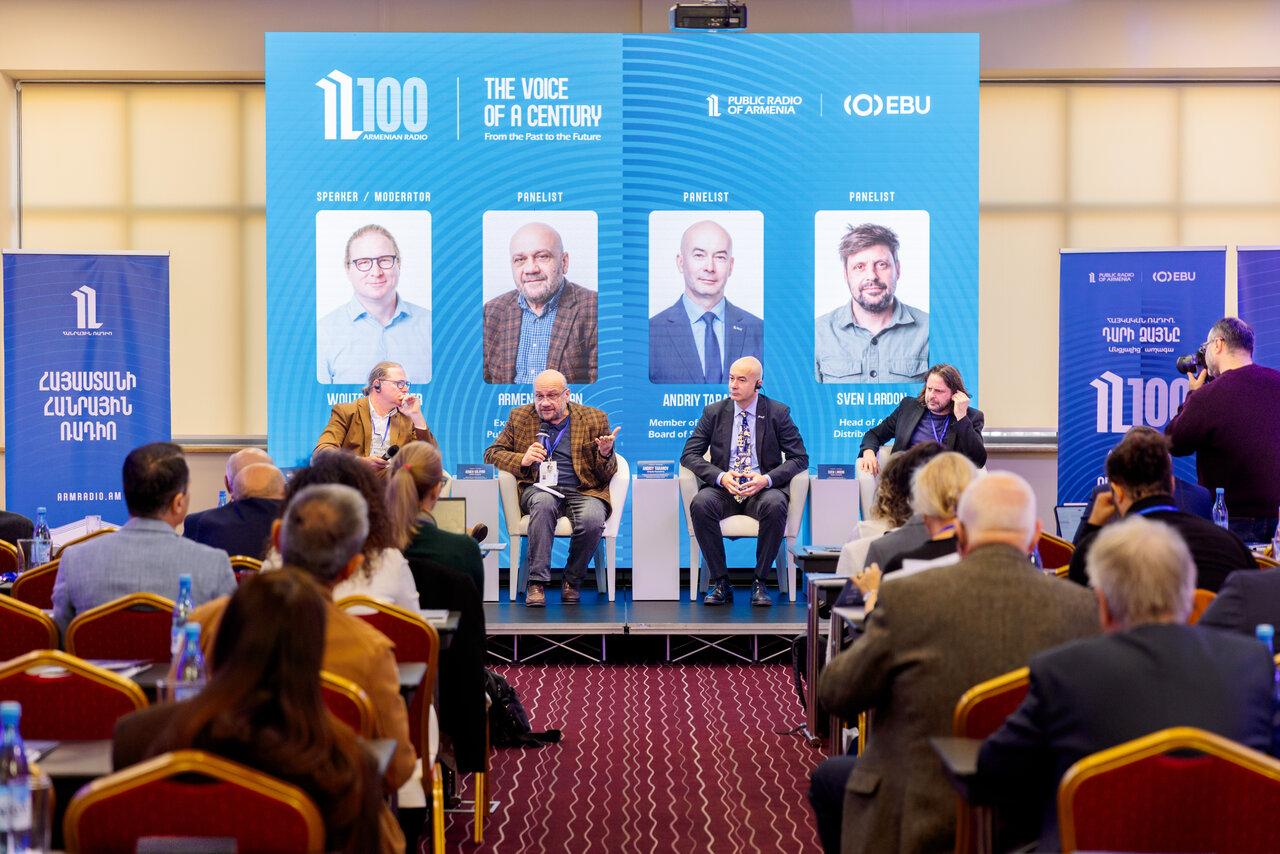
In November 2026, Public Radio of Armenia—a member of the European Broadcasting Union (EBU)—commemorated its centenary by hosting an international media conference titled “The Voice of a Century: From the Past to the Future.” The two-day gathering convened 19 international media delegates and experts representing 15 countries. Among the participants, the Tehran Times was the sole honorary media organization attending from outside the European continent and beyond the EBU membership, reflecting long-standing regional and cultural ties.
The opening day took place at the historic Radio House in Yerevan, where guests attended the official inauguration of the station’s Museum Corner. Among the primary exhibits on display was the organization’s historic “birth certificate”—the original founding regulatory license granting legal authority to broadcast in Armenia. Preserving this cultural memory has relied on an ambitious archival restoration initiative. To date, Public Radio has digitized 102,422 historical tapes, preserving more than 12,300 hours of rare audio recordings, national folklore, and vintage programming. During his keynote address, Artur Ispiryan, Head of the Archive, reflected on the complexities of this endeavor, explaining that modernizing decades of magnetic tape required bridging vintage engineering with contemporary digital technology, a process made all the more challenging by the rare expertise needed to execute it.
The second day shifted focus to contemporary and emerging media challenges during sessions held at the Ani Grand Hotel. Industry executives, broadcasters, and editors engaged in three distinct panels centered on the pressing issues shaping 21st-century journalism. Topics included the visual evolution of traditional radio and strategies to avoid simply mimicking television, the structural impact of artificial intelligence on newsrooms and voice-driven media, and tactical approaches to combating disinformation and modern hybrid media warfare. The centenary concluded with an anniversary gala concert at the Armenian National Opera and Ballet Theater, honoring a century of service to listeners at home and across the globe.
Disclaimer : This story is auto aggregated by a computer programme and has not been created or edited by DOWNTHENEWS. Publisher: tehrantimes.com