Long before diamonds became the default marker of luxury, pearls were the world’s most coveted gem. As early as 2300 BCE, Chinese royalty prized them. In ancient Rome, pearl jewellery became such a potent symbol of wealth that laws were introduced to regulate who could wear it. In the Mughal courts in India, pearls were sewn into garments and turbans.
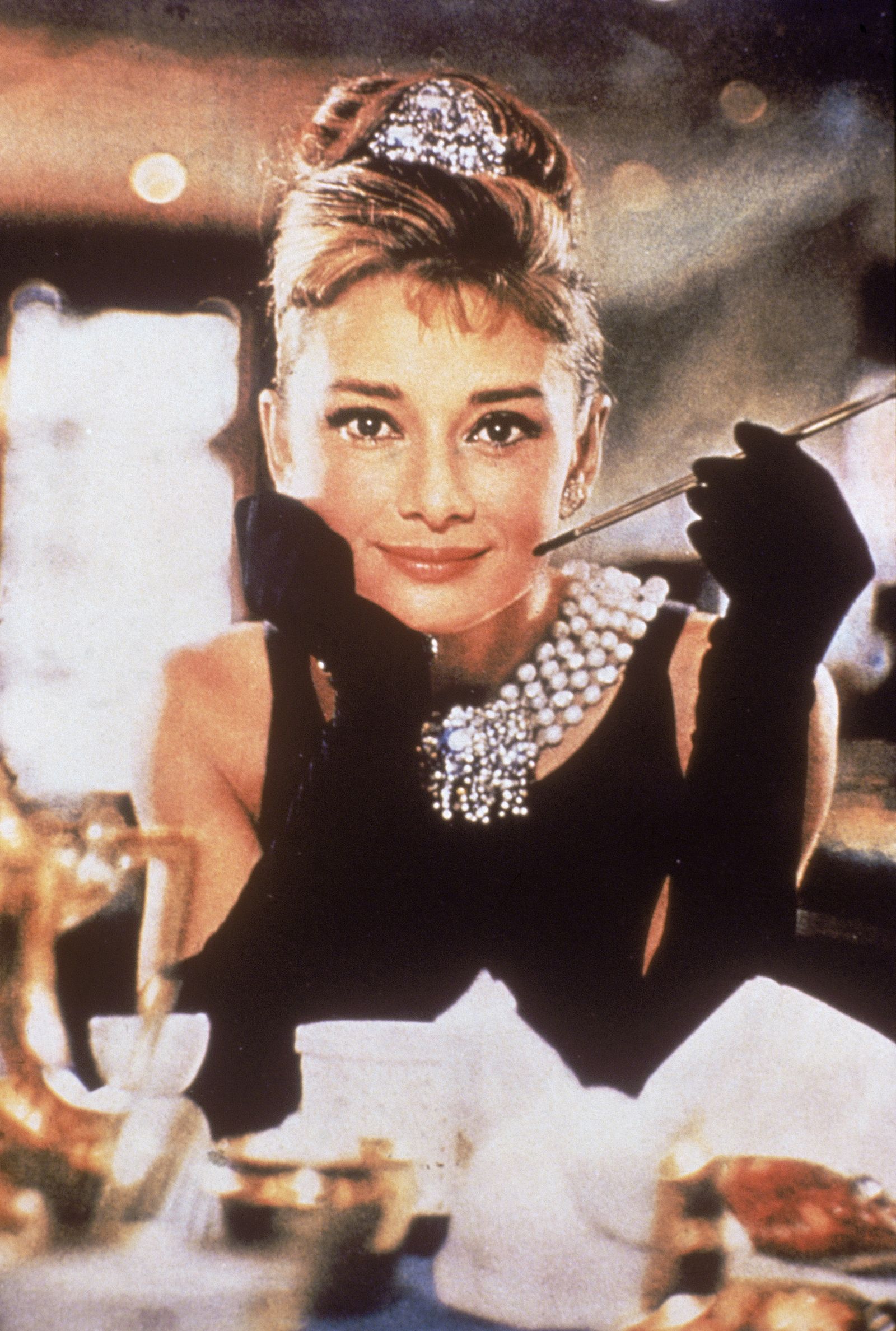
Belgian-born actress Audrey Hepburn (1929 – 1993), in a black, shoulderless dress, matching gloves, and a tiara, smiles with a cigarette holder in her hand, in her role as Holly Golightly the film, ‘Breakfast at Tiffany’s,’ directed by Blake Edwards, New York, New York, 1961. (Photo by Paramount Pictures/Courtesy of Getty Images)Paramount Pictures/Getty Images

LONDON, UNITED KINGDOM – NOVEMBER 20: Diana, Princess Of Wales, Attending A Gala Evening In Aid Of Cancer Research At Bridgewater House In London. The Princess Is Wearing A Dress Designed By Fashion Designer Jacques Azagury (Photo by Tim Graham Photo Library via Getty Images)Tim Graham/Getty Images
By the early 20th century, Coco Chanel famously declared, “A woman needs ropes and ropes of pearls.” In her wake came Audrey Hepburn, who immortalised her multi-strand pearl choker in Breakfast at Tiffany’s (1961). Decades later, Princess Diana wore pearls often and intuitively: a classic single-strand necklace for formal engagements and most memorably, the pearl-and-sapphire choker.
Today, pearl jewellery is everywhere. It surfaces in unexpected ways: stacked, mismatched, worn with streetwear or couture. Recently, Manish Malhotra’s high jewellery line crafted pearl earrings, chokers and necklaces, all interwoven with diamonds.
What exactly is a pearl?
Unlike other gemstones that are mined from the earth, pearls are organic, formed inside living molluscs like oysters and mussels. When an irritant enters the shell, the mollusc coats it in layers of nacre, AKA mother-of-pearl—the strong, lustrous material that forms the inner layer of many mollusc shells. There are two broad categories: natural pearls, which form entirely by chance (and are exceptionally rare), and cultured pearls, which are grown with human intervention. Nearly all pearls you’ll encounter today are cultured.
What are the types of pearls?
Pearls are sourced from both freshwater and saltwater environments, which matters both aesthetically and financially. Freshwater pearls are more abundant, making them the most accessible option. Saltwater pearls, on the other hand, are rarer and typically prized for their superior lustre. These include Akoya pearls from Japan, known for their high shine and near-perfect roundness; Tahitian pearls from French Polynesia, valued for their naturally dark tones with overtones of peacock green and aubergine; and South Sea pearls, usually from Australia or Indonesia, which are larger, slower to form and among the most expensive in the world.
Disclaimer : This story is auto aggregated by a computer programme and has not been created or edited by DOWNTHENEWS. Publisher: vogue.in